Non-Prescription ADHD Medication UK: An Essential Guide
Explore legal risks, safe alternatives, and official pathways to diagnosis and treatment for ADHD medication without a prescription in the UK.
Written and maintained by the ADHD Private editorial team, drawing on NHS, NICE and ADHD UK guidance. This is general information, not medical advice.
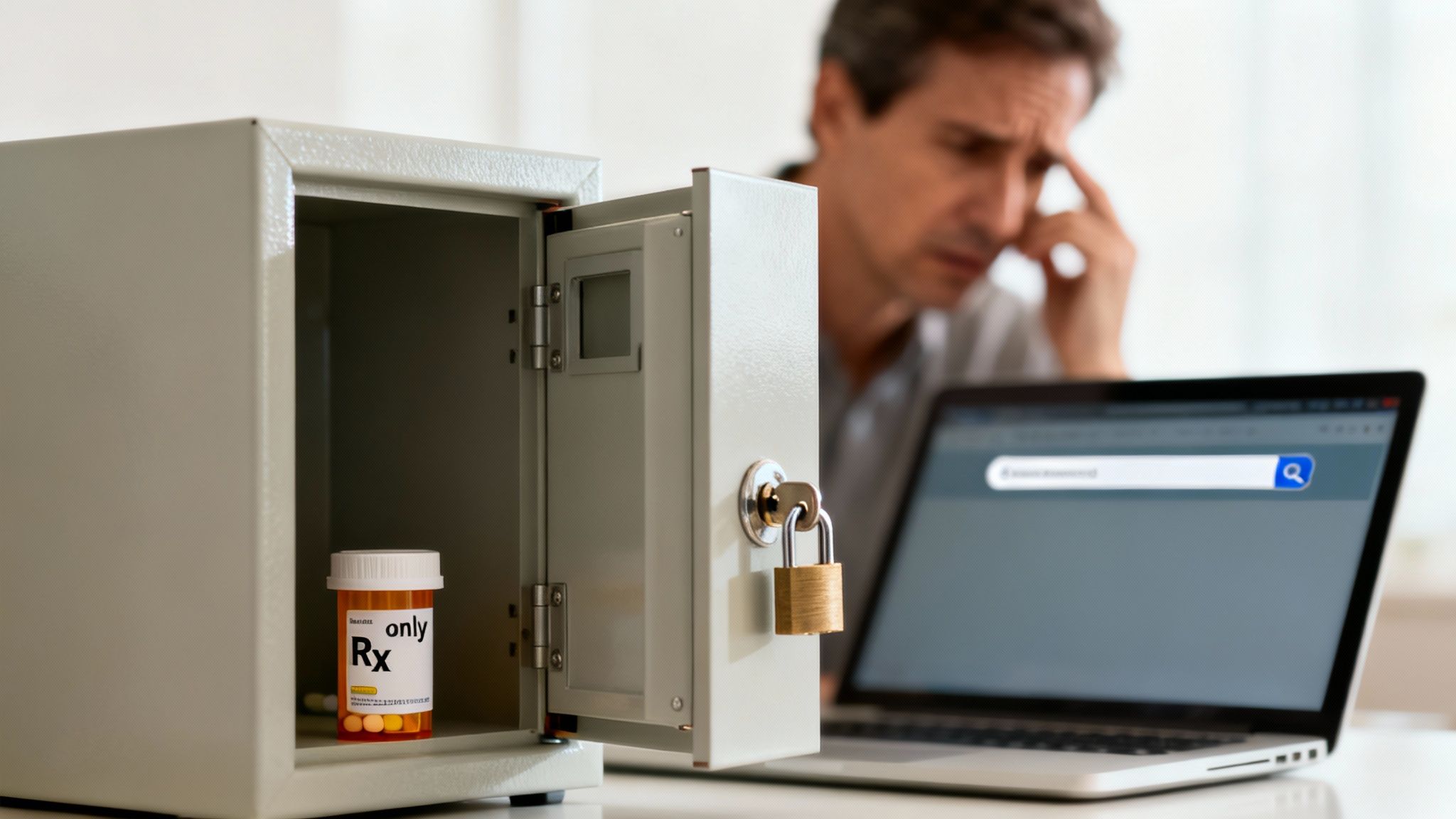
Let's get straight to the point: no, you cannot legally or safely buy ADHD medication without a prescription in the UK.
ADHD treatments like Methylphenidate and Lisdexamfetamine are powerful, Class B controlled substances. They can only be dispensed by a pharmacy when you have a valid prescription from a specialist. Any website claiming to sell them without one is operating illegally, and what they're selling is unregulated, dangerous, and often fake.
Why ADHD Medication Requires a Prescription in the UK
We get it. The frustration of endless NHS waiting lists is very real. When your symptoms are turning your daily life upside down, the wait for an assessment (let alone treatment) can feel impossible. It’s no wonder so many people start desperately searching for a faster way forward.
But it’s vital to understand why the official system has so many safeguards. ADHD medications aren't like grabbing a paracetamol off the shelf; they are potent stimulants that have a significant impact on your brain chemistry and heart. Classifying them as controlled drugs isn't about bureaucracy; it's about keeping you safe.
The Dangers of Unregulated Sources
If you find a website offering ADHD medication without a prescription in the UK, you’re not dealing with a real pharmacy. These sellers are breaking the law and peddling products with zero guarantee of quality, safety, or even what’s actually in them.
Here are just a few of the risks you’re taking:
- Counterfeit Pills: The tablets you buy could contain a completely different drug, the wrong dose, or no active ingredient at all. Worse, they are sometimes cut with genuinely harmful substances.
- No Medical Oversight: A proper diagnosis involves checking your physical health first. Without a doctor's assessment, you won’t know if you have an underlying condition, like a heart problem or high blood pressure, that could make taking stimulants extremely dangerous.
- Incorrect Dosages: Finding the right medication and dose is a careful process called titration. This is managed by a specialist over weeks or months to find what works for you with the fewest side effects. Guessing the dose yourself can be totally ineffective or lead to serious health issues.
The urge to find a quick fix is completely understandable, especially when you're struggling. But the path of unregulated medication is littered with dangers that far outweigh any potential benefit. The goal isn't just to get any medication; it's to get the right treatment safely, under expert medical care.
Your Safe and Legal Pathways
Instead of hitting a wall, think of this as a turning point. This guide is here to help you navigate the legitimate routes to getting the support you deserve. We'll walk you through the proper, official channels for diagnosis and treatment.
From the standard NHS pathway to using your NHS Right to Choose or exploring reputable private clinics, you have options. The system might feel slow, but it's built to put your long-term health and well-being first.
Understanding Why ADHD Medication Is a Controlled Substance
To get why you can’t just buy ADHD medication without a prescription in the UK, it helps to stop thinking of them as simple pills. They’re more like highly specialised tools, precision-engineered for the unique wiring of an ADHD brain. In the right hands, with an expert guiding their use, they can be genuinely life-changing. But used incorrectly, they can cause serious harm.
That isn't just a turn of phrase; it's the very reason medications like methylphenidate and lisdexamfetamine are so tightly controlled. They work by directly influencing the central nervous system. Because of this, UK law classifies them as Class B controlled substances: the same legal category as amphetamines. This underscores their potential for misuse and dependency if they aren't managed properly.
This classification isn't there to scare people. It’s a critical safety net, built on decades of understanding how these medications work and the very real risks they pose without medical supervision. The entire system is designed to make sure the treatment you get is both safe and effective.
The Medical Risks of Flying Blind
When prescribed and monitored by a specialist, ADHD medication is transformative for so many people. But that's only after a thorough health assessment has been done. A doctor's first job is to rule out any underlying conditions that could make stimulant medication dangerous.
Here are just a few of the essential checks they perform:
- Cardiovascular Health: Stimulants increase your heart rate and blood pressure. For someone with an undiagnosed heart problem, this could be incredibly dangerous and potentially lead to a serious cardiac event.
- Mental Health Screening: While great for ADHD, these medications can sometimes make conditions like anxiety or bipolar disorder worse. A full psychiatric evaluation is vital to make sure the treatment won’t do more harm than good.
- Physical Vitals: Regularly checking weight, height (especially for younger people), and blood pressure is a standard part of ongoing care, allowing doctors to spot any negative side effects early on.
Without a professional overseeing this, you’re essentially taking a huge gamble with your physical and mental health. The risks are simply too high to justify trying to sidestep the proper medical channels.
Why You Can’t DIY the Dosage
Finding the right medication and the perfect dose isn't a one-shot deal. It's a careful, collaborative process called titration. This is a journey you take with your specialist, and it can often take several weeks or even months to get just right. The whole point is to find the lowest possible dose that gives you the best focus with the fewest side effects.
Think of titration like tuning an old-school radio. You don't just spin the dial hoping for the best. You have to turn it carefully, millimetre by millimetre, listening for the static to fade until the signal comes through perfectly clear.
This careful adjustment is so important because everyone’s body chemistry is different. A dose that works wonders for one person might cause horrible insomnia, anxiety, or appetite loss in another. A specialist knows exactly what to look for and how to tweak the plan safely.
This ongoing monitoring is a non-negotiable part of safe ADHD treatment. Regular check-ins make sure the medication is still working and isn’t causing any hidden long-term problems. This is the real difference between proper medical care and the reckless gamble of buying non-prescription ADHD medication in the UK online. The regulated system isn’t a barrier; it's a safeguard for your health.
If you’re feeling lost and frustrated looking for non-prescription ADHD medication in the UK, you’re not alone. It’s easy to feel desperate for a solution, but the safest and most effective way forward is through official channels. The good news is, you have several clear, legitimate options for getting a proper diagnosis and the right treatment.
Taking control of your health starts with understanding these pathways. In the UK, there are three main routes to an ADHD assessment and, if appropriate, medication. Each comes with its own process, waiting time, and costs, but all are designed to make sure you get specialist care safely.
The Standard NHS Pathway
This is the traditional route, and it all starts with a chat with your GP. If they agree that your symptoms point towards ADHD, they’ll refer you to your local NHS mental health service for a formal assessment.
The biggest plus? It’s free. The major downside, however, is the waiting time. Depending on where you live, you could be waiting anywhere from a few months to several years just for the initial appointment. And even after a diagnosis, there’s often another "hidden wait" before you can start titration (the process of finding the right medication and dose), which can tack on many more months.
The NHS Right to Choose Pathway
For adults in England, the NHS Right to Choose (RTC) can be a genuine lifeline. This rule gives you the legal right to choose where you have your mental health assessment, as long as the provider has a contract with the NHS. This opens the door to many respected private clinics that also serve NHS patients.
The real benefit here is choice. RTC lets you choose a provider other than your local NHS service, all while still being covered by the NHS. To get the ball rolling, you’ll need to find a qualifying provider and then ask your GP to refer you to them directly.
A quick heads-up: while Right to Choose is a fantastic option, it’s become incredibly popular. Make sure you check the current wait times for both the assessment and the titration process with any provider you're considering. High demand means some now have significant waiting lists of their own.
The Private Pathway
Your third option is to go fully private. This is, without a doubt, the fastest way to get help. Many private clinics can offer an assessment within weeks, and if you're diagnosed, you can start on medication almost straight away.
Of course, the main hurdle is the cost. You'll be paying for everything out of pocket: the assessment, every follow-up appointment, and the private prescriptions themselves. This can add up quickly, often costing several hundred pounds a month, especially in the early stages.
The pressure on the NHS is a big reason why so many people are turning to private care. Research from January 2025 showed that only 0.32% of UK adults have a formal ADHD diagnosis, leaving millions without the support they need. With 1 in 5 patients now getting their medication privately, it’s clear that long NHS waits and recent medication shortages are pushing people to find faster alternatives.
This infographic lays out exactly why professional medical supervision for ADHD medication isn’t just a recommendation: it’s essential.
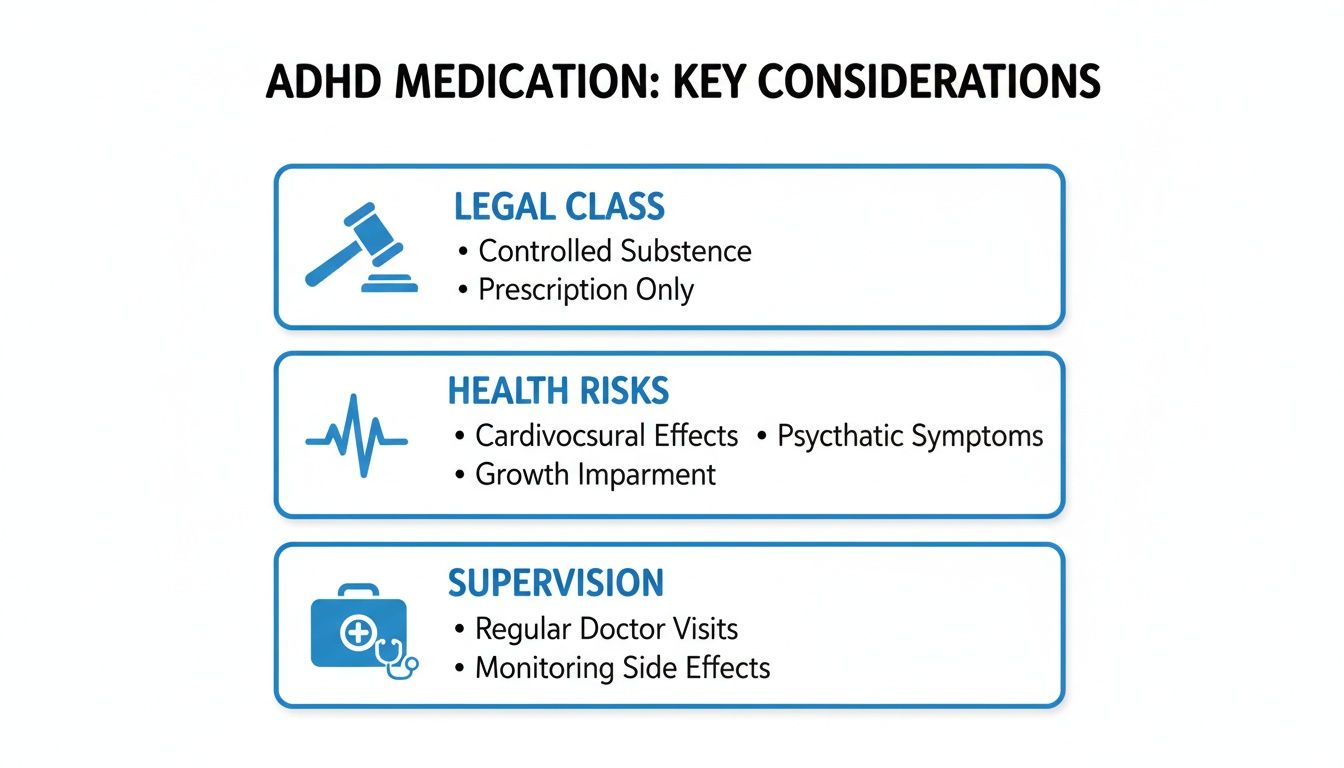
As you can see, these are powerful, controlled substances with real health risks. Going through an official pathway ensures a specialist is monitoring your health every step of the way.
To help you weigh your options, here’s a quick comparison of the three pathways.
Comparing Your Pathways to an ADHD Assessment and Medication
| Feature | Standard NHS Pathway | NHS Right to Choose | Private Pathway |
|---|---|---|---|
| Typical Wait Time | Very long (often 1-5 years for assessment and titration) | Varies by provider and NHS area, but waits are growing | Very fast (often 2-6 weeks for assessment) |
| Cost | Free (covered by the NHS) | Free (covered by the NHS) | Paid privately (costs can range from £700-£2,000+) |
| Choice of Provider | Limited to your local NHS service | You choose from a list of NHS-approved providers across England | You have complete freedom to choose any private clinic in the UK |
| Starting the Process | Speak to your GP for a local referral | Research a provider and ask your GP for a specific RTC referral | Contact a private clinic directly to book an appointment |
| Best For | Those who can't afford private care and are able to wait | Adults in England seeking an NHS-funded diagnosis | Those who need urgent help and can afford the associated costs |
Ultimately, the right path depends entirely on your personal circumstances: your budget, how urgently you need support, and where you live.
Making an Informed Choice with Shared Care
If you decide to go private, aiming for a shared-care agreement should be a top priority. This is an arrangement where, once you’re on a stable dose of medication, your private specialist and your NHS GP agree to share the responsibility for your treatment.
Here’s how it works and why it’s so important:
- How It Works: Your private psychiatrist oversees the initial titration period to get your dose just right. Then, they’ll write to your GP, formally asking them to take over prescribing your medication.
- The Benefit: If your GP agrees, you can get your medication through an NHS prescription. This means you’ll only pay the standard NHS prescription fee, which is significantly cheaper than the private cost.
- The Catch: GPs are not required to accept a shared-care agreement. It's really important to have a conversation with both your GP and your chosen private clinic about this before you commit to anything.
Figuring all this out can feel like a lot, but using a service that lets you compare private clinics can make the process much clearer. You can easily filter providers by their wait times, assessment costs, and whether they offer key services like online prescribing or have a good track record with shared-care agreements. To dive deeper, you can learn more about the official UK pathways for ADHD medication and what each treatment involves. This will give you the confidence to choose the route that truly works for you.
Treatment starts with an assessment
Answer a few questions and we’ll shortlist private ADHD clinics that fit your needs and budget.
Why Is It So Hard to Get an ADHD Prescription? The Real Story Behind the Surge
If you’re finding the struggle for ADHD support incredibly frustrating, you’re not alone. It feels like the system is completely overwhelmed, and frankly, it is. A massive, and welcome, wave of public awareness has crashed into a healthcare system that just wasn’t prepared for it. This collision is the reason behind the impossibly long waits and why so many people are now looking for a faster way to get help.
The numbers back this up. More people than ever are connecting the dots, recognising potential ADHD symptoms in themselves or their kids, and reaching out for a proper diagnosis. This is brilliant news for tackling stigma, but it’s put an immense strain on the NHS.
The result? A massive bottleneck. While awareness has soared, the resources (the specialists, the clinics, the funding) simply haven't kept up. This mismatch is why the public route is now measured in years, not months, and why alternatives are no longer just a luxury.
The Post-Pandemic Effect
The COVID-19 pandemic threw fuel on the fire. The shift to home working and the disruption of our daily routines pushed many people's coping mechanisms to the breaking point. Executive function challenges that were once manageable suddenly became impossible to ignore, sparking a huge increase in people seeking an assessment.
This has had a direct, measurable impact. Since the pandemic, ADHD prescriptions in England have shot up by 18% year-on-year. We’ve gone from 25 items prescribed per 1,000 people in 2019-20 to a staggering 41.55 per 1,000 in 2023-24. This dramatic rise explains why private clinics are busier than ever, as families across the UK decide they simply can't wait any longer. You can see the full breakdown of these rising prescription rates and how they vary across the country.
Understanding this context is important. It confirms that your struggle isn't a personal failing; it’s a symptom of a nationwide system under enormous pressure.
Your Postcode Can Determine Your Wait
That national average doesn't tell the whole story, either. When you dig into the data, you find huge differences from one region to another, showing just how much of a lottery access to care can be.
For example, that same report showing an 18% national increase reveals a very different picture on the ground:
- London: Saw a massive 28% jump in prescription rates each year.
- The Northeast and Yorkshire: Experienced a slower, but still significant, 13% annual rise.
What this means is that where you live has a direct impact on how quickly you can get help through the NHS. In areas with fewer specialists or higher demand, the waiting lists are often far longer. For many, this makes going private feel less like a choice and more like the only practical option.
This isn't about pointing fingers at the NHS. The system is dealing with unprecedented demand. The spike in prescriptions is a good thing—it means more people are getting help—but it also highlights an urgent need for more capacity to stop people from being left in limbo for years.
This is precisely why so many people are now carefully comparing private clinics. They’re looking for a reputable provider who can offer a timely assessment, start treatment quickly, and ideally work with their GP under a shared-care agreement. When the alternative is a multi-year wait, it's a pragmatic step towards getting the support you need, right now.
Exploring Safe Alternatives and Supportive Therapies
Waiting for an official diagnosis and the right medical treatment can feel like being stuck in limbo. It’s a frustrating place to be. But this waiting period doesn't have to be a passive one. In fact, there are powerful, evidence-based strategies you can start using right now to get a better handle on your ADHD symptoms and improve your day-to-day life.
While these strategies aren't a replacement for medication, they are the essential bedrock of any solid ADHD management plan.

Think of it like this: you're upgrading your brain's operating system and hardware while you wait for the specialist software (the medication) to be installed. This approach is all about building practical skills and healthy habits that give your brain the best possible environment to function in. These therapies and lifestyle tweaks are often so effective that they remain a vital part of managing ADHD long after you start a prescription.
Cognitive Behavioural Therapy for ADHD
Cognitive Behavioural Therapy (CBT) is a practical, structured form of talking therapy that helps you identify and change unhelpful thinking patterns and behaviours. While standard CBT is great, the version specifically adapted for ADHD is a game-changer. It gets right to the heart of core challenges like procrastination, disorganisation, and emotional regulation.
Instead of just talking about feelings, ADHD-focused CBT is about action. It gives you real, tangible tools to use in your life. A therapist might work with you to:
- Break down overwhelming tasks into tiny, manageable steps to finally beat procrastination.
- Create organisational systems that actually work for your brain, using things like calendars, timers, and visual cues.
- Learn to spot and challenge the negative self-talk that so often comes with ADHD – those persistent feelings of failure or not being good enough.
CBT for ADHD isn't about 'curing' you. It's about building a personalised toolkit of coping strategies that empower you to work with your brain, not constantly fight against it.
The Power of Executive Function Coaching
Executive functions are your brain's management team – they handle planning, prioritising, time management, and staying on task. Since ADHD directly impacts these skills, a coach can be an invaluable ally. An ADHD coach works with you one-on-one to build practical systems for your life.
This isn't therapy; it's much more hands-on. A coach focuses squarely on the "how" of getting things done. They can help you build routines for everything from taming your inbox to actually remembering appointments, providing the kind of practical support that makes a massive difference while you're on the path to medical treatment.
Lifestyle Changes with Proven Impact
Never, ever underestimate the profound effect that diet, exercise, and sleep have on an ADHD brain. They aren't a substitute for professional treatment, of course, but getting these three areas dialled in can significantly lessen the severity of your symptoms.
- Exercise: Regular physical activity is easily one of the most effective non-medical strategies out there. It boosts dopamine and norepinephrine (the very same neurotransmitters targeted by stimulant medication) leading to better focus and a more stable mood.
- Sleep: It's simple: poor sleep makes ADHD symptoms a whole lot worse. Prioritising a consistent sleep schedule in a cool, dark room can have a dramatic impact on your attention and emotional stability the next day.
- Diet: There’s no magic "ADHD diet," but focusing on a balanced intake of protein, complex carbs, and healthy fats helps to stabilise your blood sugar. This prevents the wild rollercoaster of focus and fatigue that can derail your entire day.
A Note on Supplements
You’ll almost certainly see supplements like Omega-3 fatty acids, zinc, and magnesium mentioned online as a type of non prescription ADHD medication in the UK. And it's true that some studies suggest a potential, mild benefit – particularly with Omega-3s, which are vital for overall brain health.
It is absolutely crucial to manage your expectations here, though. Supplements are not a primary treatment. At best, they are a supportive measure that should only be considered after a chat with your doctor. They simply don't have the same targeted, powerful effect as prescribed medication and should never be seen as a replacement.
For a much deeper dive into non-medical approaches, our dedicated guide explains how to manage ADHD without medication.
Your Next Steps Toward Safe ADHD Treatment
Figuring out the next steps for ADHD support can feel like a maze. But before you do anything else, know this: steer clear of unregulated online sellers. Googling for non prescription ADHD medication in the UK is a dangerous path that leads nowhere good. The real journey starts by committing to a safe, legal, and medically supervised route.
This means you have three legitimate options. You can get on the waiting list for your local NHS service, look into the NHS Right to Choose pathway for an NHS-funded assessment, or go with a private clinic for speed and flexibility. Each has its own timeline and costs, but they all end with professional, safe care.
Making an Informed Choice
The demand for ADHD services has exploded, and the system is creaking under the strain. In a single quarter of 2025/2026, ADHD prescriptions in the UK shot up by 5%, hitting over 1 million items. It’s this massive demand and the painfully long NHS queues that are pushing over one in five patients to get private prescriptions. You can read more about the recent rise in ADHD prescriptions to get a sense of the current picture.
This situation makes doing your homework more important than ever. If you're thinking about going private, you need to arm yourself with the right information. Your goal isn't just to find any clinic; it's to find the right one for your health journey.
Here's what you should be looking into:
- Wait Times: How long will it take to get an assessment? And just as importantly, how soon can you start the medication titration process if you get a diagnosis?
- Costs: Look for clinics with clear, upfront pricing for the assessment, follow-up appointments, and any private prescription fees.
- Shared-Care Agreements: Find out if the clinic regularly works with NHS GPs to hand over prescribing duties. This is a huge deal for keeping your long-term medication costs down.
- Patient Reviews: What are other people saying? Check reviews for feedback on the clinic's communication, quality of care, and overall support.
This isn't just about getting a prescription. It's about finding a structured, supportive, and effective plan that truly puts your well-being first. Taking the time to properly compare clinics and understand the process puts you back in the driver's seat.
If you're in England, the NHS Right to Choose pathway is a fantastic middle-ground option, using NHS funding with a private provider. To see if it's a good fit for you, have a look at our detailed guide on how the NHS Right to Choose for ADHD works. By arming yourself with knowledge, you can move forward with confidence and finally get the support you deserve.
Got Questions? We've Got Answers
Stepping into the world of ADHD treatment can feel like a maze. It’s completely normal to have a ton of questions, so we’ve gathered some of the most common ones we hear and answered them plainly and simply.
We want to cut through the confusion and give you the real-world information you need about costs, waiting lists, and the different routes you can take to get support in the UK.
Can I Get ADHD Meds Without a Diagnosis?
In a word: no. It’s a hard and fast rule in the UK that ADHD medications can only be prescribed after you have a formal diagnosis from a qualified specialist, like a psychiatrist.
These are powerful, controlled drugs, and this strict process is in place to make sure they're the right and safe choice for you. There are no shortcuts or legal loopholes around this.
What’s This "Hidden Wait" I Hear About After Diagnosis?
This is something that catches a lot of people out. Getting your diagnosis feels like crossing the finish line, but it’s often just the start of another wait. Before you get your ongoing prescription, you have to go through a process called titration.
During titration, a specialist works with you over several weeks or months to carefully figure out the right type of medication and the most effective dose. The problem is, there's usually a long queue just to start this process. This "hidden wait" for titration can easily add another 6 to 12 months to your journey, even after you’ve paid for and received a diagnosis. Always ask clinics about their wait times for both the assessment and the titration period.
Is It Cheaper to Get ADHD Medication on the NHS?
Yes, by a long shot. Once your medication and dose are stable, and you have a shared-care agreement sorted with your GP, you’ll only pay the standard NHS prescription charge. If you’re in Scotland, Wales, or Northern Ireland, it's completely free.
Compare that to a private prescription, which can set you back anywhere from £80 to £150 every month. That's why getting a shared-care agreement is a major goal for most people who go private initially: it makes long-term treatment affordable. Just remember you'll still have to cover the significant upfront costs of the private assessment and titration first.
Finding the right path forward starts with having the right information. At ADHD Private, we make it easier to compare UK clinics by wait times, costs, and services offered, so you can make a choice that works for you. Start comparing ADHD clinics in the UK today.