NHS Guide: Right to Choose for Faster ADHD Assessments
Learn how NHS Right to Choose ADHD speeds up assessments with NHS funding and practical tips.
If you’re staring down the barrel of a multi-year wait for an ADHD assessment, you need to know about the NHS Right to Choose pathway. This isn't some loophole; it's a legitimate route that lets you get seen much faster by a qualified provider, funded entirely by the NHS. It's a game-changer for anyone stuck in a seemingly endless queue.
What is NHS Right to Choose for ADHD?

Simply put, Right to Choose is a legal right enshrined in the NHS Constitution. It gives you, the patient in England, the power to choose which qualified provider you're referred to for your specialist assessment. The crucial part? That provider can be a private clinic, as long as they hold an NHS contract for ADHD services.
This means you can sidestep the painfully long waiting list at your local mental health trust. Instead, you can ask your GP to refer you to an alternative clinic that can see you far sooner, without you having to pay a penny.
This choice puts you back in the driver's seat. Rather than just waiting for a letter to land on your doormat, you can actively research providers and pick one that suits you best. You might find a clinic with much shorter waiting times, one that offers online assessments, or a team whose approach you prefer.
Why This Pathway Is So Important
Let's be honest, the demand for ADHD assessments has skyrocketed. Traditional NHS services are completely overwhelmed, and it's created a situation where people are left in limbo for years, waiting for a diagnosis that could genuinely change their lives. Right to Choose has become a vital lifeline.
It’s estimated that 500,000 or more people are currently on an ADHD assessment waiting list in England. In some areas, the wait time is well over two years. The system is creaking, and Right to Choose helps relieve some of that pressure by letting you access NHS-funded care through a different door.
For you, the benefits are clear:
- Get Diagnosed Faster: This is the big one. We're talking months, not years.
- It Costs You Nothing: The assessment and any subsequent care are funded by the NHS, exactly as they would be through your local service.
- You're in Control: You get to research different clinics and choose one that feels right for you.
- Quicker Access to Support: A faster diagnosis means you can start getting the understanding, strategies, and treatment you need sooner.
The NHS Right to Choose gives you the power to be proactive about your health. It’s not about jumping the queue—it’s about choosing a different, often faster, queue that the NHS fully endorses and pays for.
Getting to grips with the NHS Right to Choose for ADHD is your first step towards self-advocacy. When you know your rights and have your paperwork in order, you can approach your GP with confidence. To learn more about the practical steps, you can find a full breakdown here: https://adhdprivate.co.uk/right-to-choose.
Are You Eligible for Right to Choose?
Before you start drafting letters to your GP or shortlisting clinics, it's worth taking a moment to make sure the NHS Right to Choose ADHD pathway is actually an option for you. It's a fantastic system, but it has some clear-cut rules that can trip people up. Getting this sorted first will save you a world of frustration down the line.
The whole thing boils down to a few simple facts. Most importantly, Right to Choose is an English patient right, baked into the NHS Constitution. This means you have to be registered with a GP practice in England. If you live in Scotland, Wales, or Northern Ireland, you'll need to look into your local healthcare options, as they have different systems.
The Essential Eligibility Checklist
Think of this as your pre-flight check. If you can confidently tick every box here, you’re cleared for takeoff and can approach your GP knowing you’re on solid ground.
Here’s what you need to have in place to use Right to Choose:
- You're registered with a GP in England. This is non-negotiable. Your surgery's address has to be in England.
- You're seeking an ADHD assessment. The pathway is specifically for a first specialist outpatient appointment for suspected ADHD.
- Your chosen provider has an NHS contract. The private clinic you want to be referred to must be officially commissioned to provide ADHD services by an NHS body somewhere in England.
- Your GP agrees the referral is needed. A doctor still needs to agree that your symptoms warrant an assessment. This is about choice of provider, not a bypass of clinical judgement.
A quick but important note: Right to Choose isn't just for adults. It applies equally to children and young people who need an ADHD assessment. The process is the same, but a parent or guardian will naturally be managing it.
It's also a good idea to understand what the pathway actually pays for. Right to Choose covers your assessment and diagnosis, but it helps to know what a full ADHD assessment in the UK involves so you can manage your expectations about what comes next, like medication or follow-up appointments.
Once you’ve confirmed you meet these criteria, you’ve got the green light. Now you can move on to the next, more proactive step: finding the right provider for you.
How to Research and Select an ADHD Provider
Choosing the right provider is probably the most important part of the whole NHS Right to Choose ADHD process. Don’t just go with the first name you see. A bit of digging now will save you a lot of headaches later and ensure you find a service that genuinely fits your needs.
Your starting point is pretty straightforward: Google. You'll be looking at clinic websites and online directories to see who's out there. Try not to get sidetracked by slick marketing; your goal is to pull out the hard facts that will actually affect your experience.
What to Look for When Comparing Clinics
As you start browsing, you're essentially building a personal shortlist. It helps to focus on a handful of key details that can make a huge difference from one provider to the next.
Here are the absolute must-knows to check for each clinic:
- Current Waiting Times: This is the big one for most people. Look for specific numbers, like '18-20 weeks' or 'around 50 days from referral'. Vague promises like 'short waits' aren't good enough.
- Assessment Method: Do they offer assessments online, or will you need to travel? A fully remote option is a game-changer for many, saving a lot of time, money, and stress.
- Post-Diagnosis Support: What's the plan after a diagnosis is confirmed? You need to know if their service includes medication titration (the crucial process of finding the right medication and dose) and if they will set up a Shared Care Agreement with your GP.
This initial sweep lets you quickly rule out any providers that just won't work for you. For instance, if you live in Cornwall and a clinic only offers in-person appointments in London, you can cross it off your list straight away. To get a feel for what the assessment itself might involve, you can even look at an ADHD test online, which often gives you an idea of the questions they'll ask.
Key Questions to Ask Potential Providers
Once you've narrowed it down to a few contenders, it’s time to get into the nitty-gritty. Most clinics have a decent FAQ page, but if you can't find clear answers, don't be shy about picking up the phone or sending an email.
Going in with a list of specific questions not only gets you the information you need but also shows that you're an engaged and informed patient.
Choosing a provider isn't just about finding the shortest wait. It's about ensuring the entire pathway—from assessment to ongoing care—is clear, accessible, and works for both you and your GP.
The rise of Right to Choose has led to a boom in independent ADHD services. We're now seeing some providers quoting waits of just 18-20 weeks, which is a world away from the multi-year waits still common in many local NHS trusts. The NHS Constitution is what gives you the power to access these faster, NHS-funded services, so doing your homework really pays off.
To help you compare your options like for like, I've put together a table of essential questions. Before you settle on a provider and go to your GP, make sure you have solid answers to these.
Key Questions to Ask Potential ADHD Providers
| Question Category | Specific Question to Ask | Why It's Important |
|---|---|---|
| Wait Times | What's your current wait from a GP referral being accepted to the first assessment? | This is often the primary reason for using Right to Choose. You need a realistic, up-to-date timeframe. |
| Medication Process | Is medication titration included? What is the separate wait time for titration to start after a diagnosis? | Some clinics have a second, hidden waiting list for medication, which can add months to your timeline. |
| GP Collaboration | What's your process for setting up a Shared Care Agreement with my GP? | A smooth handover to your GP for ongoing prescriptions is vital for long-term care. You need a provider with a proven process. |
| Assessment Format | Are your assessments fully online, or are any in-person appointments needed? | This determines the convenience and accessibility of the service, saving you potential travel and time off work. |
Once you have this information in hand, you'll be in a much stronger position to choose the provider that’s right for your situation. Then, you can walk into your GP appointment feeling prepared and confident in your choice.
Navigating the GP Appointment for Your Referral
Let's be honest, walking into your GP surgery to ask for an NHS Right to Choose ADHD referral can feel like the biggest hurdle of all. It’s easy to imagine being dismissed or facing a doctor who’s completely unfamiliar with the process. But a little bit of preparation can turn this potentially nerve-wracking chat into a straightforward, productive conversation.
The trick is to go in armed with clear information, not just a vague feeling that something's wrong. This isn't about diagnosing yourself; it's about clearly presenting your concerns and showing you understand your rights in a calm, organised way. You need to show you’ve done your homework.
Getting a few key documents ready beforehand is the best thing you can do. This small bit of effort really can make all the difference between getting that referral and walking out frustrated.
What to Bring to Your Appointment
Being organised shows you're taking this seriously. It also helps your GP, who is almost always stretched for time, to quickly get up to speed with what you need from them.
Have these ready to go, either printed out or easily accessible on your phone:
- Your list of symptoms: Jot down specific, real-world examples of how you think ADHD is affecting you. Think about work, your home life, and your relationships. Instead of saying "I'm disorganised," try something like, "I often miss important deadlines at work, even when I start early, because I can't stay focused on the task."
- Details for your chosen provider: Have the name and contact information for the clinic you've already researched and picked out.
- A Right to Choose letter: This is your most powerful tool. A pre-written letter should clearly state your request for a referral under the NHS Right to Choose guidelines, name your chosen provider, and even reference the official NHS policy.
You'll have already done the groundwork of picking a provider before you even get to the GP's office.
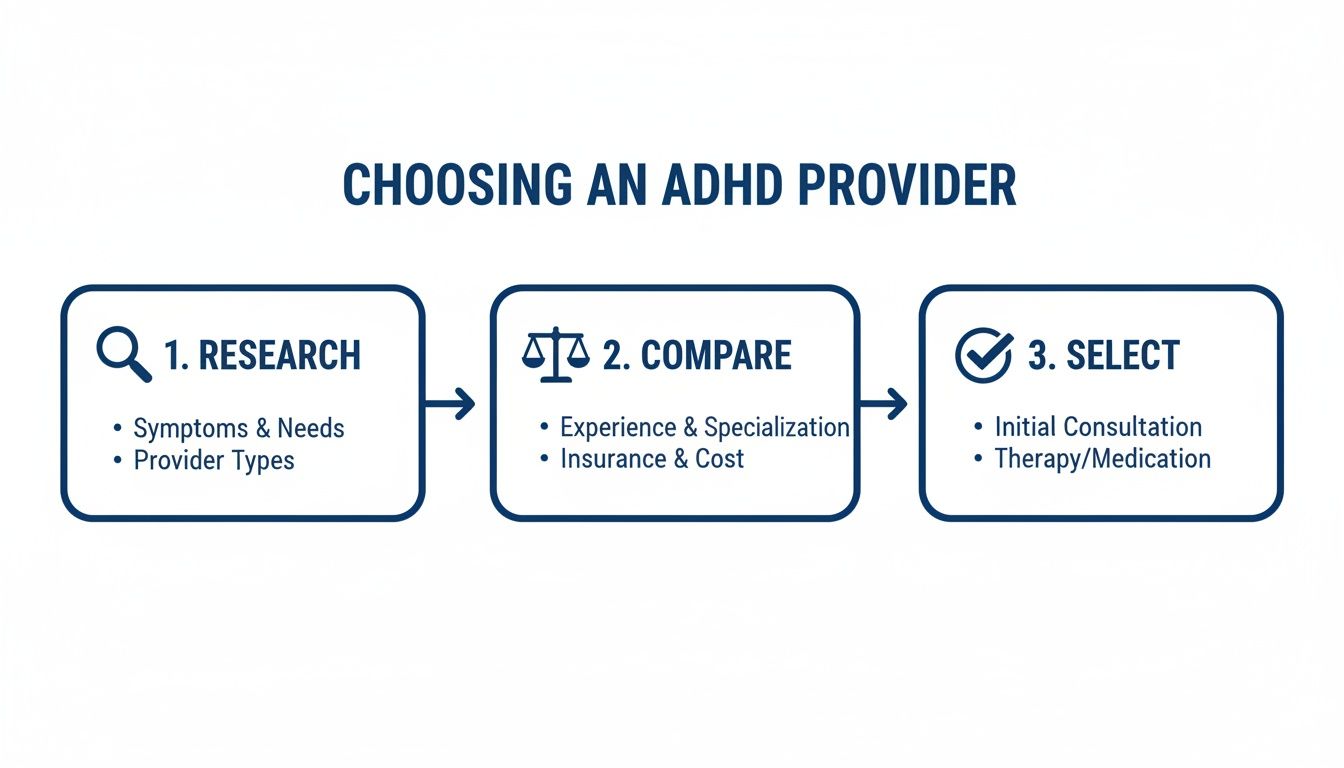
This just shows that the logical process of researching, comparing, and then selecting a clinic is the foundation for making a successful request.
Handling the Conversation with Confidence
When you're in the appointment, aim to be a partner in your healthcare, not just a passive patient. Start by explaining your symptoms and why you suspect ADHD might be the reason. Be open about your personal experiences and the real-world impact they're having on your life.
Once you’ve laid out your concerns, you can introduce your request. A good, non-confrontational way to phrase it is: "Because the local waiting times are so long, I'd like to use my NHS Right to Choose for an ADHD assessment. I've found a provider called [Provider's Name] and I've brought a letter with all their details."
Key takeaway: You aren't asking for a special favour. You are exercising a right that’s part of the NHS Constitution. A calm, informed approach is always going to get you further than a demanding one.
It does happen that a GP might not be familiar with the Right to Choose policy. If they seem unsure or insist you have to use the local service, don't panic. You can politely refer them to the official NHS England guidance on their website – maybe even have the page loaded on your phone, just in case.
If you do get some pushback, stay firm but respectful. You could say something like, "I understand there's a local pathway, but the NHS Constitution gives me the right to choose any qualified provider that has an NHS contract. All the information needed for the referral is in the letter I've brought with me." This simple preparation gives you the tools and the confidence to secure your referral, often in a single, well-prepared visit.
So, Your GP Has Sent the Referral. What Now?

Getting your GP to send the referral is a massive step forward, so give yourself a pat on the back. But it’s totally normal to feel a bit in the dark about what happens next. Once your doctor has passed your details to your chosen provider, the process is officially out of your hands for a little while.
Essentially, this part is a waiting game, but knowing the typical steps can make it feel a lot less stressful.
The first thing the provider will do is triage your referral. This is just an administrative check to make sure they have all the right information from your GP and that you’re eligible under the NHS Right to Choose ADHD rules. This can take a few weeks.
Once that’s done, you should get a confirmation directly from the provider, probably by email. Keep an eye out for it! This is your official proof that you're in their system and on the waiting list.
From Waiting List to Assessment Day
After you get that confirmation, you'll likely be sent a pack of pre-assessment questionnaires. These are pretty in-depth forms that will ask about everything from your childhood and school days to the specific challenges and symptoms you're facing now.
Take your time with these and be as honest and detailed as you can. This information is what the clinician will use to build a picture of your life, so it's incredibly important.
Then comes the longest part of the journey: the wait. Depending on which provider you chose and how long their list is, this could be several months. Try to be patient. When you finally reach the top of the queue, they’ll get in touch to book your assessment, which is usually held online over a video call.
A diagnosis isn't the finish line; it's the start of understanding and treatment. The steps that follow—medication titration and establishing shared care—are just as important as the assessment itself.
Life After an ADHD Diagnosis
If you do receive an ADHD diagnosis, the conversation will turn to treatment options. For many, this includes medication, but it’s not as simple as just getting a prescription.
First, you’ll likely join another waiting list for titration. This is a crucial period where a specialist (usually a psychiatrist or specialist nurse) works closely with you to find the right medication and the most effective dose. This process is very personal and can take several months to get right.
Once your medication is stable and working well, the final piece of the puzzle is setting up a Shared Care Agreement. This is a formal arrangement between the specialist provider and your GP. It allows your GP to take over prescribing your medication on an ongoing basis. Getting this agreement in place is vital, as it means you can get your prescription through the NHS instead of paying expensive private fees. It’s all about creating a long-term plan for consistent and affordable care.
Got Questions About Right to Choose for ADHD?
Even with a clear plan, navigating the NHS Right to Choose for ADHD can throw up a few curveballs. That's perfectly normal. Getting your head around the common sticking points beforehand can make a real difference, helping you sidestep potential hurdles and keep things moving.
Let's walk through some of the questions that pop up most often, from who pays for medication to what to do if your GP isn't on board straight away.
Who Actually Pays for My Medication?
This is probably the biggest point of confusion, and the answer isn't a simple yes or no. Your Right to Choose referral covers the heavy lifting: the assessment, the diagnosis, and the crucial titration period where a specialist works out the right medication and dosage for you. What it doesn't cover is the ongoing cost of the prescriptions themselves.
That’s where a Shared Care Agreement (SCA) comes in. Think of it as a formal handover from your specialist to your GP. Once your medication is stable and working well, the provider you chose will arrange this agreement with your GP practice.
- With an SCA in place: Your GP takes over writing your prescriptions.
- The outcome for you: You can pick up your medication from your local pharmacy with a standard NHS prescription. This means you’ll only pay the standard NHS charge (or nothing at all, if you're exempt).
It's vital to get this sorted. Without a signed Shared Care Agreement, you'd be stuck paying the full private cost for your medication every month, which can quickly become unaffordable. A reputable provider will have a smooth, well-trodden path for getting these agreements set up.
What if My GP Says No to a Referral?
It’s incredibly frustrating when a GP refuses to make a referral, but don't let it be a dead end. This usually happens for one of two reasons: either the GP isn't familiar with the Right to Choose rules, or they mistakenly think they can only refer you to the local NHS mental health team.
If you find yourself in this situation, the first step is to stay calm and advocate for yourself politely. A great starting point is to show them the official NHS England guidance on their website, which clearly lays out your rights.
If they still won't budge, there’s a formal process to follow. You can raise a complaint with the Practice Manager. If that doesn't work, you can escalate it to your local Integrated Care Board (ICB)—the organisation responsible for planning NHS services in your area. Taking this official step is often enough to get the GP practice to reconsider.
I Already Have a Private Diagnosis. Can I Use Right to Choose Now?
This is a tricky one. Many people, understandably frustrated with long waits, pay for a private ADHD assessment. The problem often starts when they realise they can't afford the ongoing private prescription costs and look to transfer their care.
Unfortunately, the NHS Right to Choose ADHD pathway isn't designed for this. It’s intended for a first outpatient appointment to investigate a suspected condition. You generally can't use it to transfer care you've already started or to get a second opinion on a private diagnosis. In this scenario, your best bet is to ask your GP for a standard NHS referral, which likely means joining the local waiting list.
At ADHD Private, we've built a free, UK-wide directory to cut through the confusion and help you find the right support, faster. You can compare clinics that accept NHS Right to Choose referrals, check up-to-date wait times, and read verified patient reviews—all in one place. Start your search today at https://adhdprivate.co.uk.