Your Guide to ADHD Right to Choose in the UK
Learn how ADHD Right to Choose lets you bypass long NHS waits for a faster diagnosis. This guide explains your rights, the steps, and how to get started.
Facing the prospect of waiting years for an ADHD assessment on the NHS can feel incredibly frustrating. But what if there was a faster, fully-funded alternative you’re legally entitled to? This is your ADHD Right to Choose, a patient right in England that lets you pick a qualified private provider for your assessment, with the NHS footing the entire bill. It’s an official pathway designed to help you bypass those daunting local waiting lists.
Understanding Your ADHD Right to Choose

Imagine being stuck in a massive queue for a service you desperately need, then finding out there’s a fully-funded express lane you can legally use. That’s exactly what the ADHD Right to Choose offers people in England who are seeking a diagnosis. It’s a powerful patient right, written right into the NHS Constitution, that puts you in the driver’s seat of your own healthcare.
Instead of being automatically put on your local NHS trust's waiting list—which can often mean a wait of several years—you have the legal right to choose a different provider for your mental health assessment. This includes many private clinics that hold contracts to deliver services on behalf of the NHS.
Why This Is Such a Game-Changer
The main benefit boils down to one simple thing: speed. The reality of multi-year waiting lists is a huge barrier for so many people who need life-changing support. The ADHD Right to Choose policy tackles this problem head-on by giving you access to a much bigger network of qualified specialists.
This isn’t some sort of loophole or a private healthcare trick; it's a recognised and official NHS pathway. The process itself is quite straightforward:
- You find a qualified provider that accepts Right to Choose referrals.
- Your GP agrees to send a referral letter to that provider.
- Your chosen clinic carries out the assessment, and the NHS covers the full cost.
The impact of these delays can’t be overstated. Right now, over 549,000 children and adults in England are on an NHS waiting list for an ADHD assessment. In some parts of the country, investigations have found that these waits can stretch to an unbelievable eight years, leaving people struggling without the support they need.
A Simple Analogy
Think of it like getting your car fixed through your insurance. If your car develops a complex engine fault, you don't have to wait months for the dealership's only approved garage to get to it. Your insurance policy lets you pick any certified specialist mechanic who can do the job sooner.
In this situation, your GP is like the insurance agent, your referral is the claim, and the private ADHD clinic is the specialist mechanic. The best part? Your standard "policy"—the NHS—pays the whole bill. This puts the power in your hands, making a faster route to diagnosis and treatment not just a possibility, but your officially sanctioned right. To get started, you can learn more about how to navigate the ADHD Right to Choose process.
Confirming You Qualify for Right to Choose
Before you start drafting referral letters or researching clinics, the first step is to make sure the ADHD Right to Choose pathway is actually an option for you. The criteria are pretty straightforward, but getting them clear in your head now will save you time and give you the confidence to push forward. Think of it as your pre-flight check.
The good news? For most adults in England hoping to get an ADHD assessment, this right applies. The rules are designed to be inclusive, focusing on where you're registered for healthcare, not on how severe your symptoms might be at this early stage.
The Core Eligibility Checklist
At its heart, qualifying for Right to Choose comes down to just a few key points. If you can say 'yes' to the following, you're almost certainly eligible to use this powerful NHS right.
- You are registered with a GP in England. This is the big one. Your GP practice has to be in England for Right to Choose to apply.
- You're looking for a mental health assessment. The right specifically covers referrals for mental health conditions, and adult ADHD fits squarely under that umbrella.
- The provider you choose has a contract with an NHS England Commissioning Hub. This is crucial – not every private clinic can accept these referrals. The one you pick must be an approved NHS provider.
It's also worth noting this pathway is available to both children and adults, making it a fantastic option for individuals and families alike.
A quick but important note on location: your legal Right to Choose for mental health is specific to England. This means the scheme doesn't apply if you live and are registered with a GP in Scotland, Wales, or Northern Ireland, as they operate under different healthcare systems.
Clearing Up Common Misunderstandings
One of the biggest hurdles people face is confusion – both their own and sometimes their GP's. A common question is, "Can my GP refuse my request because we have a local service?" The answer is a clear no. Your right to choose is a legal entitlement baked into the NHS Constitution, and it overrides local commissioning arrangements. They can't force you to use a local service if you'd prefer to choose a different qualifying provider.
Likewise, you don't need to have some kind of pre-diagnosis or "prove" your symptoms are bad enough to get a referral. That's what the assessment is for! Your only job right now is to meet the simple criteria to get the ball rolling. For a more detailed look at the journey ahead, you can learn more about the specifics of the Right to Choose ADHD process.
How to Start Your Right to Choose Journey
Starting your ADHD Right to Choose journey can feel like a massive undertaking, but it’s more straightforward than you might think. By breaking it down into a clear plan, you can turn a potentially confusing process into a series of simple, manageable actions.
This guide will walk you through everything you need to do, from the initial research to that all-important GP appointment. Think of it as your personal roadmap to getting an ADHD assessment referral—being prepared is the secret to a smooth and successful start.
Step 1: Research and Choose Your Provider
First things first, you need to decide which clinic you want your GP to refer you to. Not every private ADHD clinic is eligible for Right to Choose; they absolutely must hold a contract with an NHS England commissioning body. The good news is, many reputable providers do.
When you're looking at clinics, think beyond just their eligibility. You need to find a place that really fits your needs. Here are a few key things to look out for:
- Current Waiting Times: How long will it be from the moment you're referred to your actual assessment? This is often the biggest motivator for using Right to Choose, so check the latest estimates on the clinic's website.
- The Assessment Process: Do they offer assessments online, or will you need to travel? An online option gives you far more flexibility and can be a game-changer.
- Follow-Up Care: What happens after a diagnosis? Dig into their process for medication titration and how they handle setting up a Shared Care Agreement with your GP.
A brilliant way to get a feel for a provider is by reading what other patients have to say. Checking out verified reviews on platforms like Trustpilot or Google can give you honest, real-world insights that help you make a much more informed decision.
Before you go any further, just double-check you meet the core criteria for eligibility. This flowchart breaks it down.
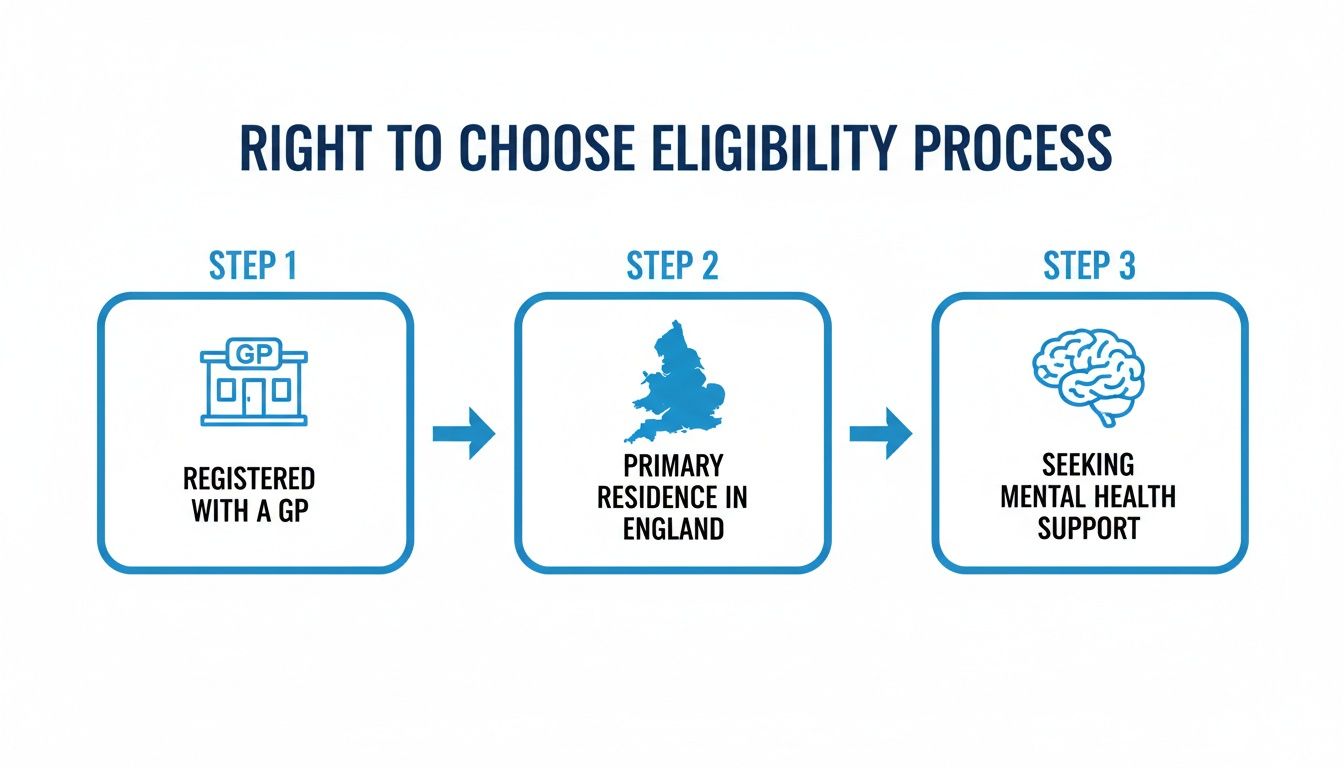
As you can see, being registered with a GP in England is the essential first step for using this NHS right for a mental health condition like ADHD.
Step 2: Get Ready for Your GP Appointment
Once you’ve settled on a provider, it’s time to book an appointment with your GP to ask for the referral. Preparation is everything here. Some GPs might not be fully up to speed on the Right to Choose policy, so arriving with all the right information makes the conversation go much more smoothly.
Your main goal is to make the referral process as quick and easy as possible for your GP. You can achieve this by getting all the required documents and information together beforehand.
Here’s a simple checklist of what to bring:
- A Completed Assessment Form: Most Right to Choose providers have their own pre-assessment or referral forms on their website. Download this and fill it out completely before you go.
- A Referral Letter Template: Many clinics also provide a template letter for your GP to complete or sign. Having this ready saves your GP a huge amount of time and ensures all the necessary clinical details are included.
- Information on Right to Choose: It can be helpful to print a page from the official NHS website explaining the Right to Choose policy. This is a useful backup just in case your GP is unfamiliar with it.
Approaching this conversation as a team is the best strategy. You're not making a demand; you're simply informing your GP of your legal right and giving them all the tools they need to help you. This collaborative approach makes the whole process smoother for everyone involved.
To help you and your GP stay on the same page, we've put together a simple checklist outlining who does what.
Patient and GP Action Checklist
This table breaks down the responsibilities for both you and your GP, ensuring nothing gets missed and your referral is processed without a hitch.
| Step | Your Action | GP's Action |
|---|---|---|
| 1. Research | Choose a qualifying provider and check their current waiting times and referral requirements. | N/A |
| 2. Paperwork | Download and complete the provider's pre-assessment/referral forms from their website. | N/A |
| 3. Appointment | Book a GP appointment. Bring the completed forms and the GP referral letter template with you. | Review the paperwork and discuss the referral request. |
| 4. Referral | Clearly request a referral under Right to Choose to your selected provider. | Complete and sign the referral letter provided. Attach your completed forms. |
| 5. Submission | N/A | Send the complete referral package to the chosen clinic via their specified method (e.g., email, portal). |
| 6. Confirmation | Ask your GP surgery to confirm when the referral has been sent. | Provide confirmation to you that the referral has been sent. |
Following these steps together helps ensure a successful referral, getting you on the path to assessment much faster.
Step 3: Communicate Clearly With Your GP
During your appointment, be clear and calm when you state your request. You don't need to go into a deep dive on why you think you have ADHD at this point—that’s what the assessment is for. Instead, keep the focus on the practical steps needed for the referral.
You can start the conversation with something simple and direct, like:
"I've been struggling with symptoms that I believe could be adult ADHD, and I'd like to be assessed. I've researched my options under the NHS Right to Choose and would like to be referred to [Clinic Name]. I’ve brought all the forms with me today to make it as easy as possible."
If your GP seems hesitant or suggests you have to use the local service, you can gently refer them to the NHS Constitution. Remind them that your Right to Choose a qualifying provider is a legal entitlement. The key is to be polite but firm, showing that you’ve done your homework.
Step 4: The Referral and What Happens Next
Once your GP agrees to the referral, they will need to send the completed letter and your forms to the clinic you've chosen. It’s always a good idea to follow up and ask for confirmation once this has been sent.
After the clinic receives your referral, they will start processing it and will get in touch with you directly. They’ll typically send a confirmation email and give you an idea of the timeframe for your assessment. From this moment on, the clinic will be your main point of contact, not your GP.
Now comes the waiting game, so be patient. While the ADHD Right to Choose pathway is significantly faster than standard NHS routes, it can still take several weeks or a few months to get an appointment, depending on the clinic's demand. But you’ve done it—you have successfully started your journey towards getting the clarity and support you need.
Finding the Best Right to Choose Clinic for You

With more and more providers getting on board with the ADHD Right to Choose pathway, you suddenly have choices. This is brilliant news, but it can also feel a bit daunting. How do you actually sift through all the options to find the clinic that’s right for you?
Picking a clinic isn’t just about bagging the shortest waiting list. Think of it as choosing a partner for a really important part of your health journey. This mindset helps you look beyond the initial assessment and focus on what really counts.
What you're looking for is a provider who is not only clinically solid but also works for you on a practical level, from their communication style to how they handle appointments. A little bit of research now will save you a world of hassle later on, making the entire process feel much smoother.
Key Factors to Compare and Consider
To make a good decision, you need a plan. Instead of getting bogged down in endless clinic websites, try to focus your comparison on a few key areas. This helps you weigh up each option methodically and see which one truly stands out.
Here are the most important things to look into:
- Current Waiting Times: This is usually the big one. Check the clinic’s website for the latest estimates, but look for two numbers: the wait from referral to assessment, and the separate (and often long) wait for medication titration to begin.
- Assessment Format: Do they do everything online, or will you need to travel for a face-to-face appointment? For a lot of people, the sheer convenience of a video call assessment is a massive plus.
- Medication and Follow-Up Process: How do they handle the titration period where your medication is adjusted? Crucially, you need to see clear information about their process for setting up a Shared Care Agreement with your GP. This is essential for getting your prescriptions on the NHS long-term.
- Communication and Support: How do you get in touch with them? Is there a patient portal, a dedicated email address, or a phone number? Good, clear communication can make all the difference to your experience.
One of the most powerful tools you have is the experience of other patients. Don't just read the glossy testimonials on a clinic's homepage. Dig into independent, verified reviews on places like Google and Trustpilot to get the real story.
Looking Beyond the Marketing Spiel
A slick website is a good start, but it doesn’t paint the full picture. The best providers—like well-known clinics such as Psychiatry-UK, ADHD 360, and Clinical Partners—have earned their reputations through solid service and patient care, and you’ll see this reflected in what people are saying about them online.
When you’re reading reviews, look for recurring themes. Are people consistently praising the clinic’s communication, the quality of their assessments, or the support they received during titration? On the flip side, are there repeated complaints about admin delays or it being impossible to get hold of someone? This gives you a much more grounded, realistic view.
To make this easier, you can use a dedicated directory to compare Right to Choose ADHD clinics and see their services listed side-by-side.
This is a big decision, so give yourself time. Maybe create a shortlist of two or three clinics that feel like a good fit. Then, do one last comparison based on the points above. That way, you can make your final choice feeling confident that you’ve picked the best possible starting point for your ADHD journey.
Understanding Shared Care Agreements After Diagnosis
Getting your ADHD diagnosis is a massive relief, but it’s really just the start of the next chapter: figuring out your long-term care. The next big step on your path is getting a Shared Care Agreement (SCA) sorted, which is the key to making your ongoing treatment affordable and straightforward.
Think of an SCA as a formal handshake between your specialist at the private clinic and your local NHS GP. It’s essentially a collaborative care plan. While the specialist continues to oversee your overall treatment strategy, your GP agrees to manage the day-to-day practicalities, like writing your prescriptions. This means you can get your medication for the standard NHS prescription fee.
Without this agreement in place, you’d be stuck paying for private prescriptions month after month, and the costs can be eye-watering. The SCA is the crucial link that brings your private diagnosis back into the NHS system for your ongoing care.
How the Shared Care Process Works
Once your specialist has worked with you to find the right medication and a stable dose – a process called titration – the clinic will formally offer the Shared Care Agreement to your GP. This is the moment you transition from purely private specialist care to a team-based approach with the NHS.
Here’s what that typically looks like:
- Finding Your Dose (Titration): You’ll work closely with your specialist to test different medications and dosages until you find what works best for you. This can take anywhere from a few weeks to a few months.
- The Formal Proposal: Once your medication is stable, the clinic sends a detailed letter and the SCA document to your GP. It lays out your diagnosis, treatment plan, and a clear breakdown of who is responsible for what.
- GP Acceptance: Your GP will review everything. If they are happy to proceed, they’ll sign the agreement and officially take over prescribing your medication.
- Ongoing Care: From then on, you can pick up your repeat prescriptions from your local pharmacy for the standard NHS price. You’ll still have annual reviews with your ADHD specialist to make sure everything is on track.
This approach is designed to give you the best of both worlds: the specialist expertise of an ADHD consultant combined with the convenience and affordability of getting your prescriptions from your local GP.
What if My GP Is Hesitant to Agree?
While most GPs are happy to help, it's not unusual for some to be a bit cautious about signing an SCA. This hesitation often comes down to worries about increased workload, clinical responsibility, or simply not being familiar with the private provider you used. If you run into this, don't panic. A calm, informed conversation can make all the difference.
It’s important to remember that GPs aren't obligated to accept an SCA, so your best bet is to approach it as a collaborative discussion. You can gently explain that your provider is an approved NHS contractor and point out that the agreement clearly states the specialist remains responsible for the treatment plan and annual reviews.
The need for these kinds of partnerships is only growing. Prescriptions for ADHD medication in England doubled to nearly 278,000 patients by 2023-24. Yet, with an estimated 2.5 million people in the UK living with ADHD, only around 15-25% are currently medicated. This makes effective care models like shared care more critical than ever. You can read more about these ADHD prescription trends to understand the scale of the issue.
By staying informed and keeping the lines of communication open with both your clinic and your GP, you can navigate this final step and secure the continuous, affordable care you need to thrive.
Your Top Questions About ADHD Right to Choose, Answered
Navigating any part of the NHS can feel like learning a new language, and the ADHD Right to Choose pathway is no exception. It’s a brilliant system, but it’s completely normal to have questions and concerns about how it all works in practice.
Think of this section as your go-to FAQ. We’re going to tackle the most common worries and "what ifs" that pop up, giving you clear, straightforward answers. The goal here is to cut through the jargon and uncertainty so you can move forward with confidence.
Can My GP Refuse My Right to Choose Referral?
This is easily the biggest worry for most people, so let's clear it up straight away: no, a GP cannot legally refuse your request as long as you meet the basic criteria and have chosen a qualified provider. This isn't just a guideline; it's a legal right embedded in the NHS Constitution for England.
That said, "cannot refuse" doesn't always mean you won't hit a stumbling block. Sometimes, a GP might hesitate, but it’s rarely out of malice. It’s usually down to one of three things:
- They're simply not aware of it. Many GPs are fantastic, but they can't be experts on every single policy, especially one that’s used less frequently than standard referrals. They might not know it applies to mental health.
- They're used to the local system. Your GP practice might have a default process of referring only to local NHS services and may mistakenly believe this takes priority over your national right.
- They don't recognise the clinic. If they haven't heard of the provider you've chosen, they might be worried about its legitimacy and their professional responsibility.
If you find yourself in this situation, the best approach is to be prepared, polite, but firm. Walking into your appointment with a printout of the official NHS guidance on Right to Choose, along with clear information about your chosen clinic, can resolve these issues almost immediately. Remember, it's your right, not a special request they can choose to deny.
Are There Any Hidden Costs I Need to Pay?
For a genuine Right to Choose referral, the core services are funded entirely by the NHS. From your first assessment right through to the end of your medication titration period, you shouldn't have to pay a penny for the clinic's time.
When you use your ADHD Right to Choose, the private clinic you've selected will bill your local Integrated Care Board (ICB) directly. You are not the one footing the bill. This means no consultation fees, no assessment charges, and no hidden extras for the clinical service itself.
However, there is one crucial cost you absolutely need to plan for: prescriptions.
- During Titration: While the clinical team is working with you to find the right medication and dosage, they will issue private prescriptions. You will have to pay the full price for the medication at the pharmacy. This can be a real shock if you're not prepared, often costing between £50 to over £100 every month.
- After Titration: Once your medication is stabilised, the clinic will work with your GP to set up a Shared Care Agreement. As soon as your GP takes over the prescribing, you'll only pay the standard NHS prescription charge.
It’s vital to budget for those initial private prescription costs, as the titration phase can last several months.
What Happens if I Am Not Diagnosed with ADHD?
It's completely understandable to feel invested in a particular outcome, but it’s important to remember that an assessment is an investigation, not a rubber stamp. Sometimes, the evidence points to something other than ADHD.
If the clinician determines that you don't meet the diagnostic criteria for ADHD, they won't simply send you away with a "no." A good provider will always ensure you have a clear path forward.
- You'll Get a Detailed Report: They will give you a full report that explains exactly how they reached their conclusion.
- They'll Suggest Other Possibilities: The report will often highlight other potential reasons for your difficulties, such as anxiety, depression, or autism, which can all present with overlapping traits.
- They'll Recommend Next Steps: You'll be given clear advice on what to do next, which almost always involves sharing the report with your GP to explore different routes for support.
An outcome like this isn't a failure or a dead end. It’s a crucial piece of the puzzle. The assessment still provides immense value by ruling things out and pointing you in a more accurate direction, and it remains fully funded by the NHS regardless of the result.
What Is a Realistic Timeline from Referral to First Appointment?
Using Right to Choose is definitely much faster than waiting for a local NHS assessment, but it’s a mistake to think it’s an instant solution. Timelines vary wildly between clinics and can change quickly depending on how many people are applying.
Here’s a more realistic breakdown of what to expect:
- GP Referral to Clinic Acceptance: This initial step is usually pretty quick. It might take a few weeks for your GP to send the paperwork and for the clinic's admin team to process it and confirm they've received it.
- Acceptance to Assessment: This is where the real waiting happens. For some clinics, it might be just a few months, but for the most popular ones, you could be looking at over a year. Demand has shot up recently.
- Assessment to Titration: This is the "hidden wait" that catches many people by surprise. Even after you get a diagnosis, there's often a separate queue to start the medication titration process. With some of the bigger providers, this wait alone can be up to 10 months.
Before you settle on a clinic, always check their website for the very latest waiting time estimates. Knowing the reality of the timelines upfront helps you manage your expectations and choose a provider that truly fits your needs.
At ADHD Private, we've created a free, UK-wide directory to help you find the right clinic for your needs. Compare transparent pricing, check real-time wait estimates, and read verified patient reviews to make a confident and informed decision on your ADHD journey. Start exploring your options today at https://adhdprivate.co.uk.