Private ADHD Assessment London: Trusted Quick Options
Discover private ADHD assessment options in London, with costs explained and tips to prepare for a quick, trusted appointment.
Written and maintained by the ADHD Private editorial team, drawing on NHS, NICE and ADHD UK guidance. This is general information, not medical advice.
If you're looking for a private ADHD assessment in London, you've probably hit the wall of long NHS waiting lists. It’s a frustrating place to be, but taking matters into your own hands can be a massive step towards getting the clarity you need. This guide is your roadmap to finding a great clinic, understanding the costs, and walking into your appointment prepared.
Why a Private Assessment Can Be a Game Changer
Let’s be honest, the choice to go private often comes from sheer necessity. When you're wrestling with focus, struggling to stay organised, or dealing with emotional ups and downs every day, the thought of waiting years for an NHS appointment can feel completely overwhelming. The challenges of unmanaged ADHD don't just pause while you're on a waiting list; they keep affecting your job, your relationships, and your mental health.
Going private is about taking back control. It’s a way to get clear answers without getting stuck in systemic delays. Instead of waiting indefinitely, you can get a full evaluation from a specialist within weeks, which is the essential first step towards getting the right support and treatment.
The Reality of NHS Waiting Times
The delays in the public system are staggering. Right now, there's an estimated 500,000 people in England waiting for an ADHD assessment. What's even more concerning is that over a quarter of them have been waiting for two years or more. This isn't just a backlog; it's a crisis that has forced people to look for alternatives.
This isn't just an inconvenience. For many, that waiting period is time lost—time they could have spent understanding their condition and developing strategies to thrive. A private assessment offers a practical way around this bottleneck.
"Choosing a private assessment isn’t about skipping a queue; it’s about making a strategic decision for your mental health and future. It’s an investment in understanding yourself sooner, so you can start building effective coping strategies without losing more time."
What Are Your Options?
While going private is the fastest route, it's good to know all your options. The NHS Right to Choose (RTC) programme can be a middle ground, letting you choose an approved private provider for an NHS-funded assessment. But be aware, even this pathway can come with its own waiting lists and paperwork.
In the end, it all comes down to what works for you. A private ADHD assessment in London offers the most direct access to specialist care, a much faster diagnosis, and a quicker start on a treatment plan that can help you move forward with your life.
How to Find the Right London ADHD Clinic for You
Choosing a clinic for a private ADHD assessment in London can feel like searching for a needle in a haystack. With so many options out there, it’s easy to get overwhelmed. But if you focus on a few key factors, you can cut through the noise and find a provider that’s a genuine fit for you.
Ultimately, this isn't about finding the "best" clinic in some abstract sense. It’s about finding the right one for your specific circumstances. That means looking past the slick websites and digging into the details—from the specialists they have on staff to the kind of support they offer after a diagnosis.
This flowchart maps out the typical decision-making process. As you can see, the long NHS waits are often what pushes people to look at private options in the first place.
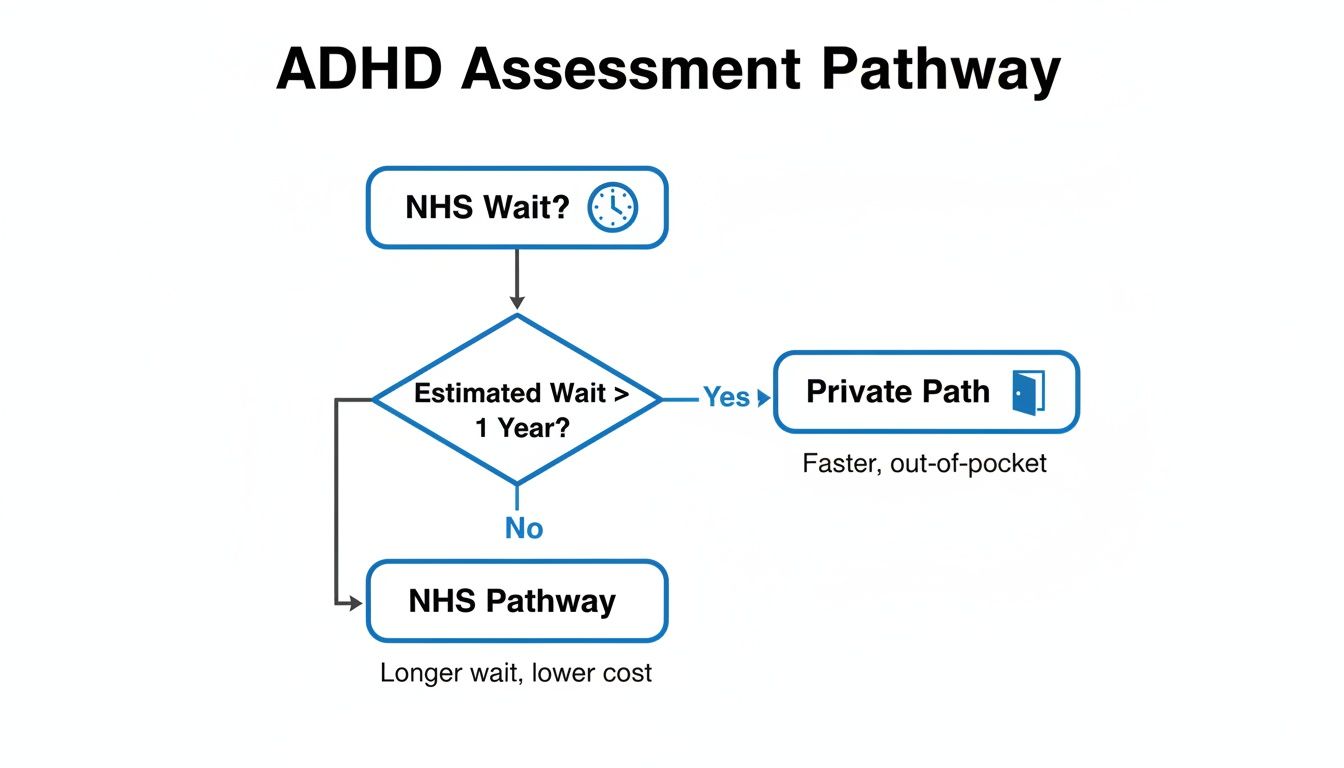
As the diagram shows, the significant delays in the NHS pathway are a massive factor for many people considering a private ADHD assessment in London.
Start with a Reputable Directory
Rather than diving into a generic Google search that will throw a bit of everything at you, a far better starting point is a specialised directory. These platforms are built to help you compare clinics using consistent, reliable information, which saves you a ton of time.
A good directory will let you filter providers by the criteria that matter most, making your search far more efficient. To kick things off, I always recommend looking for specialist-led clinics that have plenty of verified patient reviews.
When you're ready to dive in, you can use a directory to find private ADHD clinics in London and start filtering them based on your needs.
Key Factors to Compare
Once you’ve got a shortlist of potential clinics, it's time to get into the nitty-gritty. Your goal is to find a practice that is not only clinically excellent but also works for you logistically and aligns with your long-term treatment goals.
Here’s what I’d be looking at:
- Clinician Credentials: Who is actually doing the assessment? The gold standard is a clinic led by a GMC-registered Consultant Psychiatrist. This ensures you're getting the highest level of expertise.
- Assessment Process: How thorough is their evaluation? A proper assessment is comprehensive. It should rule out other potential conditions, not just feel like a quick online checklist.
- Post-Diagnosis Support: What happens after the diagnosis? Check if they offer medication titration (the crucial process of finding the right medication and dose) and ongoing follow-up care.
- Shared Care Agreements: Does the clinic have a solid track record with NHS Shared Care Agreements? This is absolutely vital for making long-term medication affordable.
- Patient Reviews: What are real patients saying? Look for detailed reviews on independent platforms that cover the whole experience, from the first phone call to follow-up appointments.
Quick Comparison of London ADHD Clinic Features
This table gives you a snapshot of what to look for when comparing clinics on a directory, helping you prioritise what matters most to you.
| Clinic Feature | Example Clinic A | Example Clinic B | What to Consider |
|---|---|---|---|
| Lead Clinician | Consultant Psychiatrist | ADHD Specialist Nurse | A psychiatrist can diagnose and prescribe for more complex cases. |
| Wait Time | 2-4 weeks | 8-12 weeks | How quickly do you need an assessment? A shorter wait often costs more. |
| Assessment Cost | £950 | £700 | Is the price all-inclusive? Check for hidden fees for reports or letters. |
| Follow-up Costs | £250 per session | £180 per session | How many follow-ups are typically needed during titration? |
| Shared Care | Established process | Case-by-case basis | Ask about their success rate with local GP surgeries. |
| Online/In-Person | Online only | Both options available | Do you prefer the convenience of remote or the reassurance of face-to-face? |
Comparing clinics side-by-side like this makes it much easier to spot the one that ticks all your boxes, balancing cost, speed, and the level of clinical support.
Spotting Red Flags and Green Flags
As you research, you’ll start to notice patterns that separate the good from the not-so-good. Learning to spot these signs can save you a lot of time, money, and stress down the line.
A major red flag is a lack of transparency. If a clinic's website is vague about its clinicians, its assessment process, or its pricing, be very cautious. The same goes for any provider promising an instant diagnosis or aggressively pushing one particular treatment.
On the flip side, a big green flag is clear, detailed information. A reputable clinic will be proud to show off its team's credentials, will provide a step-by-step overview of the assessment journey, and will have transparent, itemised pricing for everything.
A key indicator of a trustworthy clinic is its willingness to talk about post-diagnosis pathways right from the start, including the potential bumps in the road with securing a Shared Care Agreement with your GP. It shows they’re invested in your long-term care, not just a one-off assessment.
Another really positive sign is a clinic that provides helpful resources like blogs, FAQs, or guides. It shows they're committed to patient education. Taking the time to do this vetting work upfront is probably the single most important step you can take. It ensures your investment leads to a credible diagnosis and a treatment plan that actually works for you in the long run.
Decoding the Full Cost of a Private Assessment
When you start looking into a private ADHD assessment in London, it’s natural to focus on the headline price for the diagnosis. But that initial fee? It's really just the starting point. To avoid any nasty surprises later on, you need to understand the full financial picture from day one.
Think of the total cost in three main stages: the assessment itself, the medication titration period, and the long-term management. Each part has its own costs, and knowing what to expect helps you budget properly and, crucially, ask the right questions before you commit.
The Initial Assessment Fee
This is the most straightforward part of the bill. In London, a comprehensive diagnostic assessment will typically set you back anywhere from £700 to over £1,500. This figure should cover the time with the clinician, the diagnostic report, and a detailed initial treatment plan.
But don't take it for granted. Before you book, get clarity on what that fee actually includes. I always tell people to ask:
- Is the full diagnostic report included in this price, or is that an extra charge?
- Does the fee cover a follow-up appointment to discuss the diagnosis?
- Will I be charged extra for letters to my GP or workplace?
A good, transparent clinic won't hesitate to give you a clear breakdown. This first payment gets you the diagnosis, but the next phase is where the ongoing costs really start to kick in.
Costs During Medication Titration
If you and your specialist decide medication is the right path, you’ll begin what’s called the titration phase. This is just the medical term for the process of carefully finding the right type of medication and the most effective dose for you. It’s not a one-and-done thing; it can take several weeks, sometimes a few months, to get it just right.
Throughout this period, you’ll have a series of follow-up appointments, and each one comes with a fee, usually between £180 and £350. On top of that, you'll be paying for the medication itself on a private prescription, which costs a lot more than a standard NHS one.
A key thing to remember: The titration period is often the most unpredictable part of the budget. How many appointments you'll need comes down to how you personally respond to the treatment. It’s smart to plan for at least two to four follow-up sessions.
Reducing Long-Term Costs with a Shared Care Agreement
Once you’re settled on a stable medication dose, the aim is usually to set up a Shared Care Agreement (SCA) with your NHS GP. This is a formal arrangement where your GP agrees to take over the repeat prescribing on the NHS. Your private specialist still oversees your overall ADHD care, but your GP handles the prescriptions.
Getting an SCA in place is the single biggest step to making long-term treatment affordable. An NHS prescription has a small, fixed cost, whereas a private one could easily be over £100 a month.
Even with an SCA, you’re not done with private costs. To keep the agreement active, you'll need a mandatory annual review with your private specialist. Expect this to cost between £250 and £500. It's important to know that skipping this annual check-up is the most common reason GPs withdraw from a Shared Care Agreement.
If you want a bit more detail on the whole journey from start to finish, you can learn more about how a private ADHD diagnosis works in the UK.
By mapping out all these potential costs—the assessment, titration, private prescriptions, and annual reviews—you can build a realistic budget and move forward with confidence.
Looking for a private ADHD assessment?
Answer a few questions and we’ll shortlist clinics that fit — comparing price and waiting time.
How to Prepare for Your Assessment Appointment
You’ve booked your private ADHD assessment in London—the big administrative hurdle is cleared. Now, the focus shifts to getting ready for the appointment itself. This isn't just about ticking boxes; it's about pulling together the story of your life so you can give the clinician a clear, honest picture of your experiences. A bit of prep work now can make a world of difference, helping you feel less anxious and ensuring the assessment is as accurate as possible.
Think of it this way: the clinician has never met you. It’s your job to provide them with the evidence they need to understand your lifelong patterns. This means digging up specific, real-world examples of how you think ADHD traits have shown up, not just last week, but right back to your school days.

Gathering Your Essential Documents and Examples
Your personal history is the bedrock of an ADHD assessment. Clinicians are looking for a persistent pattern of behaviour, so having documented proof and specific memories is incredibly powerful. I always suggest starting a dedicated folder—physical or digital—to keep everything in one place.
Here’s a practical rundown of what to start collecting:
- Childhood School Reports: These are pure gold. Look for tell-tale comments from teachers like, "easily distracted," "disruptive," "daydreams constantly," or the classic, "has so much potential but doesn't apply themself." These are strong indicators of early challenges.
- Work Performance Reviews: Scan these for recurring themes. Are you consistently praised for your creative ideas but pulled up on missed deadlines, messy admin, or poor timekeeping? This can paint a vivid picture of your struggles in a professional environment.
- Anecdotes from Your Life: Jot down specific examples. Think about times you’ve battled with procrastination, acted impulsively, struggled with big emotions, or felt completely disorganised. Maybe you missed a crucial flight because you lost track of time or a work project descended into chaos despite your best efforts.
- Input from People Who Know You: If you feel comfortable, ask a parent, an older sibling, or your partner for their honest observations. They might remember things from your childhood you’ve completely forgotten or offer a valuable outside perspective on your current habits.
You're not trying to diagnose yourself here. The point is to gather the raw material for the expert to analyse. The more detailed and specific you are, the more effectively the clinician can do their job.
Understanding What Happens on the Day
Knowing what the assessment actually involves can really help calm the nerves. A good assessment is a deep, structured conversation—it’s not an exam or an interrogation. The clinician is there to explore your experiences, rule out other possible causes for your difficulties, and see if you meet the diagnostic criteria for ADHD.
Most private assessments follow a similar path, centring on a detailed clinical interview. This conversation will dig into your developmental history, from your earliest memories right up to your current life at work and home. Be ready to talk candidly about how you get on in different situations.
To ensure a thorough diagnosis, clinicians use standardised tools. One of the most common is the DIVA-5 (Diagnostic Interview for ADHD in Adults). This is simply a structured way for them to go through the official criteria, asking you for concrete examples of how each trait has affected you in both childhood and adulthood.
A Few Tips for the Assessment Itself
On the day, your main job is to be open and honest. It can feel really vulnerable to talk about your struggles, but holding back will only make the process less accurate. Remember, the clinician is there to help, not to judge.
To get the most out of your appointment, keep these points in mind:
- Bring your notes. Seriously, don't rely on your memory, especially when you’re nervous. Have your folder of documents and written examples ready to go. It is perfectly fine—and even helpful—to refer to them.
- Just be yourself. Don't try to mask your difficulties or present a "perfect" version of yourself. If you're struggling, say so. If you’ve developed complex coping mechanisms, explain what they are and how much energy they take to maintain.
- Ask questions. If the clinician asks something and you don't understand, ask them to clarify. This is your assessment. You have every right to be an active participant.
By putting in this groundwork, you’re setting yourself up for a productive and insightful appointment. You’ll walk in feeling more in control, knowing you’ve done everything you can to get a clear and accurate outcome.
What Happens After an ADHD Diagnosis?
So, you have your diagnosis. That moment can bring a huge mix of emotions—relief, validation, maybe a bit of apprehension about what comes next. It’s important to remember that a diagnosis isn’t the end of the road; it’s the starting line. Now, you can begin building a support system that’s genuinely designed for you, blending professional guidance with practical strategies to manage your symptoms and truly start to thrive.
Think of the diagnosis as the "what"—it gives you a name and a framework for the challenges you've been facing. The next step is the "how." This is where you create a treatment plan, explore your options, and discover what works for your unique brain. It’s a proactive journey of learning, adapting, and figuring out how to make your ADHD work for you, not against you.

Exploring Your Treatment Pathways
Following your diagnosis, your clinician will walk you through the different treatment options available. It’s rarely about picking just one thing. In my experience, the most successful outcomes come from a combination of medication and therapy or coaching.
The main paths you’ll likely discuss are:
- Medication: Often the first port of call for tackling the core symptoms of ADHD like inattention, hyperactivity, and impulsivity. For many, it's a game-changer.
- Therapy and Coaching: These non-medical supports are absolutely crucial for building practical coping skills, developing better habits, and working through the emotional and behavioural hurdles that ADHD often throws your way.
This is your life, so have a really open conversation with your specialist about the pros and cons of each route. Your lifestyle, symptoms, and personal preferences should all be part of that decision.
The Medication Titration Process Explained
If medication seems like the right fit, the next stage is a careful process called titration. This is a highly collaborative phase where your specialist works closely with you to find the right type of medication and, just as importantly, the perfect dose.
There's no magic formula here. Your clinician will start you on a very low dose and check in regularly. During these follow-ups, you'll talk about what’s working, what isn't, and any side effects you might be feeling. The dose is then tweaked bit by bit until you hit that sweet spot: maximum symptom relief with minimal side effects.
The titration phase definitely requires patience. It can take several weeks or even a few months to get right, but sticking with it is essential for a safe and effective long-term treatment plan.
Building a Holistic Management Plan
While medication can do wonders for the neurological side of ADHD, it won't teach you how to organise your life or manage your time. That's where the other pillar of your plan comes in: therapy and coaching.
Cognitive Behavioural Therapy (CBT) is brilliant for adults with ADHD. It’s a very practical, goal-focused therapy that helps you untangle unhelpful thought patterns and behaviours. A good therapist who specialises in ADHD can give you concrete tools for tackling procrastination, improving emotional regulation, and managing daily overwhelm.
ADHD Coaching offers another fantastic layer of support. A coach is your accountability partner, helping you set realistic goals and build the systems and habits you need to succeed at work and at home. They help you put all the theory into practice.
This two-pronged approach ensures you’re not just managing symptoms, but also building the real-world skills needed to navigate life with more confidence.
The Importance of Accessing Treatment
Despite how effective these treatments are, there’s a shocking gap in care here in the UK. Data shows that only 26.6% of children and a mere 15.6% of adults who likely have ADHD are receiving medication for it.
We've seen an 18% yearly jump in ADHD prescriptions since the pandemic, but this points more to a rise in awareness than it does to closing the treatment gap. The real-world consequences are stark: studies suggest that 20-34% of young people classified as NEET (Not in Education, Employment, or Training) probably have undiagnosed ADHD. You can find more of these eye-opening stats and their impact on the ADHD UK website.
Getting a diagnosis and starting a treatment plan is a massive step towards bucking these trends and building a more stable, fulfilling future for yourself.
Your Questions About Private ADHD Assessments, Answered
Deciding to get a private ADHD assessment is a big step, and it’s totally natural to have a lot of questions buzzing around your head. After all, it's a significant investment in your health and future. Let’s tackle some of the most common queries I hear, giving you the clear, straightforward answers you need to feel confident moving forward.
Think of this as the final piece of the puzzle, designed to clear up any lingering doubts before you book that first appointment.
Will My Private Diagnosis Actually Be Recognised by the NHS?
This is probably the biggest question on everyone's mind. The short answer is: yes, but it’s not a given. The NHS will generally respect a diagnosis from a reputable private clinic, particularly one conducted by a GMC-registered Consultant Psychiatrist.
The key word here is reputable. GPs are becoming more and more cautious, and for good reason. They’re seeing an influx of reports from providers offering quick, checklist-style assessments that just don't meet clinical standards.
For the NHS to accept your diagnosis, especially for a Shared Care Agreement, the report needs to be thorough. It must detail the entire diagnostic process, show that other conditions were considered and ruled out, and lay out a clear, sensible treatment plan. This is precisely why choosing a high-quality, specialist-led clinic is so critical—it builds the trust needed for your GP to collaborate on your care.
Can My GP Just Refuse a Shared Care Agreement?
Unfortunately, yes, your GP can refuse to enter into a Shared Care Agreement (SCA). It's crucial to understand that this is almost never a personal decision. It's usually based on their professional responsibility, clinical governance, and the policies of their specific practice.
A few common reasons for a refusal include:
- Unfamiliar Provider: The GP might not be confident in the credentials or the quality of the report from the private clinic you used.
- Practice Policy: Some GP surgeries have a blanket policy against accepting SCAs from any private provider, often due to the administrative burden and tight resources.
- You're Not Stable Yet: A GP will want to see that you are completely stable on your medication before they take over prescribing. A "no" might just mean "not right now."
- Complex Cases: If your treatment involves medication being used in a non-standard way ("off-label") or you have other complex health issues, your GP may feel it’s safer for the specialist to keep full responsibility.
My best piece of advice? Talk to your GP surgery before you book anything. A quick chat about their policy on shared care for adult ADHD can save you a world of time, money, and frustration down the line.
What Happens If My GP Rejects the Shared Care Agreement?
If your GP does say no to an SCA, you’re not out of options, but it does mean you'll need to rethink your budget. Your care will simply need to continue entirely within the private sector.
This means you’ll be covering the cost of:
- All follow-up appointments with your private psychiatrist or nurse.
- The full cost of your medication via private prescriptions, which is often much more expensive than the standard NHS prescription charge.
While it's a more costly route, it does guarantee you have continuity of care from a specialist. Any good clinic will support you through this and continue to manage your treatment. You could also, in some cases, consider registering with a different GP practice that is known to be more open to shared care.
How Long Does Medication Titration Really Take?
Patience is your best friend during titration. This is the careful process where your clinician works with you to find the right medication and the perfect dose. There's no magic timeline; it’s completely unique to you and how you respond.
For some, it’s a relatively quick journey of a few weeks. For many others, it can take several months of small adjustments and regular check-ins to dial it in perfectly. It’s a good idea to budget for at least two to four follow-up sessions, but don’t be surprised if it takes a little longer.
This isn’t something you want to rush. Taking the time to get the balance just right means you get the best possible results with the fewest side effects, which is the foundation for long-term success.
Is a Private Assessment Worth It If I End Up Paying for Everything?
This is the ultimate personal question. Deciding if a private ADHD assessment in London is "worth it" means weighing the very real financial costs against the life-changing impact that a diagnosis and treatment can have.
For so many people I've spoken to, the cost is seen as an investment—in their career, their relationships, and their mental peace. Unmanaged ADHD can lead to a lifetime of feeling like you're underachieving, financial instability, and chronic stress. The clarity and support that come from a proper diagnosis can finally unlock your potential.
Think about the hidden costs of not getting assessed: the emotional drain of struggling without answers, the missed career opportunities, the strain on your family and friendships. When you look at it through that lens, the price of going private often feels like a small price to pay for a better, more manageable life.
Finding the right clinic is the first and most important step. At ADHD Private, we’ve built a free, UK-wide directory to help you compare providers with total confidence. You can see transparent pricing, current wait times, and read verified patient reviews to find a clinic that fits your needs and gives you the best chance of a successful outcome. Start your search today.