How to Find the Right Psychiatrist for ADHD in the UK
A practical guide to finding a psychiatrist for ADHD in the UK. Learn to navigate NHS and private options, compare clinics, and prepare for your assessment.
Written and maintained by the ADHD Private editorial team, drawing on NHS, NICE and ADHD UK guidance. This is general information, not medical advice.
Finding the right psychiatrist for ADHD can feel like a monumental task, especially when you're up against the notorious NHS waiting lists. But getting a proper diagnosis and a treatment plan that actually works is non-negotiable, whether it's for you or your child. The first real step is simply understanding the landscape and figuring out where to even begin.
Starting Your Search for an ADHD Psychiatrist

That lightbulb moment—realising you or your child might have ADHD—is huge. But it's usually followed by a wave of confusion and the big question: "What now?". In the UK, the path to a diagnosis splits into two main routes: the NHS and the private sector. Both have their own distinct processes, waiting times, and, of course, costs.
The NHS route is the traditional starting point, typically beginning with a chat with your GP. Unfortunately, this is often where the first hurdle appears. Services are stretched thin, and the demand for assessments completely swamps the available resources. This leads to waiting lists that can drag on for years, not just months.
Understanding the Scale of the Problem
This isn't just a few people grumbling; the numbers tell a pretty grim story. A deep dive into 9 million GP records in the UK showed that a tiny 0.32% of patients had a recorded ADHD diagnosis. Let that sink in. This suggests only about 1 in 9 people who likely have the condition ever get a formal diagnosis, leaving over two million people struggling without any support. You can read more about these shocking under-diagnosis rates in the ADHD statistics published by the Priory Group.
This massive gap really highlights the bottleneck in public healthcare and explains why so many people start looking at private options to get seen sooner.
Weighing Your Options: NHS vs Private
So, how do you choose? Deciding between the NHS and a private psychiatrist for ADHD usually boils down to three things: how urgent it is, what your budget looks like, and how much choice you want to have.
- The NHS Route: This path won't cost you anything, as the assessments and any follow-up treatments are covered. The major downside, as we've seen, is the waiting. It can be a very long time.
- The Private Route: Going private cuts the waiting time dramatically. You can often book an assessment within a few weeks. That speed comes with a price tag, but for many, getting a diagnosis and starting treatment quickly can be genuinely life-changing. You can find out more about what to expect in our guide to getting an online ADHD assessment in the UK.
Choosing a path isn’t just about speed; it’s about finding a sustainable plan for long-term care. A private diagnosis can often be transferred back to the NHS for ongoing medication management through a 'shared-care agreement,' blending the best of both worlds.
In the end, the main goal is to find a qualified professional who can give you clarity and a supportive plan. Getting your head around these initial steps is the best way to feel in control and move forward with confidence.
NHS vs Private: Which Route is Right for Your ADHD Assessment?
Deciding how to get an ADHD assessment is often the first major hurdle. In the UK, you’ve basically got two choices: go through the NHS or pay for a private assessment. What you choose will have a massive impact on how quickly you get seen and the kind of care you receive.
The NHS Pathway: Free, but at a Cost
The most obvious benefit of the NHS is that it’s free. For many, that’s the deciding factor. The flip side, however, is the waiting time. And it’s not just a small delay; we’re talking years, not months, in some parts of the country. Waiting that long when you’re struggling at work or at home can feel like an eternity.
But if you live in England, there's a lesser-known option that can be a game-changer: Right to Choose (RTC). This NHS provision gives you the legal right to pick a qualified private provider (who has an NHS contract) to carry out your assessment, all funded by the NHS.
Think of it as a way to jump the queue without paying the price. It can cut your wait time down from several years to just a few months. It sounds too good to be true, but it’s a legitimate and powerful tool. We've put together a full breakdown of how to use your Right to Choose for an ADHD assessment.
Going Private: Speed and Control
If Right to Choose isn’t an option for you, or if you simply can't wait any longer, going private is the most direct route to seeing a psychiatrist for ADHD. The main advantage here is speed. You can often be seen within a matter of weeks. When you’re at a breaking point, that speed can be invaluable.
Paying for your assessment also puts you in the driver’s seat. You get to choose your clinic and your specialist, allowing you to find someone who really gets adult ADHD or offers specific services you might need.
The catch, of course, is the cost. It’s not cheap. A full assessment and the initial medication period (called titration) can run into thousands of pounds. You have to be prepared for the financial commitment that comes with it.
A smart approach many people take is to get diagnosed privately and then transition back to the NHS. Once your medication is stable, you can ask your psychiatrist and GP to set up a 'shared care agreement'. This allows your GP to handle the repeat prescriptions, making your long-term treatment much more affordable.
How to Decide What’s Best for You
There’s no one-size-fits-all answer here. It really boils down to your personal situation – your finances, your urgency, and where you live.
- Go with the NHS if: Cost is your biggest concern and you're in a position where you can manage a long wait.
- Use Right to Choose if: You're in England and want the speed of a private service without the hefty bill. It's the best of both worlds.
- Go fully private if: You need help urgently, can afford the fees, and want complete control over your choice of specialist.
Getting your head around these options is the first step. By weighing them up against your own needs, you can choose a path that gets you the support you need, on a timeline that works for you.
How to Compare Private ADHD Clinics Effectively
Stepping into the world of private healthcare can feel overwhelming. With over 85 ADHD clinics now operating across the UK, knowing where to even begin is a challenge. But choosing a psychiatrist for ADHD is a big step, so it’s worth taking the time to look past the slick websites and really compare what’s on offer.
This isn’t just about finding the quickest or cheapest diagnosis; it’s about finding a reliable partner for your health journey. The huge strain on public services has created a boom in private psychiatry. In fact, a recent report showed that more than 1 in 5 ADHD prescriptions are now issued privately, mostly because of NHS backlogs. You can read the full breakdown in the independent ADHD taskforce report on NHS England. This surge in demand makes it more important than ever to know what you’re looking for.
Initial Costs and Waiting Times
Let's be honest, the first two things most of us look at are price and availability. The cost of a private assessment can vary wildly, typically starting from around £500 but often going much higher, especially in London. It's crucial to get a clear breakdown of what that initial fee covers. Does it include follow-up appointments, or are you just paying for the diagnostic report?
Waiting times are the other major consideration. While they're almost always shorter than the NHS, they can still range from just a few weeks to several months. A clinic’s website should give you a rough idea, but I’d always recommend calling or emailing them directly to get the most up-to-date information.
This decision tree helps map out the main routes to an ADHD assessment, showing you exactly where the private pathway fits into the bigger picture.
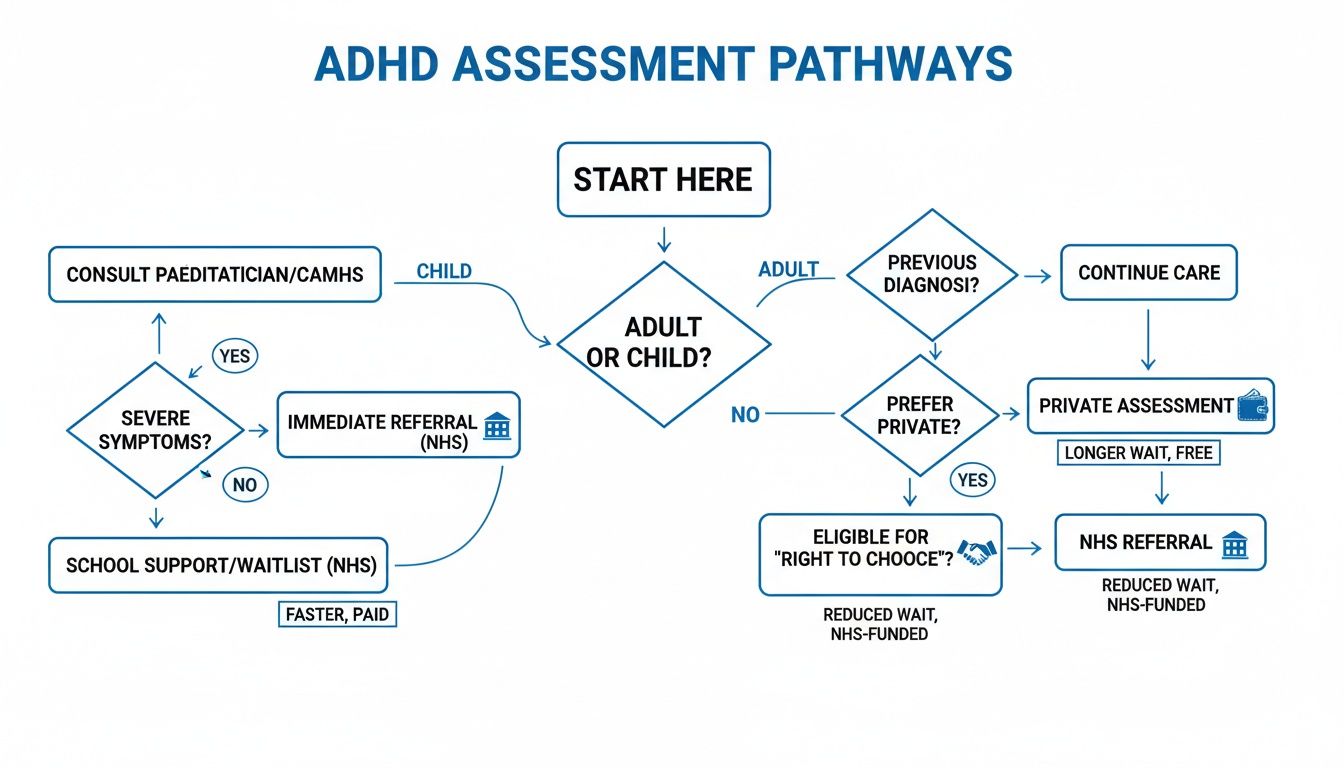
As the chart shows, while the NHS and Right to Choose are valid options, going private gives you the most direct control over your timeline and who you see.
Beyond the Assessment: What Really Matters in the Long Run
Getting a diagnosis is just the first step. The quality of your ongoing care is what will truly shape your experience. When you're comparing clinics, it pays to dig a little deeper into their processes for after the assessment.
- Medication Titration Process: Titration is the crucial period where your psychiatrist helps you find the right medication and dosage. Ask about the costs involved, how long it usually takes, and what kind of support they offer during this sensitive time.
- Shared-Care Agreements: A big one. Will the clinic work with your GP to set up a shared-care agreement once your treatment is stable? This is what makes ongoing prescriptions affordable. Some GPs can be hesitant, so confirming the clinic has a solid process for this is vital.
- Online vs In-Person: Many clinics now offer fully remote assessments, which is incredibly convenient. But think about what you’d prefer. Do you feel a face-to-face appointment would be better for you? Make sure the clinic offers a format that you're comfortable with.
- Specialist Services: Does the clinic offer more than just diagnosis and medication? Some provide valuable extras like ADHD coaching, therapy, or support for co-occurring conditions like anxiety.
By focusing on these long-term factors, you shift your mindset from just "getting diagnosed" to "building a sustainable treatment plan." The best clinics are transparent about their entire care pathway, not just the initial assessment.
To help you keep track of all this, I've put together a simple checklist. You can use this to compare different clinics head-to-head.
Private ADHD Clinic Comparison Checklist
| Feature to Check | Why It Matters | Where to Find This Information |
|---|---|---|
| Assessment Cost & Inclusions | Is it just for the report, or do follow-ups cost extra? Hidden fees can add up quickly. | Clinic's pricing page, FAQ section, or by calling them directly. |
| Current Waiting Time | You need a realistic timeline. A "short" wait can mean different things to different clinics. | Website homepage, or email/phone their admin team for the latest info. |
| GMC & CQC Registration | This confirms the psychiatrist is licensed and the clinic meets UK regulatory standards. | Search the GMC Register and the CQC website. |
| Medication Titration Costs | This is a major ongoing cost after diagnosis. You need to know the full financial commitment. | Clinic's pricing page or treatment information section. |
| Shared-Care Agreement Policy | This is key to making long-term treatment affordable via your GP. | FAQ, "About Us" page, or ask them directly about their process and success rate. |
| Holistic Support (Coaching/Therapy) | Medication isn't always the whole answer. Extra support can make a huge difference. | "Services" or "Treatments" page on their website. |
| Patient Reviews & Testimonials | Real-world feedback gives you a sense of the patient experience beyond the marketing. | Google Reviews, Trustpilot, and independent forums like the AADDUK forums. |
Ultimately, comparing private clinics effectively means looking at the whole package. By gathering this information, you can confidently create a shortlist of providers that match both your immediate needs and your long-term health goals.
If you want to understand the process in more detail, have a look at our complete guide on what a private ADHD diagnosis in the UK involves.
Looking for a private ADHD assessment?
Answer a few questions and we’ll shortlist clinics that fit — comparing price and waiting time.
Getting Ready for Your First ADHD Assessment

You’ve booked the appointment – that’s a massive step. Now, let's make sure you get the absolute most out of your time with the psychiatrist for ADHD. This isn't a test you need to pass; it’s about painting an honest, detailed picture of your life so they can see what you see.
Walking in prepared does more than just help the clinician – it calms your nerves and puts you in the driver's seat. It means you won’t walk out kicking yourself for forgetting something crucial. Remember, an adult ADHD diagnosis hinges on showing that symptoms have been around since you were a kid and are still causing real problems today.
How to Talk About Your Symptoms
Your psychiatrist needs to understand the real-world impact of your struggles. Just saying "I'm disorganised" is too vague. You need to connect that trait to specific, everyday problems.
It helps to start a note on your phone or keep a small notebook handy. Jot down examples as they happen.
Try grouping your notes into these areas:
- At Work or Uni: Think about missing deadlines, making silly mistakes in important documents, or completely zoning out during team meetings. Are you the one who can only start a massive project the night before it's due?
- Day-to-Day Life: This is the stuff like forgetting appointments, constantly losing your keys or phone, letting laundry pile up for weeks, or that habit of impulsive online shopping.
- Relationships: How does it affect your social life? Maybe you constantly interrupt people, find it hard to listen when your partner is talking, or have emotional outbursts that create tension.
Pro Tip: Specifics are everything. Instead of saying, "I'm forgetful," try, "Last week, I missed a dentist appointment I’d had booked for six months and also forgot to pay my car tax, resulting in a fine." This makes your experience concrete.
Digging into Your Past
This can be the trickiest part, but it's vital. To diagnose ADHD in an adult, clinicians need to see a pattern of behaviour stretching back to childhood. It’s time to do a bit of detective work.
See if you can track down any of these:
- Old School Reports: These are pure gold. Look for those classic teacher comments: "doesn't live up to potential," "is easily distracted," "daydreams in class," or "is disruptive."
- A Word with Your Family: Chat with your parents, an older sibling, or anyone who knew you well as a child. Ask them what they remember about your energy levels, focus, and how you got on with other kids.
- Your Own Memories: What do you remember? Did you find it hard to fit in? Were you always in trouble for forgetting homework? Did you just feel... different?
Doing this legwork transforms the assessment. It stops feeling like a scary interview and becomes a productive, collaborative conversation. When you arrive with clear, organised evidence, you're not just a patient; you're an active partner in figuring things out.
What to Ask a Potential Psychiatrist for ADHD

Your first consultation is much more than just an assessment—it's a two-way interview. You're trying to figure out if this is the right person to partner with on your health journey, and they're assessing you. Heading into that first meeting with a clear set of questions is the best way to make a confident, well-informed decision.
Think of it like this: they need to understand your unique experiences, but you also need to get a real feel for their professional style, their depth of expertise, and how their clinic actually operates. Getting this clarity from day one is absolutely vital for building the trust needed for an effective partnership.
Gauging Their Expertise and Clinical Approach
First things first, you need to know if they really get it. ADHD in adults looks very different from the classic childhood presentation, so finding a specialist who understands those nuances is non-negotiable. Their diagnostic process is just as critical; a rushed assessment can lead to a flawed treatment plan.
You can get a good sense of this by asking some direct questions:
- "Roughly what percentage of your practice is dedicated to adult ADHD?" This is a great way to find out if you're talking to a true specialist or a general psychiatrist who just dabbles in ADHD.
- "Could you walk me through your diagnostic process?" A solid answer should include things like structured clinical interviews, validated rating scales (like the DIVA-5), and a deep dive into your history, going all the way back to childhood. Be very cautious of anyone who suggests a diagnosis is possible after just one short conversation.
- "What's your overall philosophy on treating ADHD?" You're listening for a balanced perspective here. Do they jump straight to medication as the only solution, or do they see it as just one part of a bigger picture? The most effective and sustainable treatment plans often blend medication management with therapy, coaching, and lifestyle adjustments.
A huge green flag is a psychiatrist who talks about treatment as a collaboration. They should treat you like the expert on your own body and mind, valuing your feedback on everything from medication side effects to daily challenges.
Sorting Out the Practicalities of Your Treatment
Beyond their clinical skills, you need to understand the nuts and bolts of how they work. The logistics of prescriptions, how you'll communicate, and the real-world costs are going to have a massive impact on your experience, especially in those first few months.
Getting clear answers on these practical points will save you a world of headaches later on:
- "How does the medication titration period work, and what are the follow-up costs?" This initial phase of finding the right medication and dosage requires careful, frequent monitoring. You need to know how you'll communicate with them during this time and exactly what each follow-up will cost.
- "What's your procedure for setting up a shared-care agreement with a GP?" For most people, this is the only way to make long-term medication affordable. A well-run clinic will have a tried-and-tested process and should be able to tell you how successful they typically are in getting GPs on board.
- "If I have an urgent question between appointments, what's the best way to get in touch?" Just knowing there's a clear communication channel for non-emergencies can provide incredible peace of mind.
To make this even easier, I've put together a quick-reference table. Think of it as your cheat sheet for that first appointment.
Essential Questions for Your Psychiatrist Consultation
This table breaks down what you need to ask, what a good response sounds like, and what should make you think twice.
| Question Category | Specific Question to Ask | What to Listen For (Green/Red Flags) |
|---|---|---|
| Experience & Specialism | "How much of your practice focuses specifically on adult ADHD?" | Green Flag: "A significant portion, over 50%." They speak with confidence about adult-specific symptoms. Red Flag: Vague answers or a focus mainly on children. They seem to treat all ADHD the same. |
| Diagnostic Process | "What does your assessment process involve from start to finish?" | Green Flag: Mentions structured interviews (e.g., DIVA-5), rating scales, and gathering collateral information (like old school reports or speaking to a family member). Red Flag: A very brief "chat" or a diagnosis promised in under an hour. |
| Treatment Philosophy | "What's your approach to treatment beyond just medication?" | Green Flag: They discuss a multi-faceted approach including therapy (CBT), coaching, and lifestyle changes, viewing medication as one tool in the toolbox. Red Flag: They focus almost exclusively on prescribing medication without exploring other supportive options. |
| Medication & Titration | "How will we manage the titration process and communicate during that time?" | Green Flag: A clear plan for regular, brief check-ins (phone/email), and transparent pricing for follow-up appointments. Red Flag: Unclear communication channels or surprise fees for simple questions. |
| Shared Care | "What's your process and success rate for establishing shared-care agreements with GPs?" | Green Flag: They have a standard procedure, provide clear documentation for the GP, and understand the GP's perspective. Red Flag: They seem unsure, dismiss the importance of it, or say "it's all up to your GP." |
Arming yourself with these questions does more than just gather information. It empowers you. You'll walk out of that consultation with a much clearer picture, not just of your own health, but of whether you've found the right professional to help you navigate it.
Got Questions? Let's Clear a Few Things Up
It’s completely normal to have a head full of questions when you're starting this journey. Finding the right support for ADHD can feel like navigating a maze, so let's tackle some of the most common queries that come up.
Psychiatrist vs. Psychologist: Who Does What for ADHD?
This is a big one, and getting it right from the start is key. While both are mental health experts, their roles in ADHD diagnosis and treatment in the UK are quite different.
Think of it this way: a psychiatrist is a medical doctor who has gone on to specialise in mental health. This means they are the only ones who can formally diagnose ADHD and, crucially, prescribe medication for it.
A psychologist, on the other hand, usually holds a doctorate in psychology. They are brilliant at conducting assessments and offering therapies like Cognitive Behavioural Therapy (CBT) or coaching, which are incredibly helpful. But they can’t write you a prescription. So, if you think medication might be part of your treatment plan, you’ll need to see a psychiatrist.
Do I Really Need a GP Referral for a Private Assessment?
In short, no. Most private clinics let you self-refer, which is a massive plus. It means you can cut through the red tape and contact them directly to get the ball rolling, often much faster than going through the NHS.
That said, it’s always a good idea to keep your GP in the loop.
Even if you go private, telling your GP is smart for the long run. They’ll be your main point of contact if you want to set up a 'shared-care agreement' later, which makes getting your prescriptions much easier and cheaper.
So, I've Got My Diagnosis... What's Next?
Getting a diagnosis is often a huge relief, but it’s really the starting line, not the finish. Your psychiatrist will sit down with you to go through the report and map out what comes next.
This conversation usually covers a few things:
- Medication: If you and your psychiatrist decide to try medication, you'll begin a process called titration. It's not a one-size-fits-all thing. This is a carefully monitored period where you work together to find the right medication and dosage that gives you the best results with the fewest side effects.
- Therapy and Coaching: Medication isn't the whole picture. Your psychiatrist might also suggest things like ADHD coaching or therapy. These are fantastic for building practical skills and strategies to manage daily life, from organisation to emotional regulation.
- Follow-Up Care: You won't be left on your own. You’ll have regular check-ins to see how you’re getting on, tweak your treatment if needed, and make sure your plan is still the right fit for you.
Once you’re on a stable dose of medication, you can often arrange a shared-care agreement. This is where your GP agrees to take over writing your repeat prescriptions, following the psychiatrist's plan. It’s a game-changer for reducing long-term costs, though you’ll still need an annual review with your specialist to keep everything on track.
Finding the right professional is the most important first step. ADHD Private is a free UK-wide directory that helps you compare over 85 clinics by price, wait times, and services offered, so you can make a confident and informed choice. Find the right ADHD clinic for you at https://adhdprivate.co.uk.