Discover ADHD Medication UK for Adults: NHS vs. Private Options
Explore ADHD medication in the UK for adults. Compare NHS vs. private options, costs, and treatments to choose the best path.
Written and maintained by the ADHD Private editorial team, drawing on NHS, NICE and ADHD UK guidance. This is general information, not medical advice.
If you're an adult in the UK looking into ADHD medication, you're probably facing a big decision: brave the long NHS queues or pay to go private? Both routes can get you to the same effective treatments, but knowing what each path involves is key to making the right choice for you. This guide will walk you through the entire process, step by step.
Your First Steps with Adult ADHD Medication in the UK

Starting the process of getting ADHD medication as an adult can feel like you’ve been asked to solve a puzzle with half the pieces missing. You’ve probably heard that treatment can be a game-changer, but the actual steps to get there can seem confusing and, frankly, a bit daunting.
The good news? It’s completely doable. You essentially have two main options: go through the NHS for a diagnosis and prescription, or take the private healthcare route. Each has its own timeline, costs, and procedures.
Understanding Your Options
For most people, the journey begins with a visit to their GP to ask for an NHS referral. This is the most affordable route, but it’s notorious for its incredibly long waiting lists. It’s not uncommon to wait several years just to get an initial assessment, which can be a huge hurdle when you need support now.
That’s why many people decide to go private. Private clinics can get you a diagnosis and start you on a treatment plan much faster, often within a few weeks or months. Of course, this speed comes at a cost, but for many, the investment is well worth it for timely access to specialist care.
After a diagnosis, over 84% of adults say they have a much better understanding and acceptance of themselves. For many, medication is a key part of that puzzle, helping to manage things like impulsivity and a lack of focus.
What to Expect from This Guide
We’ve created this guide to be a clear, no-nonsense roadmap. We’ll break down everything you need to know about ADHD medication in the UK, from the different types you might be offered to the practical side of dealing with both the NHS and private providers.
Here’s what you’ll learn:
- How to weigh up the NHS and private pathways to figure out which is the best fit for your situation.
- What types of medication are commonly used to treat adult ADHD and how they work.
- A breakdown of the costs and processes, including how a 'shared-care' agreement with your GP works.
- Practical tips on finding the right clinic using resources that can make your search a lot easier.
By the time you're done reading, you’ll feel much more confident and ready to take the next step toward getting the support you need.
Understanding Stimulant and Non-Stimulant Medications
When you first start looking into ADHD medication UK for adults, you’ll quickly discover that treatments are split into two main camps: stimulants and non-stimulants. The key isn't that one is 'better' than the other, but that they work in very different ways to help you manage your symptoms.
Think of it this way: your brain relies on key chemicals like dopamine and noradrenaline to stay focused and organised. In an ADHD brain, the signals sent by these chemicals can be a bit weak or patchy. Medication helps to steady that system, but each type takes a different route to get there.
The Stimulant Approach: Turning Up the Volume
Stimulants are the most common starting point for treating ADHD in the UK, and for good reason—they’re effective for roughly 70-80% of adults. They get to work fast, often within an hour of taking the first dose.
Imagine the part of your brain that controls focus is like a radio, but the volume is turned way down, making everything sound fuzzy and indistinct. A stimulant medication is like turning that volume knob right up. It quickly boosts the available dopamine and noradrenaline, making the ‘signal’ of your thoughts much clearer and stronger.
This almost immediate effect helps you concentrate, get a handle on impulses, and feel less restless. Because the change is so rapid, you can feel the benefits on the very first day, which for many people is a genuinely profound experience.
The two main types of stimulants used in the UK are:
- Methylphenidate: You’ll see this under various brand names. It’s the most widely prescribed ADHD medication.
- Lisdexamfetamine: This is a commonly used long-acting stimulant. Its use has been growing rapidly over the past few years.
As awareness of adult ADHD has grown, so has the demand for treatment. In England, prescriptions for ADHD medication have been rising by 18% annually since the pandemic. The numbers jumped from 25 items per 1,000 people in 2019-20 to a striking 41.55 per 1,000 in 2023-24. While methylphenidate remains the most common, lisdexamfetamine prescriptions have shot up by 55% each year. You can dig deeper into these trends in the excellent report by The Pharmaceutical Journal.
The Non-Stimulant Approach: Building a Stronger Foundation
Non-stimulant medications take a much more gradual route. If stimulants are about turning up the volume for instant clarity, non-stimulants are like carefully rewiring the radio’s internal circuits to hold a strong, stable signal all the time.
Instead of creating a quick spike in brain chemicals, these medications work quietly in the background, building up their effect over time. They primarily increase the levels of noradrenaline, which also plays a crucial role in attention and impulse control.
The process is much slower, so you won't feel a sudden change. Instead, the benefits slowly accumulate over several weeks as the medication establishes a steady level in your system. This makes non-stimulants a fantastic option for people who don’t get on with stimulants or can’t take them for medical reasons.
The real advantage of non-stimulants is that they offer a '24/7' background level of support. Once they're fully working, their effects are continuous, which can help with managing ADHD symptoms around the clock—not just during the typical working day.
The main non-stimulant prescribed in the UK is Atomoxetine, often sold under the brand name atomoxetine. It's a valuable alternative that delivers consistent symptom management without the 'on-off' feeling that some people experience with stimulants.
Stimulant vs Non-Stimulant ADHD Medications at a Glance
So, which one is right for you? That’s a conversation to have with your specialist, who will consider your symptoms, medical history, and daily life. There’s no single ‘best’ option—it’s all about finding the right fit for your brain and body.
To help you see the differences clearly, here’s a quick side-by-side comparison.
| Feature | Stimulant Medications (e.g., Methylphenidate, Lisdexamfetamine) | Non-Stimulant Medications (e.g., Atomoxetine) |
|---|---|---|
| How It Works | Quickly increases dopamine and noradrenaline levels for an immediate effect. | Gradually builds up noradrenaline levels for a steady, long-term effect. |
| Onset of Action | Fast-acting, usually within 30-60 minutes. | Slow-acting, taking 4-6 weeks to reach full effectiveness. |
| Duration of Effect | Lasts for a set period (e.g., 4-12 hours) depending on the specific formula. | Provides continuous, 24-hour coverage once it has built up in the system. |
| Common Scenarios for Use | Considered the "first-line" treatment for most people due to its high effectiveness and rapid action. | A great alternative if stimulants cause difficult side effects, aren't effective, or aren't suitable. |
Ultimately, both approaches aim for the same goal: to help your brain’s signalling work more effectively so you can navigate your day with greater ease and focus.
Choosing Your Path to Treatment: NHS vs Private
When you start looking into ADHD treatment, you’ll quickly find yourself at a major crossroads. In the UK, you have two main options for getting assessed and medicated: going through the NHS or opting for a private clinic. Figuring out which route is right for you means weighing up your urgency, your budget, and what you need right now.
The NHS is the path most of us know best. It starts with a chat with your GP, who can then refer you to a specialist adult ADHD service for a proper assessment. The big advantage here is cost – the entire process is covered by the NHS, so you’ll only pay the standard prescription charge in England for your medication.
The catch? The waiting lists. This is the major hurdle with the NHS route. It’s not uncommon to wait months, and in many areas, several years for that first assessment. For someone grappling with the daily frustrations of ADHD, that kind of delay can feel completely unmanageable.
The Private Healthcare Alternative
This is where private healthcare steps in as a practical alternative. Private clinics are all about getting you seen quickly. Instead of waiting years, you can often get an assessment booked within a few weeks or months, meaning you can get a diagnosis and start treatment far sooner.
Of course, this speed comes at a cost. You'll be funding the initial assessment, any follow-up appointments, and the private prescriptions yourself. These costs can add up, particularly during the initial ‘titration’ period when your clinician is working with you to find the perfect medication and dose.
"The private route can feel like a lifeline. It's about taking control of the process and getting the support you need, when you need it, rather than being stuck in a queue for years."
For adults in the UK facing long NHS queues, private clinics offer a clear way forward. The ADHD Private directory, for example, lists over 85 vetted providers, including well-known names like Psychiatry-UK and ADHD 360. You can see their pricing, find out typical wait times (often just a few weeks), and check if they offer online appointments. The Pharmaceutical Journal has also highlighted the growing role of private care in meeting the demand for ADHD prescriptions.
This flowchart can help you think through the decision-making process for medication itself.
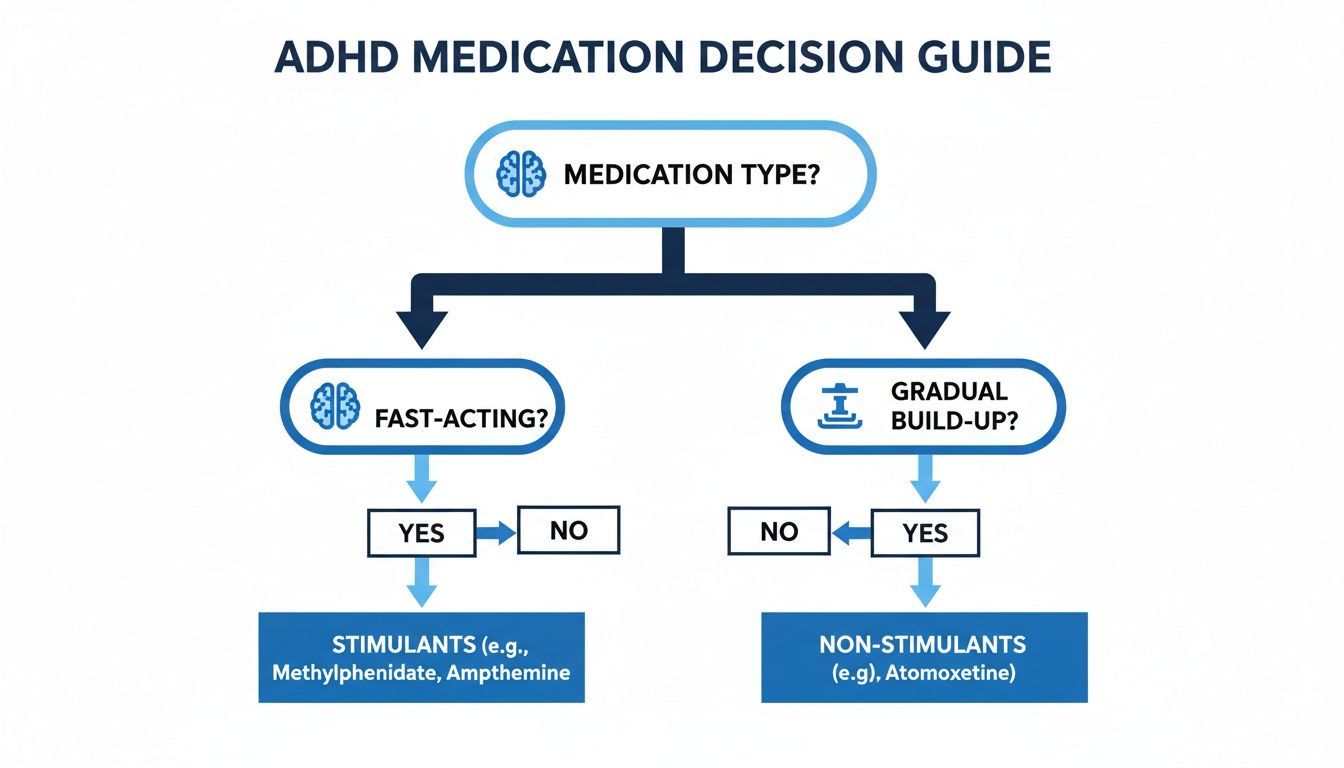
It lays out the two main medication strategies, helping you see whether a fast-acting approach or a more gradual one might be a better fit for you.
Bridging the Gap Between NHS and Private Care
The good news is that choosing a private assessment doesn't mean you're locked into paying for everything forever. There are a couple of fantastic mechanisms that help bridge the gap between the private and public systems.
- NHS Right to Choose (RTC): If you're in England, this is a game-changer. It allows you to select a private provider for your assessment, but have it funded by the NHS, as long as that provider has an NHS contract. It can slash your waiting time without costing you a penny. You can find out more in our guide on how to use your ADHD Right to Choose.
- Shared-Care Agreements: This is a very common setup. Once you've been diagnosed privately and your medication is stable, your specialist can arrange for your NHS GP to take over the day-to-day prescribing. This is a huge financial relief, as you switch from paying for pricey private prescriptions to just the standard NHS fee.
Think of a shared-care agreement as a partnership. Your private specialist stays in the picture for annual reviews and expert advice, but your GP handles the routine prescriptions and monitoring. It’s a brilliant way to get the speed of a private diagnosis with the long-term affordability of the NHS.
Ultimately, deciding between the NHS and private pathways for ADHD medication UK for adults is a personal call. It’s a trade-off between the immediate need for help and the practical realities of time and money. By understanding how both systems work, you can make an informed choice that gets you on the right path.
Ready to compare clinics?
Answer a few questions and we’ll shortlist private ADHD clinics that fit — free to use, and independent.
Breaking Down the Costs and Timelines

Going down the private route for ADHD treatment is a big decision, and it’s one you’ll want to make with your eyes wide open, especially when it comes to money and time. While private care offers a much-needed shortcut past long NHS queues, the costs can add up. It's not just one single bill.
Think of it as a journey with several key stops, each with its own price tag. Understanding this structure from the get-go means you can budget properly and avoid any nasty surprises along the way. Let's break down exactly what you can expect to pay for and how long it all takes.
Your Initial Investment: The Assessment
First things first, you'll need a formal diagnosis, and that means booking an initial ADHD assessment. This is a deep-dive evaluation with a specialist psychiatrist or a similarly qualified clinician who will determine if you have the condition.
The price tag for this can vary quite a bit from one clinic to another, but you should budget somewhere in the region of £600 to £1,200. This fee covers the specialist's time for the assessment itself—which can often last a few hours—and the work involved in writing up a detailed diagnostic report. This document is your key to unlocking treatment with ADHD medication UK for adults.
The real win here is the speed. Compared to NHS waits that can stretch into years, most private clinics can get you an assessment within a few weeks to a couple of months.
The Titration Phase: Finding Your Balance
Once you have that diagnosis, the next stage is what’s known as titration. This is probably the most important part of the process. It's a collaborative period where you and your clinician work together to find the right medication and the perfect dose that works for you.
It’s a bit like tuning an old radio; you start with static and slowly turn the dial, making tiny adjustments until the sound comes through crystal clear. During titration, your clinician will start you on a low dose and schedule regular follow-ups to see how you’re getting on, checking for benefits and side effects. They'll then tweak the dose until you hit that sweet spot.
This phase has its own set of costs:
- Follow-up Appointments: These regular check-ins are crucial for doing this safely and effectively. Each one will likely cost between £150 and £300. You’ll probably need two to four of these over the course of the titration period.
- Private Prescription Fees: Until you're on a stable dose and can arrange shared care, you'll be paying for the medication out-of-pocket. This can cost anywhere from £80 to £150 per month, depending on the drug and dosage.
The titration period itself can take anywhere from four weeks to several months. This 'hidden wait' is an important part of the timeline to factor in, as it’s the bridge between diagnosis and a stable, long-term treatment plan.
Long-Term Management: Shared Care
For most people, the end goal of private treatment is to set up a shared-care agreement with their NHS GP. This is where the whole process becomes much more affordable in the long run.
Once your private specialist is happy that your medication and dosage are stable, they can hand over the routine prescribing to your GP.
This is a game-changer. You’ll switch from paying for pricey private prescriptions to paying just the standard NHS prescription fee in England (or nothing at all, as prescriptions are free in Scotland, Wales, and Northern Ireland). Our guide on ADHD shared-care agreements explains exactly how this works.
Even with a shared-care plan in place, you’ll still need to see your private specialist for an annual review. These check-ups are essential for making sure your treatment is still on track and typically cost between £250 and £450. Factoring this in from the start makes managing your ADHD both effective and financially sustainable for the long haul.
What to Do About Side Effects and Medication Shortages
Starting ADHD medication is a big step, and like any new treatment, it’s not always a completely smooth ride. While the benefits can be genuinely life-changing, two common hurdles can pop up: managing side effects and, more recently, dealing with the UK’s frustrating medication shortages.
Knowing what to look out for and having a plan can make a world of difference. The aim is always to find a treatment that works for you in the long run, and that means working closely with your clinician to navigate any bumps in the road.
Getting a Handle on Common Side Effects
Most side effects from ADHD medication are mild and tend to fade as your body adjusts. It's a bit like breaking in a new pair of walking boots – a little initial discomfort is normal, but it usually eases off with time and patience.
Here are a few of the most common things people experience:
- Loss of Appetite: Stimulants can definitely curb your appetite, especially around midday. A great workaround is to have a big, protein-packed breakfast before your morning dose and then plan for a proper evening meal.
- Trouble Sleeping: You might find it tricky to switch off at night. A solid bedtime routine can work wonders here – think less screen time, no late-night caffeine, and maybe a relaxing bath. Your prescriber might also suggest taking your medication a little earlier in the day.
- Dry Mouth: This one’s really common but thankfully easy to manage. Keep a water bottle with you at all times and try chewing sugar-free gum to keep the saliva flowing.
The most important thing is to keep your prescriber in the loop. They can’t help if they don’t know what’s going on. A tiny tweak to your dose, a change in timing, or even switching to a different type of medication can often solve the problem completely.
It's really important that you never adjust your dose or stop your medication on your own. Always talk to your clinician first. They’re your partner in this, and their advice is vital for keeping you safe and making sure your treatment works.
Navigating the UK Medication Shortages
Beyond the usual side effects, the national shortage of ADHD medication UK for adults has become a major headache. This is a messy, complicated supply chain problem that’s causing real disruption for people across the country.
Let's be frank: these shortages aren't going away overnight. The UK is still struggling with this, and it’s thought to be affecting a staggering 91% of adults taking ADHD medication. We’re seeing intermittent stock issues with key medications like methylphenidate (long-acting methylphenidate, long-acting methylphenidate), lisdexamfetamine, guanfacine, and atomoxetine, and this is likely to continue. If you want to dig deeper into the problem, AU-DHD Psychiatry has some excellent updates on the UK ADHD medication shortage.
The situation is stressful, no doubt about it. But you’re not powerless. Here’s what you can do to stay ahead of it:
- Phone the Pharmacy in Advance: Don't leave it until your last pill. Give your pharmacy a call at least a week before your prescription is due to see what they have in stock. This gives you breathing room if you need to find an alternative.
- Get in Touch with Your Prescriber: If your usual medication is out of stock, let your clinic or GP know right away. They might be able to prescribe a different brand, a different formulation (like switching from a long-acting to short-acting version), or a completely different drug.
- Be Flexible and Ask Questions: When you’re at the pharmacy, ask if they can check stock at their other branches. Sometimes, one pharmacist will know which other local chemist has had a recent delivery. Being open to trying a different medication (with your doctor’s guidance, of course) is the key to staying on track during these shortages.
Facing these challenges can feel discouraging, but you’re not on your own. By staying proactive and working with your healthcare team, you can manage both side effects and supply issues, ensuring you don’t lose the support you rely on.
Finding the Right Private ADHD Clinic for You

Okay, you've got a solid grasp of how the process works. Now it's time to take that knowledge and find a private clinic that feels right for you. This is the part where research turns into action, and you start actively looking for the support you need. The best way to tackle this is with a clear, organised plan.
The good news is, you don't have to wade through endless Google searches alone. Specialist directories have been set up to make this exact task much simpler, offering a curated list of vetted providers. Think of them as a one-stop-shop for comparing your options based on what really matters to you.
Using a Directory to Filter Your Options
A good clinic directory is like a powerful search engine built just for this journey. Instead of getting lost online, you can use filters to quickly zero in on clinics that are a genuine match.
You can usually narrow down your search by:
- Location: Pinpoint clinics for in-person appointments in places like London or Manchester, or just select "online" for a remote consultation from anywhere in the UK.
- Services: It's crucial to look for providers who explicitly offer shared-care agreements to make your treatment affordable in the long run.
- Patient Age: Make sure the clinic actually specialises in adult assessments, as many are focused on children and teenagers.
This approach saves a massive amount of time and effort by giving you a pre-vetted list to start from. You can explore a comprehensive directory of private ADHD clinics for adults to get a feel for how it works.
Creating Your Shortlist
Once you’ve filtered the list, the next step is to pick out two or three clinics that stand out. This is your shortlist. Now, you can dig a little deeper into their individual profiles and compare them side-by-side.
Pay close attention to verified patient reviews from sources like Trustpilot or Google. Hearing directly from others about their experiences provides invaluable insight into a clinic’s communication, professionalism, and overall quality of care.
As you compare your top choices, jot down their assessment costs, the estimated wait time for an appointment, and the fees for those all-important titration follow-ups. Seeing this information laid out clearly will make the final decision feel much more straightforward.
With your first choice selected, you can confidently get in touch to book your initial assessment—a huge and positive step towards getting the right support.
Frequently Asked Questions
Getting your head around ADHD medication in the UK can feel like a lot to take in. It's completely normal to have questions, so I've put together some straightforward answers to the things people ask most often. Hopefully, this will help you feel a bit clearer on the path ahead.
How Long Will I Need to Take ADHD Medication?
This is a really common question, and the honest answer is: it’s different for everyone. It’s a conversation you'll have with your clinician. For many people, ADHD is a lifelong condition, so medication becomes a reliable, long-term tool for keeping symptoms in check at work, in relationships, and just getting through the day.
Your treatment plan isn't set in stone; it will involve regular reviews. These check-ins are crucial for making sure the medication is still doing its job, managing any side effects, and confirming the dose and type are still right for you.
Some people, with their doctor's guidance, decide to take breaks from treatment to see how they manage. Others find that sticking with their medication gives them the consistency they need to function at their best. There’s no one-size-fits-all rule here—it’s all about finding what works for you.
Can My NHS GP Refuse to Enter a Shared-Care Agreement?
Yes, unfortunately, they can. While many GPs are brilliant and happy to help, they aren't required to accept a shared-care agreement and can say no for perfectly valid reasons.
A few common reasons a GP might decline are:
- They don't feel they have enough experience in prescribing or monitoring ADHD medications.
- Their local NHS commissioning board has policies that make shared-care difficult.
- They simply don't have the time or resources to take on the extra monitoring work.
My best advice is to have a chat with your GP before you even book a private assessment. It’s a simple step that can save you a world of stress later. Just ask if they are generally open to shared-care agreements for ADHD, and you’ll know where you stand.
Good private clinics know this is a potential hurdle and will usually provide your GP with all the right paperwork to make the whole process as easy as possible for them.
Can I Get an ADHD Diagnosis and Medication Entirely Online?
You certainly can. The move to online healthcare has made getting specialist ADHD support so much more accessible. Plenty of private clinics in the UK now offer the whole journey remotely, from your first assessment and diagnosis to getting your prescription sorted and managing the titration process online.
This has been a huge help for people who don't live near a major city or find it difficult to travel. You can even use directories to find clinics that specifically offer online-only services.
It means you can handle everything—the diagnosis, getting the dose right, and follow-up appointments—without leaving your house. Once you’re on a stable dose, the online clinic will then liaise with your local GP to arrange that all-important shared-care agreement for your repeat prescriptions.
Ready to find a clinic that feels right for you? The free directory from ADHD Private lets you compare over 85 vetted UK clinics, see up-to-date wait times, and check their pricing. Start your search and take the next step today at https://adhdprivate.co.uk.