How to Get an ADHD Diagnosis in the UK: A Practical Guide
Discover how to get an ADHD diagnosis in the UK with our guide. We cover NHS vs. private routes, Right to Choose, assessment prep, and what comes next.
If you're constantly fighting to focus, feel like you're drowning in disorganisation, or find impulsivity is getting the better of you, looking into an ADHD assessment is a huge step. It’s about more than just getting a label; it’s about finally understanding how your brain works and finding the right support.
The process itself involves a clinical interview with a healthcare professional, like your GP or a private specialist, who will look at your history to see if you meet the criteria for a diagnosis.
Recognising the Signs and Deciding to Act
Does it ever feel like your brain is a browser with a hundred tabs open, while everyone else seems to be calmly working on a single one? If you think you might have ADHD, you're definitely not alone. Many adults in the UK face these same challenges every day, often without realising there's a neurodevelopmental reason for it.
Getting assessed isn't about looking for excuses. It's about finding an explanation that can make a lifetime of difficulties finally click into place. That understanding is the key to unlocking effective strategies, treatments, and a much-needed dose of self-compassion.
Why Are So Many Adults Undiagnosed?
For years, ADHD was almost exclusively seen as a "naughty little boy" problem. This meant countless adults, especially women, were completely missed. They built complex, often exhausting, coping mechanisms to mask their symptoms, just about managing to get by until the demands of work, relationships, or parenthood made their struggles impossible to ignore. This has left a huge 'diagnostic gap' in the UK.
Seeking a diagnosis as an adult is about self-advocacy. It means looking back at your life's challenges with a new understanding and giving yourself permission to find tools that actually work for you, instead of trying to force your brain to fit a mould that was never right for it.
Thankfully, our understanding of ADHD is changing. As more people share their experiences, more adults are starting to see themselves reflected in the stories of others. This is slowly helping to close the diagnostic gap, but there are still millions living without the validation and help a diagnosis can bring.
The numbers are pretty stark. An analysis of over 9 million UK GP records showed that only 0.32% had an ADHD diagnosis noted down. With an estimated 2.5 million people in England having ADHD, this suggests that more than two million people are going without a diagnosis and the support that comes with it. Essentially, only one in nine people with the condition in the UK have been formally diagnosed. You can dive deeper into these ADHD statistics and what they mean for patients.
Taking that first step to get an ADHD diagnosis isn't admitting defeat—it's taking back control. It’s about finding an answer that allows you to move forward with real clarity, armed with the knowledge you need to thrive.
Navigating NHS vs Private Diagnosis Pathways
If you’re looking to get an ADHD diagnosis in the UK, you’re essentially faced with two main roads: the National Health Service (NHS) or a private clinic. Each has its own distinct journey, timeline, and costs, so figuring out the differences is the very first step.
This isn't just about how quickly you can get an appointment; it's about what makes sense for your life right now. The NHS provides a comprehensive service at no cost, but often comes with a long wait. The private sector, on the other hand, is a much faster, more direct option, but you'll be paying for it yourself. Let's break down what each path really looks like.
Comparing NHS and Private ADHD Assessment Routes
Seeing the key differences laid out side-by-side can make your decision much clearer. Think about what matters most to you—cost, speed, or the referral process—as you look over this table.
| Factor | NHS Pathway | Private Pathway |
|---|---|---|
| Assessment Cost | Free (covered by the NHS) | £600 - £1,200+ (paid by you) |
| Wait Time | 6 months to 5+ years | 2 weeks to 3 months |
| Medication Cost | Standard NHS prescription charge | Full private prescription cost |
| Referral Source | GP referral is mandatory | Self-referral is usually possible |
Ultimately, there’s no single "best" choice. The right route depends entirely on your personal circumstances, budget, and how urgently you need answers.
The NHS Route: A Path of Patience
The traditional journey to an ADHD diagnosis through the NHS starts at your GP's surgery. You'll need an appointment to talk through your symptoms, how they're affecting your day-to-day life, and why you think it might be ADHD. If your GP agrees an assessment is the next logical step, they will refer you to your local NHS adult ADHD service.
Unfortunately, this is often where the waiting really begins. NHS services are under incredible strain, and waiting lists for an initial assessment can be incredibly long—stretching from many months to, in some areas, several years. It’s a system that demands a great deal of patience, but the key benefit is that the assessment and any treatment that follows are free.
The biggest hurdle for most people on the NHS path is the wait. While the quality of care is high, the gap between getting a referral and actually being seen can be a huge source of frustration and leave you feeling stuck.
This flowchart can help you think about whether now is the right time to seek an assessment, regardless of which route you take.
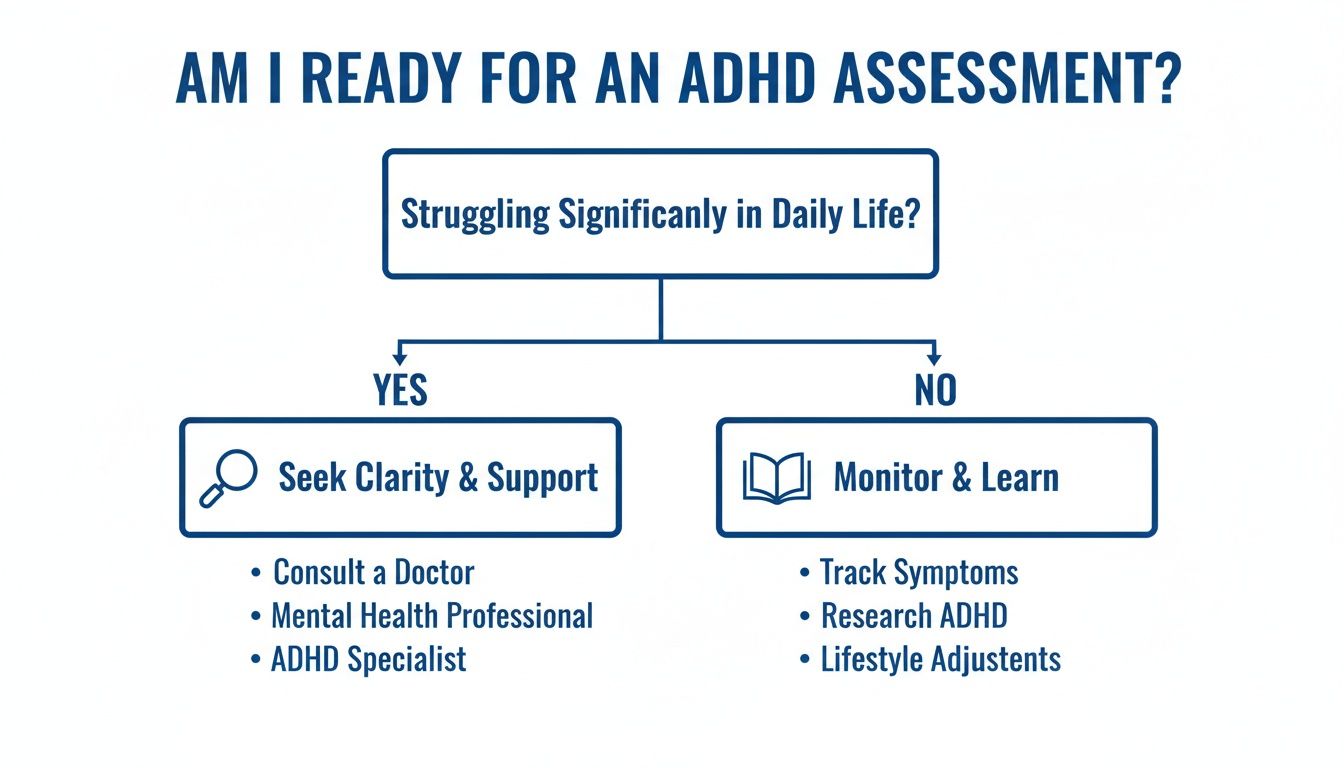
It boils down to a simple question: if you're struggling, getting clarity is a powerful step forward. If things feel manageable, you might just want to keep an eye on your symptoms for now.
The Private Pathway: Speed and Choice
If the thought of waiting years for an NHS appointment just isn’t an option, going private offers a much quicker alternative. The main advantages are speed and choice. You can often get an assessment booked within a few weeks and you have total control over which clinic and which specialist you see.
Most private clinics also allow you to refer yourself directly, so you don't have to go through your GP first. You can simply research clinics, compare what they offer, and book an appointment when you're ready.
The major downside, of course, is the cost. An initial assessment can set you back anywhere from £600 to over £1,200. On top of that, there are costs for any follow-up appointments and for medication titration, which is the process of finding the right medication and dose for you.
A Middle Ground: Understanding Your Right to Choose
For those in England, there’s a fantastic option that can dramatically shorten the NHS wait. It’s called NHS Right to Choose, and it allows you to ask for a referral to a qualified private provider that holds an NHS contract—at no cost to you.
The process still begins with your GP, but instead of being sent to the local service with its massive waiting list, you can request a referral to an approved provider you've chosen yourself. This can slash the wait time from years down to just a few months.
To use this option, you'll need to:
- Be registered with a GP in England. Right to Choose is currently an England-only scheme.
- Find a qualified provider. Look for a clinic that accepts Right to Choose referrals.
- Give the details to your GP. You might need to bring them the clinic's contact information and specific referral forms.
This is a game-changer for anyone stuck on a long waiting list. You can find out more in our detailed guide on the NHS Right to Choose ADHD pathway.
Bridging the Gap With a Shared Care Agreement
One of the most important things to think about when going private is the long-term cost of medication, as private prescriptions can be very expensive. This is where a Shared Care Agreement comes in. It’s an arrangement that builds a bridge between your private specialist and your NHS GP.
Once your private clinician has confirmed your diagnosis and found a stable medication dose for you, they can write to your GP. They'll ask if the GP is willing to take over prescribing your medication on the NHS. If your GP agrees, you'll only have to pay the standard NHS prescription charge, making your ongoing treatment much more affordable.
It’s always a good idea to have a chat with your GP before you book a private assessment to see if they’re open to this kind of arrangement. Many are supportive, but it's important to know they aren't obligated to agree.
How to Prepare for Your ADHD Assessment
Heading into your ADHD assessment can feel a bit nerve-wracking, but a little bit of prep work beforehand can make a world of difference. Getting your thoughts and documents in order helps turn a potentially anxious experience into an empowering one. This is your opportunity to give the clinician a clear, complete picture of your life and the challenges you've faced.
Think of it less as a test and more like gathering evidence for your own case study. The aim isn't to convince the specialist you have ADHD, but to arm them with all the information they need to make an accurate diagnosis. This way, nothing important gets missed on the day.

Gather Your Historical Evidence
Because ADHD is a neurodevelopmental condition, the signs need to have been present since childhood. Your clinician will be looking for a pattern of behaviour that stretches back over time, so digging up old documents can be incredibly helpful. You’re not looking for a single "smoking gun" but building a consistent story.
Start by tracking down anything that offers a glimpse into your childhood behaviour and academic performance.
- Old School Reports: These are absolute gold. Look for recurring comments like "doesn't live up to potential," "is easily distracted," "daydreams in class," or "is disorganised."
- Performance Reviews: If you feel comfortable, past work appraisals can be very revealing. Feedback about missed deadlines, trouble with project management, or organisational struggles are all relevant.
- Personal Notes or Diaries: Any old journals might contain your own reflections on struggling with focus, managing daily life, or navigating relationships.
Don't panic if you can't find much. Many of us don't have these things lying around, and that's totally fine. Your own memories and what others who knew you can recall are just as valuable.
Create a Timeline of Your Experiences
Your memory is your most powerful tool here. Before your appointment, take some time to map out a rough timeline of your symptoms and key life events. This simple exercise will help organise your thoughts and prevent that "mind goes blank" feeling when you're talking to the specialist.
Try breaking your life down into a few key stages and jot down notes for each one.
Your Symptom Timeline
| Life Stage | Examples of Challenges to Note |
|---|---|
| Primary School | Trouble sitting still, difficulty waiting your turn, a chaotic desk, forgetting homework, teachers saying you were 'in a world of your own'. |
| Secondary School | Procrastinating on coursework, struggling to revise for exams, feeling overwhelmed by homework, being called 'lazy' despite trying hard. |
| University/Work | Missing deadlines, finding independent projects difficult, financial impulsivity, frequently changing jobs, struggling with office politics. |
| Adult Life & Relationships | Difficulty with household chores, forgetting important dates like birthdays or anniversaries, starting arguments over small things, feeling emotionally overwhelmed. |
This doesn't need to be a perfect, detailed essay. Just a few bullet points for each stage can help you clearly communicate a lifelong pattern of challenges to the clinician.
Demystifying Pre-Assessment Questionnaires
Most clinics, both NHS and private, will send you questionnaires or rating scales to fill out before your assessment. It's also common for them to ask a partner, parent, or close friend to complete one about you. These forms can look a bit clinical and intimidating, but they’re just a way to gather structured information.
Be honest and try not to overthink it. Your first instinct is often the most accurate. It’s so easy to downplay your struggles, but this is the time to be open about the real impact your symptoms have.
Remember, these questionnaires are just one piece of the puzzle. They help screen for symptoms based on diagnostic criteria, but they don't tell the full story. The real substance comes from the conversation you’ll have with the specialist.
When you're filling them out, try to think about yourself on your worst days, not just your best ones. This gives the clinician a much more realistic view of the challenges you're facing.
Getting all this organised can also help you understand the potential costs involved. You can find out more about the typical ADHD assessment cost in the UK in our detailed guide. Taking these steps means you can walk into your assessment feeling prepared and ready for a productive conversation.
What Happens During the Diagnostic Assessment
So, the day of your assessment is here. It’s totally normal to feel a bit nervous, maybe even a little excited. Knowing what to expect can really help take the edge off. The main thing to remember is this isn't some high-pressure exam you can pass or fail; it's a conversation.
Whether you're meeting your specialist online or in person, the session will be a structured clinical interview with an expert, usually a psychiatrist or a specialist psychologist. They're there to listen and piece together a clear picture of you and the challenges you've faced throughout your life. This is your opportunity to finally tell your story and be properly heard.

The Structure of the Conversation
Your specialist will guide the chat, but it's a collaborative effort. They’ll likely start by explaining how it all works to help you feel at ease before getting into the nitty-gritty.
They’ll be working to see how your experiences match up with the official diagnostic criteria for ADHD, like those in the DSM-5 or ICD-11. This means they'll ask very specific questions about things like inattention, hyperactivity, and impulsivity.
For instance, they won't just ask, "Are you forgetful?". Instead, you can expect more detailed questions, such as:
- "How often do you misplace essentials like your keys, phone, or wallet?"
- "Do you forget appointments unless you've set up multiple reminders?"
- "Ever find your mind wandering in a conversation, only to realise you've missed what was just said?"
These kinds of real-world questions help them get a sense of how often these things happen and how much they impact your life. The whole thing usually takes between 90 minutes and two hours – it's a thorough process designed to get it right.
This isn't just a checklist exercise. The goal is to connect the dots between the official diagnostic criteria and your actual, lived experience. Your personal stories are the most important part of this, as they bring the symptoms to life for the clinician.
Exploring Your History from Childhood to Now
A key piece of the puzzle is establishing that your symptoms started before you were 12 and have been a consistent part of your life ever since. Because of this, your clinician will spend a good chunk of time delving into your past.
They’ll be keen to hear about different areas of your life:
- School: What did your school reports say? Did teachers ever comment that you were disruptive, a daydreamer, or not quite reaching your potential?
- Work: Have you found it tough to stick to deadlines, stay organised, or navigate workplace relationships?
- Home and Relationships: What are the day-to-day struggles? This could be anything from keeping on top of housework and bills to recurring patterns in your friendships and romantic partnerships.
Looking back like this is vital. It helps the specialist distinguish ADHD from other conditions that can look similar in adults, such as anxiety, depression, or simple burnout.
The Value of Another Perspective
Most clinicians find it incredibly useful to hear from someone who knows you well—a partner, parent, sibling, or close friend. It's not about them checking up on your story; it's about adding another layer of insight.
Sometimes, we're so used to our own quirks and struggles that we don't even see them as out of the ordinary. Someone else can offer concrete examples you might not think of, like a partner mentioning how you often interrupt them, or a parent recalling your perpetually messy room as a kid.
If you can, ask someone to join for a portion of the assessment or be on standby for a quick call. If that’s not practical, getting them to fill out a questionnaire beforehand is just as good. Plus, having someone there with you can be a huge source of moral support. With all your preparation and a clear idea of what to expect, you can walk into that assessment feeling confident and ready to get some answers.
Life After Diagnosis: Treatment, Support, and What Comes Next
Getting an ADHD diagnosis can feel like a huge, emotional weight has been lifted. It’s the end of a long, often confusing journey of self-doubt and the start of a new one—one focused on understanding and support. This isn't the finish line. Think of it as the starting block for finally building a life that works with your brain, not against it.
The path forward looks different for everyone. For most people, a combination of medication and therapy provides the strongest foundation for managing their ADHD. This approach helps you tackle the core symptoms while also building practical skills to handle the day-to-day challenges that ADHD can throw your way.
Finding the Right Treatment for You
When it comes to managing ADHD, the two main pillars are medication and therapy. They work best in tandem, creating a support system that addresses both the neurobiological side of things and the behavioural habits that have built up over years.
Your specialist will walk you through the different medications available. These usually fall into two categories: stimulants (like methylphenidate) and non-stimulants (like atomoxetine). Finding the right fit is a careful, collaborative process.
- Medication Titration: This is the initial "getting to know you" phase with your medication. Your clinician will start you on a low dose and gradually increase it over several weeks, checking in regularly to see how effective it is and if you're experiencing any side effects. Being completely open and honest during this time is key to getting it right.
- Therapeutic Support: Medication isn't a magic wand. Therapies like Cognitive Behavioural Therapy (CBT) can be a game-changer. ADHD-specific CBT gives you practical strategies for things like procrastination, poor time management, and emotional dysregulation.
- ADHD Coaching: If you’re looking for a more hands-on, goal-focused approach, ADHD coaching might be for you. A good coach helps you create systems and routines to manage your personal and professional life more effectively.
Making Long-Term Treatment Affordable
One of the biggest worries after a private diagnosis is the ongoing cost of medication. This is where a Shared Care Agreement comes in, and it's absolutely vital to understand. It’s an arrangement between your private specialist and your NHS GP that can make your treatment affordable in the long run.
Once you’re settled on the right medication and a stable dose, your specialist can ask your GP to take over prescribing. If your GP agrees, you'll only pay the standard NHS prescription charge. It’s a really good idea to have a chat with your GP about their willingness to enter a Shared Care Agreement before you even start your private assessment.
A Shared Care Agreement bridges the gap between private and NHS care. It lets you get a fast diagnosis and start treatment quickly, while ensuring your ongoing medication is affordable. It's a critical part of planning your post-diagnosis journey.
However, it's important to know that getting consistent care isn't the same everywhere. NHS data shows a massive three-fold difference in treatment rates across the country. This "postcode lottery" has pushed many people toward the private sector, with just over one in five ADHD patients now getting their medication through a private prescription. You can see a breakdown of these regional disparities in ADHD treatment on adhduk.co.uk.
Building Your Wider Support Network
Medication is important, but it’s only one piece of the puzzle. True, lasting support comes from building a life that accommodates your needs, and that involves practical changes and connecting with people who get it.
At work, you're entitled to ask for reasonable adjustments under the Equality Act 2010. This isn't about getting special treatment; it's about levelling the playing field so you can do your job effectively. This could be something as simple as noise-cancelling headphones, flexible working hours, or software to help you stay organised.
Connecting with other people who have ADHD can also be incredibly powerful. It chips away at the feeling of isolation and gives you a space to share tips, frustrations, and wins. A great place to start is by looking for ADHD support groups near you to find a community of people who truly understand what you're going through. Your diagnosis is the key that unlocks a more supported and understood future.
Got Questions About Getting an ADHD Diagnosis? You're Not Alone.
When you're looking into an ADHD diagnosis, it’s completely normal for a million questions to pop into your head. It can feel like a complicated process, but getting straight answers to the practical stuff—the costs, the rules, the jargon—makes everything feel much more manageable.
Let's break down some of the most common questions people ask when they're starting this journey.
What’s the Price Tag on a Private ADHD Assessment?
For a private adult ADHD assessment in the UK, you’re typically looking at a cost between £600 and £1,200. The final price often depends on things like where the clinic is based and the seniority of the clinician you see.
Before you commit, it’s really important to find out exactly what that fee covers. Is the full diagnostic report included? Does it cover a follow-up appointment or the initial stages of starting medication? A good directory will let you compare clinics with clear, upfront pricing, so you can find a service that works for your budget without any nasty surprises.
Can I Just Get ADHD Medication Without a Diagnosis?
In short, no. In the UK, you absolutely cannot get ADHD medication without a formal diagnosis from a qualified specialist.
Medications like methylphenidate (Ritalin) and lisdexamfetamine (Elvanse) are controlled drugs. This means only a specialist, usually a psychiatrist, can prescribe them after a thorough assessment. Your GP can't initiate the prescription, though they can often take over prescribing duties later on under a "Shared Care Agreement" once you’re settled on a stable dose.
A formal diagnosis is your key to accessing safe, effective medical treatment. It’s a safety measure, ensuring a specialist who understands your health profile is overseeing your care and prescribing medication that's right for you.
What on Earth Is a Shared Care Agreement?
Think of a Shared Care Agreement as a formal handover from your private specialist to your NHS GP. It’s a written agreement that allows your GP to take over issuing your repeat prescriptions once your diagnosis is confirmed and your medication dose is stable (a process known as titration).
This is a game-changer for affordability, as it moves your prescription costs from the private sector to the standard NHS charge. It's a really good idea to have a chat with your GP surgery about their policy on this before you book a private assessment, as not all GPs are in a position to accept them.
Do I Have to Get a GP Referral for a Private Diagnosis?
Usually, no. One of the main reasons the private route is so much quicker is that most clinics accept self-referrals. This means you can just pick up the phone or fill out a form on their website to start the process yourself.
That said, some private clinicians do prefer a referral letter from your GP. It gives them a more complete medical history to work with and can smooth the path for setting up a Shared Care Agreement down the line. The best advice? Always check the individual clinic’s requirements before you book.
Finding the right path to a diagnosis starts with having the right information. ADHD Private offers a free UK-wide directory to help you compare private clinics, check wait times, and see transparent pricing all in one place. Take the next step with confidence by exploring your options at https://adhdprivate.co.uk.