Find a Private Psychiatrist London: Your Guide to Choosing Care
Compare costs, timings, specialties, and use our checklist to find the right private psychiatrist in London.
Written and maintained by the ADHD Private editorial team, drawing on NHS, NICE and ADHD UK guidance. This is general information, not medical advice.
If you’re feeling overwhelmed trying to get mental health support in London, you’re definitely not alone. Choosing a private psychiatrist in London is a way many people are bypassing long NHS waits to get faster access to expert assessments and treatment for conditions like ADHD, anxiety, and depression.
Why Are More People Choosing Private Psychiatry in London?
Deciding to get help is a massive first step, but actually navigating the healthcare system can feel like its own battle. It's no surprise that more and more Londoners are turning to private psychiatry to get around long delays and have more say in their own care. This isn't just about getting seen quicker; it's about having choice, flexibility, and access to specialists.
Imagine there are two roads to getting help. The NHS path is a well-trodden, reliable route, but it can be incredibly slow, with waiting lists that stretch for months, sometimes even years. The private path is more like an express toll road – it costs money, but it gets you to a specialist much faster so you can start getting better without the long, anxious wait.
The Real Reasons People Go Private
So, what’s actually pushing people to look for private options? For most, it comes down to a simple, urgent need for help. When you’re struggling every day, waiting isn't just an inconvenience; it can make things worse and take a serious toll on your job, relationships, and well-being.
The numbers really show how much pressure the system is under. In just one year, NHS mental health services in England got a record 5.2 million referrals—that’s a huge 37.9% jump from 2019. The clinical workforce just hasn't grown enough to keep up with this demand, leaving a massive gap between the number of people who need help and the support available. You can explore more data on these NHS pressures to see the full picture.
When you choose a private psychiatrist in London, you’re basically taking back control of your own timeline. Instead of waiting indefinitely for an appointment to come through, you can book an assessment yourself, often within just a few weeks or days.
What Are the Main Benefits of Going Private?
Getting seen quickly is a huge plus, but it’s not the only reason people choose the private route. There are a few other key advantages.
You can pick your specialist. You have the freedom to research and choose a psychiatrist who really understands your specific issues, whether it's adult ADHD, a mood disorder, or something else entirely.
Appointments fit your life. Private clinics are often more flexible, offering evening or weekend slots and online video calls. This makes it so much easier to get help without having to disrupt your work or family life.
Treatment is more personal. In the private system, you often get more time with your psychiatrist. This allows for deeper, more thorough assessments and treatment plans that are built around you, combining medication, therapy, and practical advice.
NHS vs. Private Psychiatry: What’s the Real Difference?
When you’re looking for mental health support in London, you’ll quickly find there are two main roads you can take: the NHS or the private sector. Both are there to help, but they work in very different ways. Understanding how they compare is the first step in figuring out which path is right for you, your budget, and how quickly you need support.
First, let's be clear on what a psychiatrist actually does. A psychiatrist is a medical doctor who has gone on to specialise in mental health. This means they can diagnose conditions, prescribe medication, and create comprehensive treatment plans. They have a deep understanding of the biological and neurological sides of mental health.
This is different from a therapist or a psychologist, who focuses more on "talking therapies" and helping you develop coping strategies. You might see a psychiatrist for a diagnosis and medication, and a therapist to work through the day-to-day challenges.
The Four Big Differences
The gap between NHS and private psychiatric care really comes down to four things: speed, cost, choice, and the referral process. Each one can dramatically shape your experience. The NHS provides fantastic care, but it’s no secret that the system is under enormous pressure, which often means long, frustrating waits for people who need help now.
Going private is the most direct way to bypass those queues, but it comes at a cost. This trade-off is often the main reason people start searching for a private psychiatrist in London.
Many people find themselves at a crossroads, feeling stuck with NHS waiting lists and wondering what else they can do. The flowchart below maps out that exact journey.
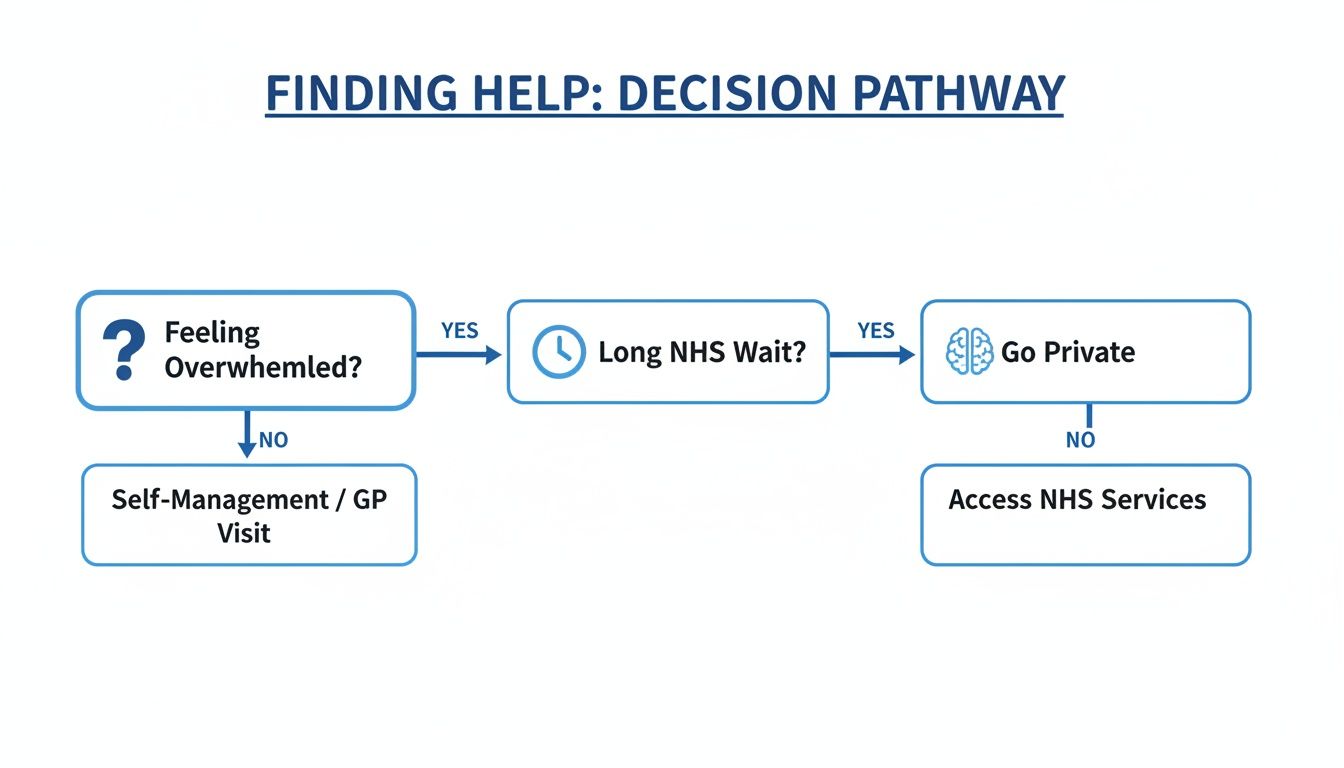
As you can see, the frustration with delays is often the trigger that pushes people to explore the faster, more direct private route.
Comparing NHS and Private Psychiatry Pathways in London
To give you a clearer picture, let's put the two systems side-by-side. Seeing the practical differences laid out like this can make the decision-making process feel a lot less overwhelming.
| Feature | NHS Psychiatry | Private Psychiatry |
|---|---|---|
| Wait Times | Often very long. You could be waiting many months, or even years, for an initial assessment, especially for ADHD. | Much faster. Initial appointments are often available within a few days or weeks, letting you get answers quickly. |
| Cost | Free at the point of use. Your consultations, treatment, and most prescriptions are covered. | Self-funded. You pay directly for every appointment, assessment, and report. Medication costs are also paid by you. |
| Choice & Control | Very limited. You're usually assigned to a psychiatrist at your local Community Mental Health Team (CMHT). | Total control. You can research and choose a specialist based on their expertise, reviews, and approach to care. |
| Referral Process | A GP referral is nearly always required. You have to go through your GP to get into the NHS mental health system. | A GP referral is good to have but often not essential. Many private clinics in London accept self-referrals, so you can book directly. |
It's also worth knowing about a potential middle ground called NHS Right to Choose, which is especially relevant for adult ADHD assessments. This scheme allows eligible patients in England to be referred to a private provider for their diagnosis, with the NHS picking up the bill. There are specific criteria you have to meet, but it can be a great option. You can read all about it in our guide to the NHS Right to Choose for ADHD.
Ultimately, the choice comes down to balancing your immediate needs against your budget. While the NHS is an incredible, free service, the reality is that the waiting lists can be a huge hurdle. Private psychiatry offers a fast, flexible, and personalised alternative for those who are able to fund it themselves.
Understanding the Cost of Private Psychiatry in London
Let's talk about the elephant in the room: the cost. For most people thinking about going private, the price tag is the biggest hurdle. Working out the costs for a private psychiatrist in London can feel a bit overwhelming, but getting a clear picture of the fee structure upfront makes the whole process far less stressful.
Think of it less as a single price and more as a breakdown of services. The initial assessment is the most in-depth (and therefore most expensive) part. This is where your psychiatrist really gets to grips with your history and symptoms to make an accurate diagnosis. It's a deep dive, and the price reflects that.
After that, you have follow-up appointments. These are shorter, less expensive sessions focused on tracking your progress, tweaking your treatment plan, or managing medication. It's always a good idea to ask about the cost and expected frequency of these right from the start.
Breaking Down the Typical Costs
While every clinic is different, and costs can vary based on a psychiatrist's experience, there’s a general price range you can expect to see across London. Knowing these ballpark figures helps you budget and compare clinics properly.
- Initial Assessment: A comprehensive first appointment, which usually lasts between 60-90 minutes, will likely set you back £400 to over £800. Highly specialised assessments, like those for Adult ADHD, often sit at the higher end of this range because of the extra complexity involved.
- Follow-Up Appointments: These are typically shorter sessions of around 30-45 minutes and usually cost between £200 and £450. How often you'll need them really depends on your specific clinical needs.
- Medication and Prescriptions: The cost of the actual medicine is a separate charge. The clinic will issue a private prescription (for which they may charge a fee), and you'll then pay the full market price for the medication at the pharmacy. This can be quite a bit more than the standard NHS prescription charge.
It's easy to focus on the upfront cost, but it's also worth weighing it against the personal and professional price of leaving a condition untreated. The economic impact of poor mental health in England is estimated at a staggering £300 billion a year, yet only around 1 in 8 adults with a mental health problem are getting any treatment at all. This treatment gap is a key reason why private services have become so essential for many.
Making Ongoing Treatment More Affordable
The ongoing cost of private prescriptions is a genuine worry for many, but there's a very common and practical solution. Once you're on a stable treatment plan, your private psychiatrist can often collaborate with your local GP on a shared care agreement.
In simple terms, this means the specialist creates the treatment plan, but your GP takes over the routine prescribing. You then just pay the standard NHS prescription fee, which makes long-term treatment much more manageable. It’s worth noting that not all GPs are obliged to accept this arrangement, so it’s crucial to have a chat with both your GP and your psychiatrist about this possibility early on.
Some clinics also recognise the financial commitment and provide ways to spread the cost. It’s always worth checking their websites for information on their clinic payment plans and options.
The golden rule is to ask for a full, itemised fee schedule before you commit to anything. Any good clinic will be completely transparent about their pricing, so you can plan your path forward with no nasty surprises.
Ready to compare clinics?
Answer a few questions and we’ll shortlist private ADHD clinics that fit — free to use, and independent.
How to Choose the Right London Psychiatrist for You
Finding the right specialist in a city as vast as London can feel like searching for a needle in a haystack. But when you know what to look for, making a confident choice becomes much simpler. This isn't just about finding someone with the right qualifications; it's about connecting with a professional who genuinely understands your needs and aligns with your long-term goals.
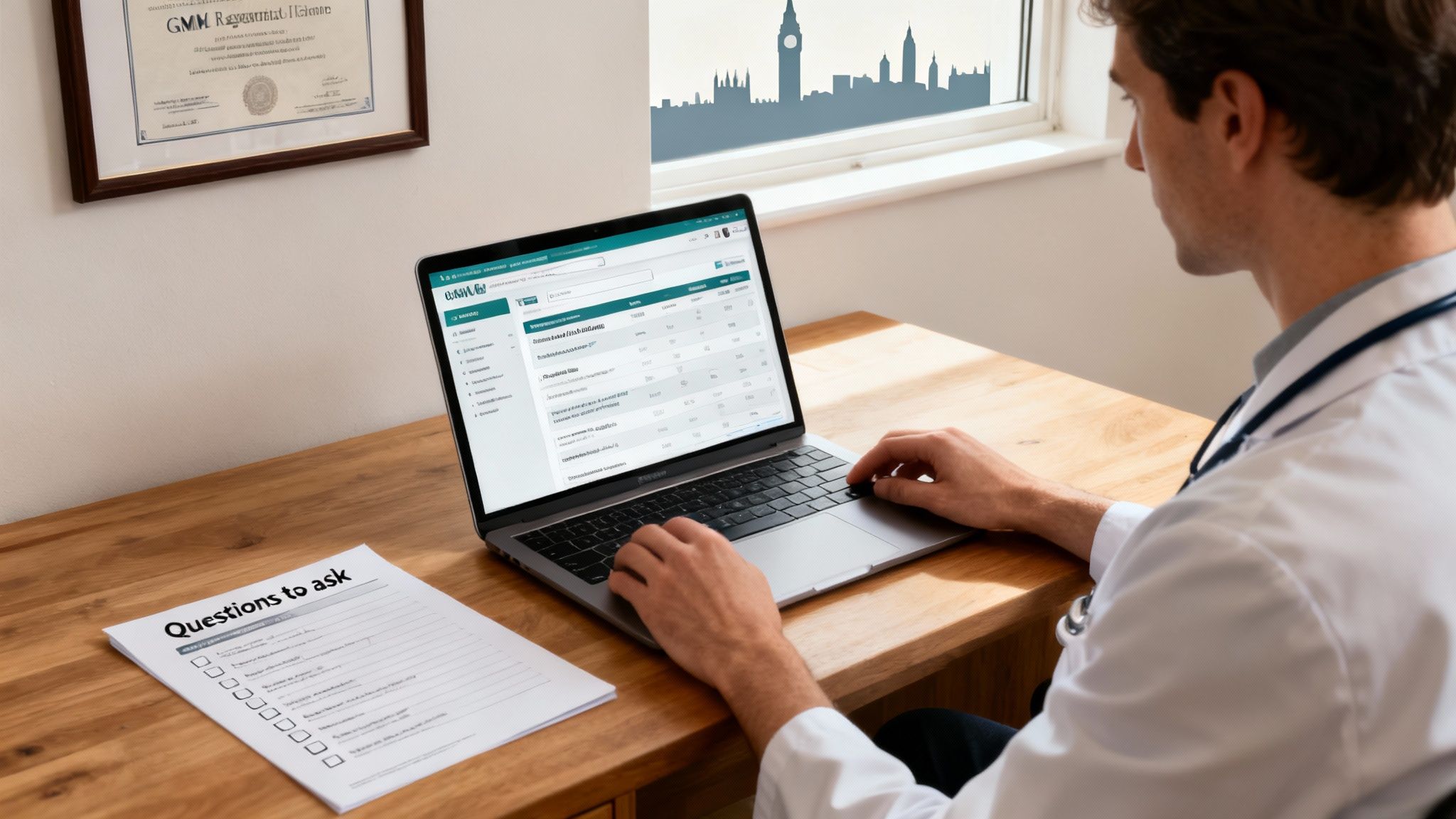
First things first, let's cover the essential safety check: credentials. Every single psychiatrist practising in the UK must be registered with the General Medical Council (GMC). You can easily look up their name on the GMC's online register to confirm they're a fully qualified medical doctor who is legally allowed to practise. It’s a quick step that provides complete peace of mind.
Define Your Needs and Check Their Specialisms
Once you’ve confirmed their registration, the real search begins. You need to match their expertise to your situation. Psychiatrists often have specific areas they focus on, whether that’s mood disorders, anxiety, trauma, or neurodevelopmental conditions like ADHD.
If you have a specific concern, finding a private psychiatrist in London with deep experience in that area is vital. A clinic’s website is the best place to start, as it will almost always list each doctor’s specialisms. Don’t be afraid to be direct—if you suspect you have ADHD, look for a psychiatrist who explicitly lists "Adult ADHD assessment" as a core part of their practice. Many online directories now let you filter your search by condition, which makes it much easier to find the right private ADHD clinics in London for you.
Read Reviews and Assess Their Approach
Professional bios are one thing, but patient reviews offer a glimpse into the real-world experience. Platforms like Trustpilot and Google Reviews are invaluable for getting a feel for a clinician's communication style, how efficiently the clinic is run, and what you can expect as a patient.
Keep an eye out for patterns in the feedback. Do people consistently say they felt heard and respected? Is the booking process often described as smooth and straightforward? A single negative review isn't always a deal-breaker, but if you see multiple complaints about the same issue, it could be a red flag.
Beyond reviews, you need to think about the practical side of things. Here are a few key questions to ask yourself or the clinic:
- Online vs. In-Person: Would you prefer the convenience of video calls, or do you feel a face-to-face appointment in London would be more beneficial for you?
- Treatment Philosophy: Is the psychiatrist’s main focus on medication, or do they also incorporate talking therapies and other approaches into their treatment plans?
- Shared Care Agreements: Are they open to setting up a shared care agreement with your GP for long-term prescriptions? Asking this upfront can save you a significant amount of money later on.
The effort to find the right therapeutic match is well worth it. Research shows that among adults who have had therapy, more than seven in ten (73%) found it helpful, and three-quarters (75%) would recommend it. This highlights how crucial a good patient-doctor relationship is. Simultaneously, with NHS mental health services facing a vacancy rate of 10.5% for doctors, the private sector provides essential access to these specialists. You can find more details in this report on mental health statistics.
Ultimately, choosing a psychiatrist is a deeply personal decision. By methodically checking their credentials, matching their specialism to your needs, reading what other patients have to say, and asking practical questions, you put yourself in the best position to make an informed choice. This structured approach can turn an overwhelming task into a manageable process, setting you up for a supportive and successful treatment journey.
What to Expect from Your Private Assessment Journey
Knowing what’s around the corner can make the whole process of seeking help feel a lot less daunting. So, let's walk through what the journey looks like, step-by-step. Think of this as your roadmap, from that first tentative phone call right through to getting a treatment plan in your hands. The whole point is to make sure you feel informed and in control.
At its core, the entire journey is designed to understand you. It’s a bit like commissioning a detailed portrait; the artist first needs to get to know their subject, sketch out the basic lines, and only then start carefully layering on the details. Your psychiatric assessment is a similar, thoughtful process designed to build a complete picture of your mental health.
Step 1: Making the First Enquiry
It all starts the moment you decide to reach out. Most private clinics in London have a simple contact form on their website or a phone number you can call. Your first point of contact will usually be an administrative or patient-care coordinator, not the psychiatrist themselves.
Their job is to handle the logistics and make sure the clinic is the right fit for you. You won’t need to dive into the deep specifics of your symptoms with them. They'll likely just ask a few straightforward questions:
- What are your main concerns (e.g., low mood, anxiety, or a possible ADHD assessment)?
- Are you enquiring for yourself or for someone else?
- Do you have a preference for a particular psychiatrist or appointment type (online vs. face-to-face)?
This first step is purely practical—it’s about getting you booked in with the right specialist and making sure the initial paperwork is sorted out efficiently.
Step 2: Pre-Assessment Forms and Getting Prepared
Once you're booked in, the clinic will send you some pre-assessment questionnaires. It’s really important to fill these out as thoroughly and honestly as you can. These forms give your psychiatrist a head start, providing essential background that lets them use your session time much more effectively.
These forms usually cover a few key areas:
- Your personal and family history: This includes details about your upbringing, family life, and whether any mental health conditions run in the family.
- Your medical history: Information on your physical health, any significant past illnesses, and any medications you’re currently on.
- Symptom checklists: These are often standardised questionnaires that ask you to rate how often and how severely you experience certain symptoms.
Getting this done beforehand means your actual appointment can be a proper conversation, not just a fact-finding mission. It’s also a good idea to spend a little time before the session thinking about what you want to discuss. Jotting down a few notes on your phone can be a lifesaver if you're worried you might forget something important on the day.
Step 3: The Diagnostic Assessment Session
This is the main event: a structured, in-depth conversation with your psychiatrist. A typical initial assessment with a private psychiatrist in London lasts anywhere from 60 to 90 minutes. The goal is for the psychiatrist to build a rich, detailed picture of your life, your struggles, and your strengths.
They'll guide the conversation, asking open-ended questions to explore your experiences. It's a completely confidential and safe space for you to be open. Remember, they are there to listen without judgement and put the clinical puzzle pieces together.
This session is a collaboration. Your psychiatrist brings their clinical expertise, but you bring your own lived experience. The aim isn’t just to stick a label on your symptoms; it's to understand the whole person behind them.
Step 4: Your Report and Treatment Plan
After your assessment, the psychiatrist will compile everything into a comprehensive diagnostic report. This document summarises the session, explains their clinical reasoning, and provides a diagnosis if one has been made.
The final, most important piece is your personalised treatment plan. This is your roadmap to feeling better. It will be created specifically for you and could include a combination of things:
- Medication: If it's a suitable option, your psychiatrist will discuss different medications, explaining the potential benefits and any side effects.
- Therapy: They might recommend a specific type of talking therapy, like Cognitive Behavioural Therapy (CBT), and could refer you to a trusted psychologist or therapist.
- Lifestyle Advice: Often, the plan will also include practical suggestions for things like improving sleep, nutrition, exercise, and managing stress.
This plan isn't set in stone. Think of it as a starting point. Your journey will continue with follow-up appointments to check on your progress and tweak the plan as needed, ensuring your care evolves right alongside you.
Navigating a Private ADHD Assessment in London

Thinking about a private ADHD assessment in London? It’s a bit different from seeking help for other mental health conditions. Diagnosing adult ADHD isn't just about ticking off a list of symptoms; it's a deep dive into your entire life story, and it demands a specialist with real expertise in neurodevelopmental disorders.
This isn’t a quick chat. The assessment feels more like a detailed biographical interview, where the psychiatrist pieces together your life experiences. They'll use structured diagnostic tools, like the DIVA-5 (Diagnostic Interview for ADHD in Adults), to guide the conversation. To get the full picture, they’ll often ask for supporting information—think old school reports or even a chat with a parent or partner who has known you for years.
What the Assessment Involves
A proper ADHD assessment is all about establishing a lifelong pattern. It’s not enough to say you're finding it hard to focus at work now. Your psychiatrist needs to see evidence that these traits have been with you since childhood, which is a fundamental part of the diagnosis.
Here’s what you can generally expect:
- A Structured Clinical Interview: This is the core of the assessment—an in-depth talk about your symptoms and how they show up in your day-to-day life, from your job to your relationships.
- A Look at Your Developmental History: You’ll go back in time to explore your behaviour as a child, how you did at school, and what your social life was like.
- Completing Rating Scales: You, and sometimes a family member, will fill out standardised questionnaires designed to measure and quantify your symptoms.
- Reviewing Supporting Documents: This is where those old school reports become gold dust. Comments like "daydreams in class," "is easily distracted," or "fails to finish work" can be incredibly telling.
And what about online assessments? It’s a common question. For ADHD, an assessment done over a secure video call with a qualified psychiatrist is considered just as valid and effective as an in-person meeting. It’s a huge plus for convenience, saving you a trip across London.
After the Diagnosis: The Next Steps
Getting a diagnosis can be a huge relief, but it’s really just the starting line. If you and your psychiatrist decide medication is the right path, the next step is a process called titration.
Titration is the careful, methodical process of finding the right medication and dose just for you. It’s not a one-size-fits-all approach. Your psychiatrist will start you on a low dose and adjust it gradually over several weeks, checking in regularly to see what’s working and what’s not.
Once your medication is dialled in and stable, the goal is to make your treatment affordable and easy to manage long-term. This is where a shared care agreement with your NHS GP becomes so important.
A shared care agreement is essentially a handover from your private psychiatrist to your NHS GP for ongoing prescriptions. This switch means you can get your medication for the standard NHS prescription charge instead of the much higher private cost. Your GP has to agree to this, so it’s a good idea to have a conversation with them about the possibility before you start the process. This teamwork between private and NHS care is the key to making your treatment sustainable.
Your Questions Answered: Private Psychiatry in London
Stepping into the world of private mental healthcare can feel a bit daunting, and it's natural to have questions. To help clear things up, here are some straightforward answers to the queries we hear most often from people looking for a private psychiatrist in London.
Do I Really Need a GP Referral?
It’s a common question, and the short answer is: it’s highly recommended, even if not always mandatory.
Think of a GP referral as a bridge between your NHS care and your new private specialist. It gives the psychiatrist a clear picture of your medical history, ensuring they have all the context they need. Crucially, it also keeps your own GP in the loop, which is vital if you later decide to set up a shared care agreement for your medication.
While some clinics do allow you to self-refer and book directly, it’s always a good idea to check their specific policy first.
Are Online Assessments as Effective as In-Person Ones?
Absolutely. For most common conditions like ADHD, anxiety, or depression, an assessment conducted over a secure video call is considered just as effective as meeting face-to-face. It offers incredible convenience, saving you travel time and stress, and opens up access to specialists right across London and beyond.
For the vast majority of cases, an online consultation provides the same quality of diagnostic insight as a face-to-face meeting. A psychiatrist would typically only suggest an in-person appointment if your situation is particularly complex or requires a physical examination.
What if I Can’t Afford Ongoing Private Treatment?
This is a very real and understandable worry for many people. The good news is that getting a private diagnosis doesn't lock you into paying for private treatment forever. You have a couple of solid options to manage costs long-term.
Once you have your diagnostic report, you can take it back to your NHS GP to be placed on the relevant NHS waiting list for treatment. The most common route, however, is to arrange a shared care agreement. This is where your GP agrees to take over your prescriptions, meaning you'll only have to pay the standard NHS prescription fee moving forward.
At ADHD Private, we simplify the search for care. Our free UK directory lets you compare over 85 private clinics, with transparent information on pricing, wait times, and services to help you find the right support, faster. Find a private ADHD clinic in the UK