Cutting Through the Haze: A Guide to ADHD Brain Fog
Feeling lost in ADHD brain fog? Discover causes and practical strategies to find focus and clarity in this science-backed guide.
Written and maintained by the ADHD Private editorial team, drawing on NHS, NICE and ADHD UK guidance. This is general information, not medical advice.
ADHD brain fog isn't just about feeling a bit tired or dreamy. It's a heavy, pervasive mental slowness that can feel like your brain is wading through mud. This cognitive haze makes it incredibly hard to think straight, pull up information, or keep your focus, leaving you feeling like your mental processor has dropped to a painfully slow speed.
What Is ADHD Brain Fog and How Does It Feel?
Think of your mind as a busy city centre with a brilliant public transport network. Information zips around on high-speed trains, allowing for quick thinking, sharp recall, and clear decisions. Now, imagine a thick, soupy fog descends on the city. Everything grinds to a halt. Train signals are obscured, routes become confusing, and getting from A to B is suddenly a monumental task. That’s a pretty good picture of ADHD brain fog. The information is still in your brain, but the pathways to get to it are completely blocked.
This isn't a character flaw or a sign you aren't trying hard enough. It’s a genuine symptom rooted in the unique wiring of the ADHD brain. At the heart of it all are two key neurotransmitters: dopamine and norepinephrine. These chemicals are essentially the brain’s air traffic controllers. In a typical brain, their levels are regulated pretty consistently, keeping mental traffic flowing. But in an ADHD brain, that regulation is all over the place.
When your dopamine and norepinephrine levels take a dip, the brain's entire communication system gets fuzzy. This has a direct knock-on effect on your executive functions – the crucial mental toolkit that manages things like your working memory, flexible thinking, and self-control.
The Everyday Experience of Brain Fog
So, what does this actually feel like day-to-day? It’s less of a single feeling and more of a collection of frustrating mental hurdles that show up differently for everyone.
- Thinking Through Treacle: You might feel like every thought is moving in slow motion. Simple mental jobs that you can usually do on autopilot, like working out a tip or remembering someone's name, suddenly feel like they require a massive amount of effort.
- Losing Your Words: You know exactly what you want to say—the word is right there, on the tip of your tongue—but you just can’t retrieve it. It can make holding a conversation feel awkward and halting.
- A Disappearing Mental Whiteboard: Your working memory feels like it's constantly being wiped clean. You’ll walk into a room and have absolutely no idea what you came in for, or you might completely lose your train of thought halfway through a sentence.
- Lagging Processing Speed: Trying to keep up with a fast-paced conversation, follow a list of instructions, or take in new information can feel totally overwhelming, as if your brain is operating a few seconds behind everyone else.
This mental cloudiness isn’t a personal failure; it’s a physiological state. Think of it as a temporary downturn in your brain's processing power, much like a computer slowing to a crawl when it has too many tabs open and not enough RAM.
Getting to grips with the root cause is the first real step toward managing it. The fog is a symptom, not the problem itself. It's a signal that your brain's chemistry is out of sync, often triggered by things like understimulation, exhaustion, or being overwhelmed. To see how brain fog fits into the bigger picture, you can learn more about the full spectrum of ADHD symptoms and their impact.
Why It's More Than Just 'Spacing Out'
Everyone has moments where they feel distracted or a bit fuzzy. But ADHD brain fog is different. It’s far more intense, persistent, and can descend without any warning, sometimes sticking around for hours or even days. It can seriously get in the way of your ability to function at work, at home, or in social settings.
It creates a frustrating gap between what you want to do and what your brain is letting you do, which can lead to feelings of deep inadequacy. The crucial difference is that for someone with ADHD, this isn't just a rare blip. It's a recurring, fundamental part of their cognitive experience, directly linked to their neurobiology. Recognising this connection is key to finding the right coping strategies and getting the right support.
Is It Brain Fog from ADHD or Something Else?
When your thoughts feel like you’re wading through treacle, it’s easy to jump to conclusions. But that mental haze we call “brain fog” isn’t exclusive to ADHD. Several other conditions, many of which are common in the UK, can produce a similar feeling of cognitive confusion. The key to figuring out what’s going on is to recognise the distinct ‘flavour’ of the fog you're experiencing.
Pinpointing the cause is crucial because the right diagnosis leads to the right support. While the sensation might feel the same on the surface—difficulty concentrating, a fuzzy memory, mental slowness—the underlying patterns and other symptoms often tell a very different story. Think of it like a car that won't start; the problem could be the battery, the starter, or the fuel line. Each one needs a different fix.
This flowchart maps out the typical pathway of ADHD brain fog, from its neurochemical roots right through to the cognitive symptoms you actually feel.
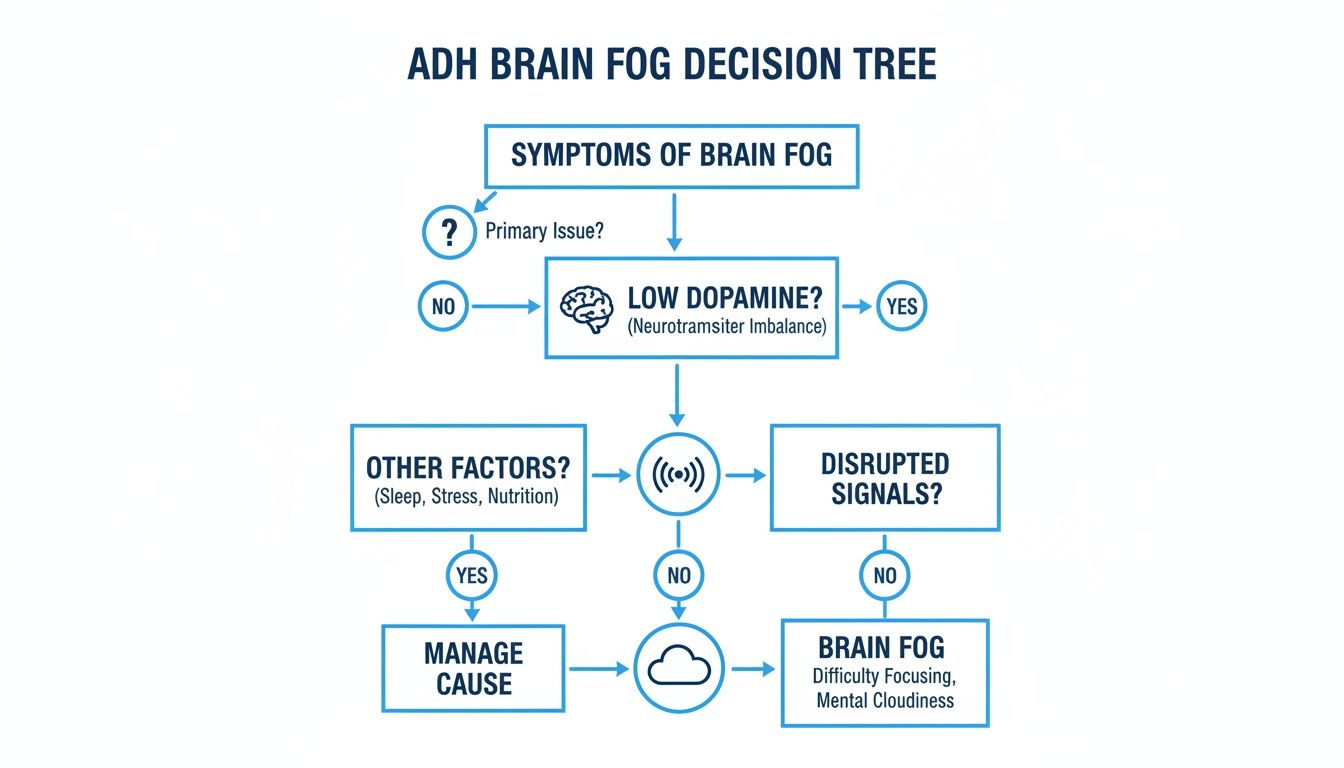
As you can see, low dopamine levels can disrupt the brain's internal signalling, which directly leads to that familiar feeling of being mentally stuck.
To help you get a clearer picture, this table provides a comparative overview of brain fog characteristics across different potential causes. Use it to help you identify patterns in your own experiences.
Differentiating ADHD Brain Fog from Other Conditions
| Symptom Origin | Typical Pattern | Associated Symptoms | Potential Triggers |
|---|---|---|---|
| ADHD | Lifelong, persistent, and situational. Worsens with boredom or understimulation. | Restlessness, impulsivity, trouble with organisation, emotional dysregulation. | Uninteresting tasks, low-dopamine activities, lack of structure. |
| Depression | Cyclical; aligns with mood. Feels heavy and slow, marked by a lack of motivation. | Low mood, loss of interest (anhedonia), changes in sleep/appetite, feelings of hopelessness. | Stressful life events, emotional distress, seasonal changes. |
| Anxiety | Feels like mental 'static' or a whirring mind; thoughts are racing but inaccessible. | Racing heart, restlessness, excessive worry, physical tension, panic attacks. | Overwhelm, high-pressure situations, perceived threats. |
| Sleep Deprivation | Directly tied to lack of rest. A feeling of deep mental and physical weariness. | Drowsiness, irritability, physical fatigue, microsleeps. | Poor sleep hygiene, insomnia, sleep apnea, lifestyle factors. |
| Long COVID | Persistent cognitive slowing that began after a COVID-19 infection. | Fatigue, shortness of breath, memory problems, 'post-exertional malaise'. | Physical or mental exertion, ongoing inflammation. |
Seeing these side-by-side highlights how the context and accompanying symptoms are your best clues for figuring out the source of your brain fog.
The Fog of Depression and Anxiety
Depression often brings a heavy, thick brain fog. It’s characterised by a profound lack of mental energy, motivation, and interest in anything. Thoughts might feel slow and repetitive, often circling around negative themes. This kind of fog tends to come and go with depressive episodes—it can lift when your mood improves and roll back in when it dips.
In contrast, ADHD brain fog is more of a constant companion. It isn’t necessarily tied to your mood but is part of your brain's baseline state. Someone with ADHD can feel foggy even on a good day, especially when faced with a task that’s uninteresting or requires sustained mental effort.
Anxiety-related brain fog feels different again. It’s often described as a "whirring" or "static-filled" mind. Your thoughts are racing, but you can't seem to grab hold of any of them. This fog is driven by worry and overwhelm, making it nearly impossible to focus on anything other than what’s making you anxious.
Chronic Fatigue and Sleep Deprivation
Chronic Fatigue Syndrome (CFS/ME) and simple sleep deprivation are major culprits behind brain fog. The fog from this kind of exhaustion feels like a deep, bone-deep weariness, both physically and mentally. Your brain feels too tired to perform even basic tasks, and any attempt at mental exertion can make the fatigue dramatically worse—a phenomenon known as post-exertional malaise.
While a bad night's sleep will certainly make ADHD symptoms worse, the fog from ADHD isn't just about being tired. A person with ADHD can wake up from a full 8 hours and still experience significant brain fog if their brain isn't stimulated in the right way. The key difference is that with sleep deprivation, the fog usually clears after proper rest. For ADHD, it's a constant that needs managing beyond just catching up on sleep.
Long COVID and Other Medical Conditions
In the last few years, "long COVID" has brought a new dimension to this conversation. Many people report persistent brain fog as a primary symptom long after their initial infection has gone. Early research suggests this may be linked to neuroinflammation—a subtle, ongoing inflammation in the brain and nervous system.
When you're trying to pinpoint the cause of your brain fog, it's essential to look at the bigger picture. Consider the timeline of your symptoms, what makes them better or worse, and what other physical or emotional experiences come with them. This holistic view is what will help you and your doctor connect the dots.
Other medical issues can also play a role, including:
- Hormonal Changes: Fluctuations during the menstrual cycle, pregnancy, or menopause can have a huge impact on cognitive function, especially for those with ADHD.
- Nutritional Deficiencies: Low levels of iron, B vitamins, or vitamin D can all lead to feelings of mental sluggishness and fatigue.
- Medication Side Effects: Always check the leaflet—some prescription medications list brain fog as a common side effect.
Teasing these possibilities apart is the first, most important step toward getting clear answers. By carefully examining the patterns and context of your brain fog, you can have a much more productive conversation with a healthcare professional and start moving towards an accurate diagnosis and effective solutions.
Wondering what the next step looks like?
Only a qualified clinician can diagnose ADHD. Answer a few questions and we’ll shortlist clinics that assess people like you.
The Hidden Costs of Living with Undiagnosed ADHD
ADHD brain fog isn't just a momentary lapse in concentration; it's a constant, thick haze that can seep into every corner of your life. It quietly undermines your confidence, your career, and even your closest relationships. This isn't just a feeling—the impact is very real, and it's a daily battle for so many.
Living with this mental sludge is like trying to run through water. You can see everyone else on dry land, moving forward with what seems like minimal effort, while every single step for you is a monumental struggle against an invisible force.

The Professional Price of Cognitive Fog
At work, the effects of ADHD brain fog can be devastating. Think about sitting in a critical meeting, trying with all your might to keep up. You hear the words, but they don't quite land. Your mind feels like a radio tuned just off the right frequency—you catch fragments, but the message is lost in a sea of static.
You might miss a key instruction, forget an important deadline, or find yourself unable to piece together a coherent thought to share. This quickly spirals into a cycle of poor performance and high anxiety. You know you're smart and capable, but the fog acts as a barrier, stopping you from showing it. This can lead to being passed over for promotions and a gnawing fear that your colleagues think you’re incompetent.
This isn’t about a lack of skill; it's about being unable to access the skills you already have. And it's far more common than you might think, especially as so many adults with ADHD are undiagnosed. Recent data shows a huge diagnostic gap in the UK, with only 0.32% of 9 million GP records indicating an ADHD diagnosis. This suggests millions are wrestling with symptoms like brain fog and poor focus without any formal recognition or support. You can read more about these ADHD statistics and their impact.
The Toll on Relationships and Self-Esteem
The fallout doesn’t stop at the office door. When you're talking with friends or your partner, you might find your mind wandering, making it impossible to stay present in the moment. You want to listen and engage, but the fog just pulls you away. From the outside, this can look like you’re bored or you don’t care, slowly creating a rift in your most meaningful relationships.
Maybe you forget a birthday, zone out while they’re telling you a story, or don't follow through on a promise you made. Each one feels like a small personal failure, but they add up, chipping away at both their trust and your own sense of being a reliable person.
Living with undiagnosed ADHD brain fog often means carrying a heavy burden of shame. You're constantly asking yourself, "Why can't I just get it together?" This internal monologue is incredibly destructive, eroding your self-esteem until you start to feel fundamentally broken.
This constant feeling of not measuring up is exhausting. It can lead to:
- Chronic Burnout: The sheer mental effort of pushing through the fog day after day is immense, leaving you physically and emotionally drained.
- Damaged Self-Worth: You start to believe the negative stories the brain fog tells you—that you're lazy, scattered, or just not good enough.
- Avoidance Behaviours: To stop "failing" again, you might begin to sidestep challenging situations or social events, which only makes your world smaller.
These hidden costs are profound. They represent lost opportunities, strained connections, and a quiet, relentless battle fought inside your own head. Realising that these struggles are symptoms of a neurodevelopmental condition—not a personal failing—is the first and most powerful step toward finding clarity. Getting the right support can finally lift the fog, helping you live up to the potential you’ve always known was there.
Finding Clarity with Effective ADHD Treatment
Living with ADHD brain fog can feel like you're constantly fighting your way through a thick haze. It’s exhausting. But the good news is, you don’t have to do it alone. There are solid, evidence-based treatments out there that can genuinely lift the fog, sharpen your focus, and give you back that sense of being in control. The goal isn’t to change who you are, but to give your brain the support it needs to fire on all cylinders.
Think of ADHD treatment like switching on the fog lights in your car. The fog might still be lingering, but suddenly you can see the road ahead and drive with confidence. For most people, that journey starts with medication, which gets right to the heart of the neurochemical imbalances that cause brain fog in the first place.
How Medication Can Clear the Fog
ADHD medications fall into two main camps—stimulants and non-stimulants—but both work by fine-tuning the brain's communication network. They target the neurotransmitters dopamine and norepinephrine, which are absolutely vital for paying attention, staying motivated, and managing all those executive functions that brain fog messes with.
- Stimulant Medications: These are usually the first port of call. They work by making more dopamine and norepinephrine available, essentially turning up the volume on the signals between your brain cells. The result? Better focus, less impulsivity, and a way to cut through that mental sludge.
- Non-Stimulant Medications: These take a more gradual approach, primarily influencing norepinephrine levels. They can be a fantastic alternative for anyone who doesn't get on well with stimulants or has tricky side effects, offering a smoother, more sustained improvement in concentration.
Finding the right medication and dose is something you’ll work out with your doctor, but when you get it right, it can feel like someone has finally tuned your brain to the right station.
As more people realise what ADHD actually is, more are seeking help. Since the COVID-19 pandemic, the UK has seen an 18% yearly jump in ADHD prescriptions. But there’s still a huge gap; only 15.6% of adults thought to have ADHD are actually receiving medication. This is a massive issue for those wrestling with brain fog, as the right treatment can be a game-changer. You can dig deeper into these ADHD treatment trends in the UK.
Building Skills Beyond Medication
Medication can lay the chemical groundwork for a clearer mind, but it works best when you pair it with practical support. That’s where therapy and coaching come in—they give you the real-world skills and strategies to manage ADHD for the long haul.
"Medication helps you see the path, but therapy and coaching teach you how to walk it. This combination is what builds lasting resilience against ADHD brain fog."
This two-pronged approach means you’re not just papering over the cracks; you’re building a whole new toolkit of sustainable habits that stick.
Therapy and Coaching for Lasting Mental Clarity
Two of the most powerful tools here are Cognitive Behavioural Therapy (CBT) and specialised ADHD coaching. They provide the structure you need to turn newfound focus into real-world success.
ADHD-Specific Cognitive Behavioural Therapy (CBT) CBT for ADHD isn’t just standard therapy; it’s specifically adapted to tackle the core challenges of the condition, including brain fog. A good therapist will help you:
- Spot Negative Thought Patterns: Learn to catch and challenge those automatic, self-critical thoughts ("I'm so slow," "I'll never get this done") that feed the fog.
- Develop Practical Coping Systems: Create real-world strategies for organising your life, managing your time, and just starting a task—systems that work with your ADHD brain, not against it.
- Manage Emotional Overwhelm: Get a handle on the frustration and anxiety that brain fog often brings, which boosts your overall emotional wellbeing.
Personalised ADHD Coaching ADHD coaching is all about looking forward and taking action. It’s a partnership where a coach helps you identify your strengths and build personalised systems for day-to-day life. A coach can help you:
- Break down massive, overwhelming tasks into small, doable steps.
- Create routines that protect your mental energy and reduce decision fatigue.
- Set and actually achieve goals that matter to you, in your career or personal life.
By bringing together the right medication with these targeted strategies, you can do more than just manage ADHD brain fog—you can build a life where clarity and focus are the new normal. It’s a complete approach that empowers you to move from feeling lost in the fog to confidently navigating your world.
Actionable Strategies to Manage Daily Brain Fog
While medication and therapy lay the groundwork for tackling ADHD brain fog, your daily habits are what truly build a clearer, more focused life. Think of it as fine-tuning your lifestyle to give your brain what it needs to thrive. These practical, ADHD-friendly adjustments can give you back a sense of control and help you push through the mental haze, one day at a time.

This isn’t about chasing perfection. It’s about finding what genuinely works for you. Often, it's the small, consistent changes that make the biggest difference, creating a routine that protects your precious mental energy.
Fuel Your Brain Intelligently
What you eat has a direct and immediate impact on your brain's performance. For an ADHD brain, unstable blood sugar is a huge trigger for brain fog, sending your energy levels on a rollercoaster. The goal is to keep things steady.
Start with a protein-rich breakfast. Switching a sugary cereal for eggs, Greek yoghurt, or even a protein shake provides a slow, steady release of energy. This helps stabilise dopamine and keeps your focus sharp, preventing that all-too-familiar mid-morning slump.
And don't forget to hydrate. It’s simple, but dehydration is one of the most common—and overlooked—causes of mental fatigue. Keep a water bottle nearby and sip throughout the day, rather than waiting until you’re parched.
Move Your Body to Clear Your Mind
Physical activity is one of the most powerful tools in your non-medical toolkit for fighting ADHD brain fog. It’s not just good for your body; exercise directly boosts the production of dopamine and norepinephrine, the very same neurotransmitters that ADHD medication targets.
- Short, intense bursts work wonders. You don't need to run a marathon. A brisk 10-minute walk, a few sets of jumping jacks, or a quick dance break can be enough to jolt your brain’s focus circuits back online.
- Find your dopamine hit. Choose activities you actually enjoy. For some, that’s running or lifting weights. For others, it’s hiking, bouldering, or martial arts. The more engaging it is, the bigger the mental payoff.
- Consistency trumps intensity. A little movement every day is far more effective than one exhausting session a week. Try building it into your routine, like a short walk right after lunch, to make it automatic.
For a deeper look at how movement can help, check out our guide on the best exercises for ADHD.
Think of exercise as a way to manually reset your brain. When the fog rolls in, movement can act like a powerful fan, actively blowing it away and restoring clarity.
Engineer Your Environment for Focus
Your surroundings can either be your ally or your enemy in the fight against brain fog. Instead of draining your finite willpower, get your environment to do some of the heavy lifting for you.
Create an "external brain" to offload all that mental clutter. Get tasks and ideas out of your head and onto a large whiteboard, sticky notes, or a digital app. This frees up so much precious working memory.
Timers are also your best friend. The Pomodoro Technique—working in focused 25-minute sprints with short breaks—is brilliant for the ADHD brain. It breaks down intimidating tasks into manageable chunks and provides the regular stimulation needed to stay on track.
It’s also important to note that cognitive difficulties are becoming more prevalent. Clinical observations in the UK suggest a noticeable rise in patients presenting with fatigue and brain fog since the COVID-19 pandemic, symptoms which disproportionately impact neurodivergent individuals trying to stay on top of their work. Learn more about these observations on post-pandemic neurodiversity.
How to Navigate a Private ADHD Assessment in the UK
If the daily battle with brain fog feels all too familiar, getting an official diagnosis can be a game-changing move. For many people in the UK, the private route is a much faster option than the long NHS waiting lists. It might seem like a daunting process, but it's really just a structured path towards getting the clarity you deserve.

Your first port of call is to research and choose a reputable clinic. You’ll want to look for providers staffed by experienced clinicians who genuinely specialise in adult ADHD. Once you've got a shortlist, don't be shy about asking some direct questions before you commit your time and money. Knowing exactly what to expect will help you feel much more confident in your decision.
Key Questions to Ask a Clinic
- What does your assessment process involve? A proper, thorough assessment should include in-depth questionnaires, a clinical interview, and a look back at your developmental history.
- What are the total costs involved? Be sure to ask for a full breakdown. This should cover the initial assessment, any follow-up appointments, and the fees for medication titration if you go down that route.
- Do you offer shared care agreements with GPs? This is a really important one. A shared care agreement makes ongoing medication much more affordable, as it lets your GP take over the prescription.
- What are your current waiting times? This will give you a clear and realistic idea of how long it will be before your first appointment.
Choosing to pursue an assessment is an act of self-advocacy. It's about getting the answers you need to stop blaming yourself for neurological symptoms like brain fog and start building effective support systems.
After picking a clinic, you’ll usually be asked to fill out some pre-assessment forms. These are often quite detailed, digging into your childhood, your time at school, and the challenges you’re facing now. It’s worth taking your time to be honest and thorough—this information gives your clinician the full picture.
The assessment itself is typically a long, guided conversation with a specialist. You’ll have the chance to talk through your experiences in depth, connecting the dots from your past to your present. The goal isn't just to get a label; it’s about finally understanding how your brain works.
A reliable diagnosis can be incredibly validating, explaining a lifetime of feeling 'different'. It’s also the critical first step towards finding a treatment that works, and at last, lifting that persistent ADHD brain fog. To help with your search, you can learn more about how to find a private ADHD assessment in the UK and compare your options.
Your Questions About ADHD Brain Fog, Answered
When you're trying to get your head around ADHD, it's only natural to have a lot of questions. Brain fog is one of the most common—and most frustrating—symptoms, so let's clear up some of the confusion.
Is ADHD Brain Fog a Real Medical Symptom?
Yes, it absolutely is. ADHD brain fog isn't a sign of laziness or a character flaw; it's a genuine neurological symptom. It’s directly linked to the way ADHD affects brain chemistry.
When key neurotransmitters like dopamine and norepinephrine aren't working as they should, it impacts crucial executive functions—things like your working memory and how quickly you can process information. That's the fog you're feeling.
Can ADHD Brain Fog Come and Go?
Definitely. For most people, brain fog isn't a constant, heavy blanket. It tends to ebb and flow, often getting worse when you're understimulated, bored, tired, or feeling stressed out.
On the flip side, you might find the fog lifts when you're completely absorbed in something you find fascinating. That intense focus can temporarily push the fogginess away.
Think of it less like a permanent weather condition and more like a rolling fog bank. Sometimes it’s thick and disorienting, while at other times, pockets of clarity break through.
Does ADHD Brain Fog Get Worse with Age?
This really depends on the individual. Some people feel their symptoms ramp up as life gets more complex. Juggling a career, family, and household responsibilities puts a huge strain on executive functions, which can make the fog feel thicker.
Hormonal shifts, especially for women going through perimenopause and menopause, can also have a big impact on dopamine levels and make brain fog much worse.
But it’s not all downhill. Many people find that with a proper diagnosis, the right treatment, and solid coping strategies, they get much better at managing their symptoms over time. Getting support is the key to building a life where the fog doesn't rule, no matter your age.
Finding the right path to diagnosis is the first step towards clarity. ADHD Private is a free UK directory designed to help you compare over 300 private clinics, making it easier to find the right support. Check transparent pricing, wait times, and services to confidently choose a provider. Start your journey today at https://adhdprivate.co.uk.