Understanding Private ADHD Assessment Costs in the UK
Explore private ADHD assessment costs in the UK for adults and children, understand what's included, and learn how to choose a clinic with confidence.
Written and maintained by the ADHD Private editorial team, drawing on NHS, NICE and ADHD UK guidance. This is general information, not medical advice.
If you're exploring a private ADHD assessment in the UK, one of the first questions on your mind is likely about the cost. Getting a clear answer can feel a bit like navigating a maze, but understanding the numbers is the first step toward making a plan.
The headline figure? The average private ADHD assessment cost in the UK is around £1,267. That figure is the average reported by a 2024 survey of 401 clinics. Our own 2026 study of published clinic prices puts the adult assessment median at £995 and the mean at £1,051. The two are measured differently — one asked clinics what they charge, the other records what clinics publish — so read them as separate pictures rather than a trend. This is a one-off fee for the diagnostic process, an investment that can provide much-needed clarity and a clear path forward for support and treatment.
A Snapshot of UK Private ADHD Assessment Costs
Our 2026 price study: we checked the published prices of 332 private ADHD clinics against their own websites in July 2026. Across the 161 that publish a price, an adult ADHD assessment cost a median of £995, ranging from £275 to £2,100 — and the region you live in accounted for only about 9% of that variation. Read the full study.
Let's be honest, with NHS waiting lists often stretching for years, turning to the private sector has become a practical option for many families and individuals. But this route comes with a price tag, and it’s crucial to know what you’re paying for.
Think of the assessment fee not just as a cost, but as an investment in specialist expertise. It covers the extensive clinical time needed for a thorough, accurate diagnosis. This isn't a quick check-up; it's a deep dive into how you or your child's mind works, forming the bedrock of any future treatment plan.
Average Costs for Adults and Children
While every clinic sets its own fees, looking at the national average gives us a solid starting point. It's also worth noting that assessments for children often cost a bit more than those for adults. This is usually down to the extra complexity involved, like gathering information from schools and parents to build a complete picture.
This chart gives you a quick visual breakdown of the typical costs you can expect.
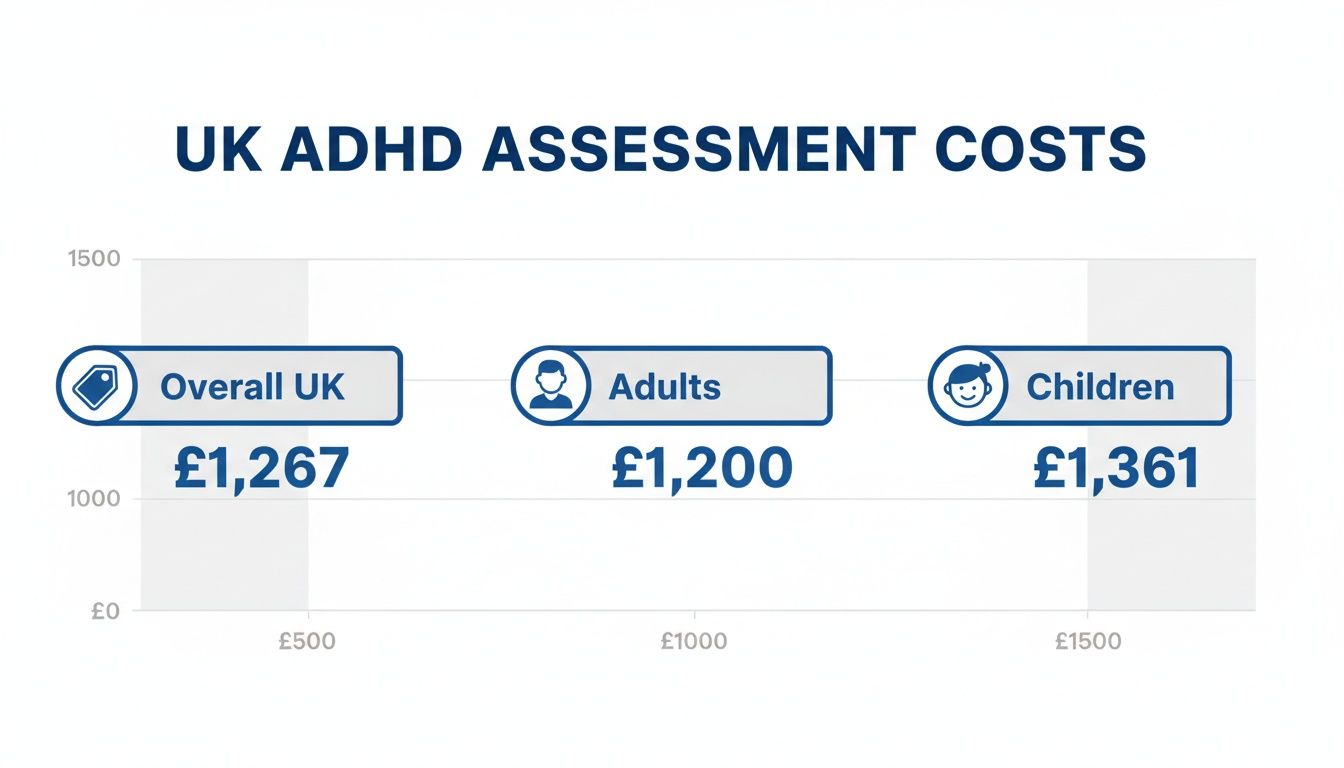
As the numbers show, while the costs are in a similar ballpark, it's wise for families to budget a little extra for a child's assessment.
Drilling down into the specifics, recent analysis confirms that the average private ADHD assessment cost hit £1,267. For adults, the average sits at around £1,200, while for children, it's slightly higher at £1,361. Keep in mind that where you live can also play a big part. For example, costs in the East of England tend to be higher, averaging £1,351 for adults and £1,510 for children. If you're interested in the regional nuances, you can explore more detailed cost breakdowns.
A private assessment offers a pathway to faster answers. While the cost is a significant consideration, it provides timely access to specialist evaluation, which can be life-changing for individuals and families waiting for support.
To make things even clearer, here's a table summarising the key figures.
Average UK Private ADHD Assessment Costs
This table provides a quick overview of the average private ADHD assessment costs in the UK for adults and children, including the typical price range you might encounter.
| Assessment Type | Average Cost (UK) | Typical Price Range |
|---|---|---|
| Adult ADHD Assessment | £1,200 | £800 - £1,800 |
| Child ADHD Assessment | £1,361 | £950 - £2,200 |
As you can see, the range is quite broad. This is because the final price is influenced by several factors, from the clinician's experience to the depth of the diagnostic tests included.
If you've started looking into a private ADHD assessment, you’ve probably noticed the prices can feel a bit all over the place. One clinic might quote under £800, while another is charging upwards of £2,000. It’s a huge range, and it’s easy to feel confused.
This price difference isn’t random, though. Several key factors are at play, and understanding them is the first step to figuring out which clinic offers the right value for you.
Think of it like buying a car. A basic model will get you from A to B, but if you want advanced safety features, a more powerful engine, and a premium interior, the price goes up. The final cost reflects what’s “under the bonnet,” and the same logic applies to ADHD assessments.

Clinician Expertise and Assessment Depth
The single biggest driver of cost is the seniority and specialisation of the clinician handling your assessment. A diagnosis from a Consultant Psychiatrist—a medical doctor who is on the GMC's Specialist Register—will almost always cost more than one from a specialist nurse or another qualified healthcare professional. You're paying for their extensive medical training, which is particularly vital for untangling complex cases or identifying co-occurring conditions.
The thoroughness of the assessment itself also plays a massive part. A straightforward diagnostic process designed just to confirm or rule out ADHD will sit at the lower end of the scale. However, a more comprehensive evaluation, which costs more, often includes extra, valuable elements:
- Cognitive testing: Specific tests that measure executive functions like your working memory or processing speed.
- Screening for co-occurring conditions: Looking for common related issues like anxiety, depression, or traits of autism spectrum disorder.
- Detailed feedback and reporting: More expensive packages usually come with longer feedback sessions and more in-depth reports, which can be invaluable for work or university.
Location and Clinic Overheads
Where a clinic is physically based can influence its pricing, although this is becoming less of a factor as more assessments move online. Still, clinics with offices in major cities like London or Manchester naturally have higher rent and running costs, which can trickle down into the price of in-person appointments.
A clinic’s size and structure matter, too. A large, established practice with a full administrative team, dedicated patient support, and rigorous quality control processes will have higher overheads than a solo practitioner working independently.
An assessment is so much more than a tick-box exercise; it's a detailed psychiatric evaluation. The price reflects the clinician's time to deeply review your history, conduct interviews, analyse all the information, and write a comprehensive report that becomes the foundation for all your future care.
All-Inclusive Packages vs. ‘Pay-As-You-Go’ Pricing
Finally, clinics have different ways of structuring their fees. Some offer a single, all-inclusive price. This fee covers everything from the initial questionnaires and the main assessment to the final diagnostic report and maybe even the first follow-up appointment.
Others operate on an "a la carte" or pay-as-you-go basis. The initial assessment fee is just for the consultation itself. Writing the report, follow-up calls, and letters to your GP are all billed as separate, additional costs.
It’s absolutely crucial to check what’s included in the price you’re quoted. A service that looks cheaper at first glance can quickly become more expensive if key parts of the process are billed separately. Don't be afraid to ask for a clear, itemised breakdown of all potential costs before you commit.
Looking for a private ADHD assessment?
Answer a few questions and we’ll shortlist clinics that fit — comparing price and waiting time.
What Your Assessment Fee Actually Covers
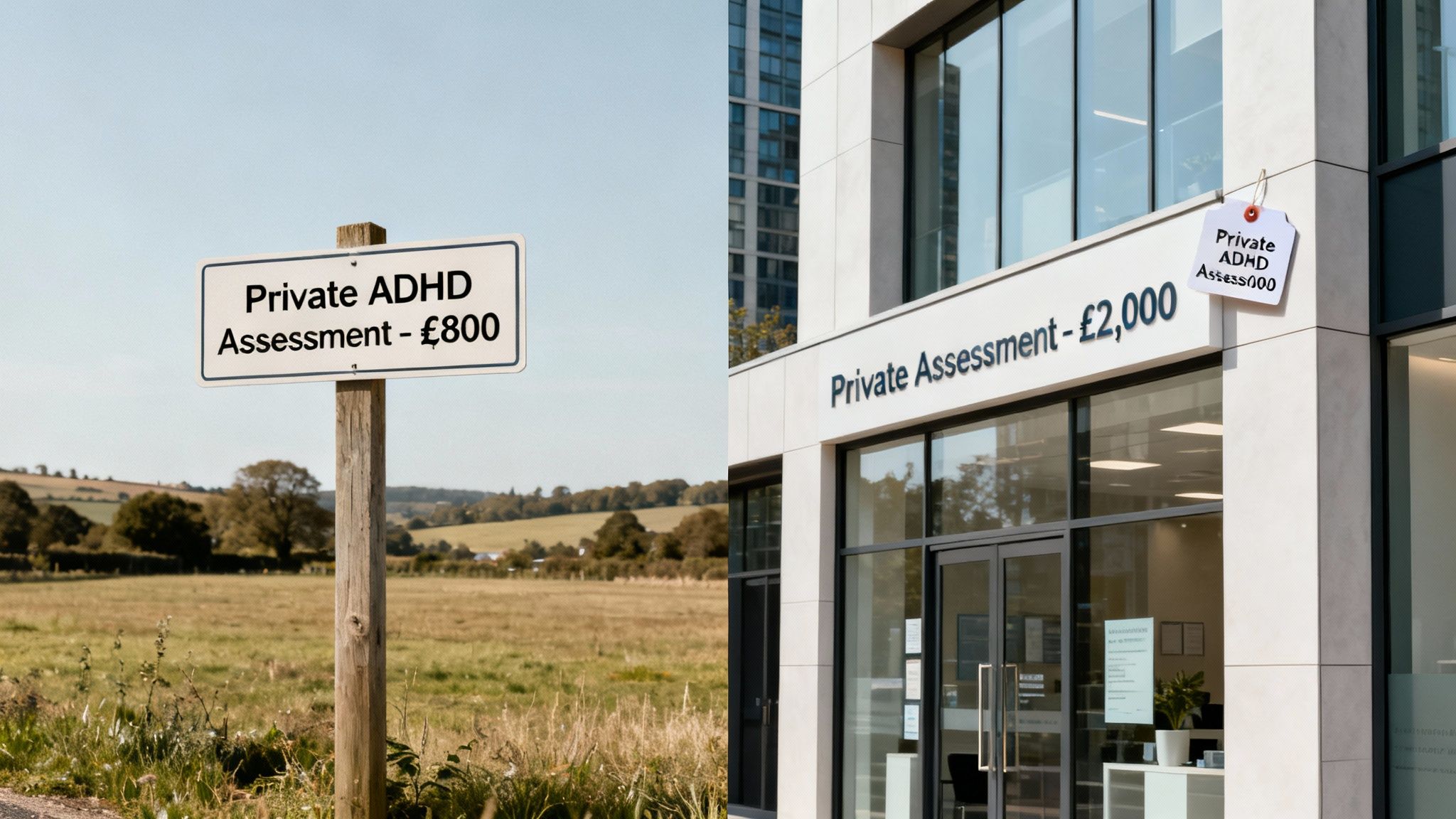
When you see a price advertised for a private ADHD assessment, it's natural to think that’s the final figure. But to budget properly and avoid any nasty surprises down the line, it’s crucial to know what that initial fee includes and, just as importantly, what it doesn’t.
Think of it like buying a car—the sticker price gets you the basic model, but the optional extras are what really shape the final cost. Most clinics bundle a core set of services into their standard assessment package to give you a complete diagnostic evaluation.
Generally, the initial private ADHD assessment cost will get you these key things.
Standard Inclusions in Your Fee
- Pre-Assessment Questionnaires: These are the detailed forms you (and often a family member or teacher) fill out before your appointment. They give the clinician a head start.
- The Main Diagnostic Interview: This is the heart of the process. It's a long, detailed chat with a specialist, usually lasting anywhere from two to three hours.
- A Formal Diagnostic Report: You’ll receive a comprehensive document detailing the entire assessment, the clinical findings, and a clear diagnostic conclusion. This report is your key to unlocking support.
- A Feedback Session: This is a follow-up call or meeting to walk you through the report, answer your questions, and discuss what comes next.
This core package delivers the diagnosis, but that’s often just the first step. If medication is part of your treatment plan, you're almost certainly going to face extra costs.
The headline assessment fee gets you the diagnosis, but the post-diagnostic support is where the true long-term costs can accumulate. It's vital to clarify these potential follow-on fees with any clinic before you proceed.
Common Additional Costs to Anticipate
The financial commitment can stretch well beyond that initial fee. Research shows that follow-up consultations average around £173. On top of that, medication titration—the process of finding the right dose—often takes three to six months of private care before your GP might agree to a shared care arrangement with the NHS.
Factor in private prescription fees, which can be anywhere from £25 to £125 each time, and your total out-of-pocket spend can easily top £1,500 on top of the assessment cost itself. It’s worth taking a moment to review the full breakdown of these ongoing treatment expenses to get a realistic picture.
Here are the most common extras you’ll need to budget for:
- Medication Titration: If you start medication, this is the phase of fine-tuning the type and dosage. It requires several follow-up appointments and is almost always billed separately from the initial assessment.
- Private Prescriptions: The clinic charges an admin fee simply for writing the prescription. This is completely separate from what you’ll pay the pharmacy for the actual medication.
- Specialised Reports: While the standard diagnostic report is included, you might need specific letters or forms for your university (to apply for DSA) or your employer (for Access to Work). These almost always come with an extra charge.
- Annual Reviews: To keep a shared care agreement going with your GP, most clinics insist on an annual review to monitor your progress. This is a recurring yearly cost you need to plan for.
How to Compare Clinics and Services
Choosing the right private ADHD clinic can feel like a daunting task, and the private ADHD assessment cost is often just the starting point. To make a decision you feel good about, you need to look past the headline price and dig a little deeper.
I often tell people to think of it like hiring a specialist for a big home project. You wouldn't just hire the cheapest builder without seeing their past work, checking their credentials, and making sure they’ll be around to fix any issues. It’s the same with a clinic—you need to look at their clinical expertise, the support they offer, and what your long-term care will look like.
The best way to do this is to create a simple checklist. It helps you cut through the marketing fluff and compare providers on the things that actually matter for your health and your wallet.
Your Mental Checklist for Clinic Comparison
As you start shortlisting clinics, here are the key questions to ask. This approach helps you make a true like-for-like comparison and find a service that genuinely fits your needs.
- Who is doing the assessment? Is it a GMC-registered Consultant Psychiatrist or another type of clinician? A psychiatrist brings a medical background that's invaluable for complex cases, and their diagnosis often carries more weight, especially with GPs.
- What’s actually in the assessment? You want a clinic that offers a proper, in-depth evaluation—not just a quick questionnaire. A good assessment should involve detailed forms beforehand, a comprehensive diagnostic interview, and checks for other conditions that often go hand-in-hand with ADHD.
- What happens after the diagnosis? This is a big one. Does the clinic offer ongoing support like medication titration or therapy? Some places just give you a diagnosis and leave you to figure out the rest. You can read more about what a full diagnostic journey should look like in our guide on how to get an ADHD diagnosis.
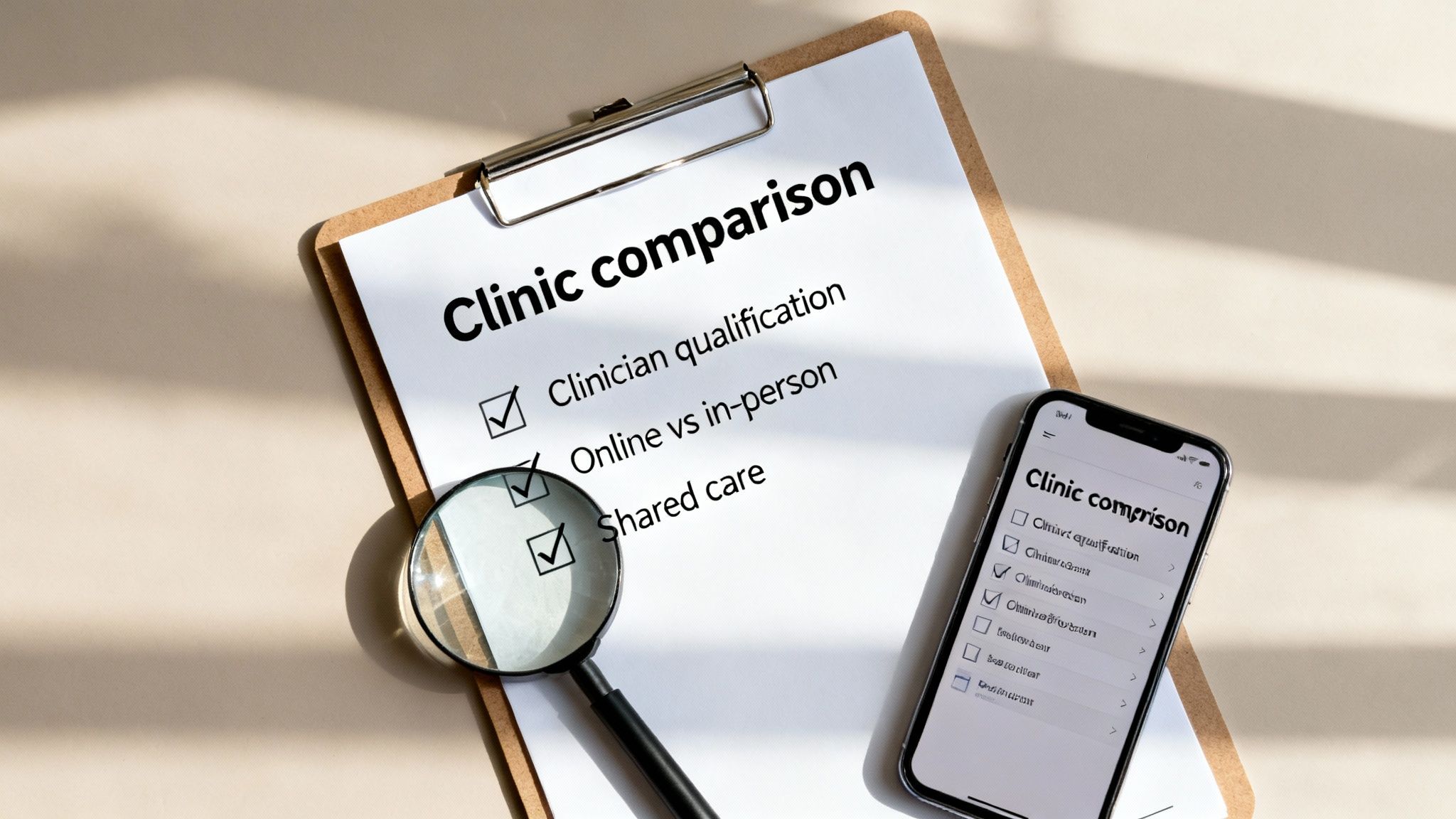
The screenshot below from the ADHD Private directory shows how you can see these crucial details at a glance.
This kind of side-by-side view makes it much simpler to compare key facts like assessment costs, how long you’ll be waiting, and whether the clinic can set up a shared care agreement.
Understanding Shared Care Agreements
One of the most critical factors for your long-term costs is whether a clinic offers a Shared Care Agreement (SCA) with the NHS. Think of this as a formal partnership between your private specialist, your NHS GP, and you.
A Shared Care Agreement is the key to making long-term treatment affordable. Under this arrangement, your GP agrees to take over writing your repeat prescriptions. This means you only pay the standard NHS prescription charge instead of the much higher private medication fees.
Before you even book an assessment, it’s absolutely vital to confirm two things. First, does the private clinic actively support and help set up SCAs? Second, and just as important, is your local GP surgery willing to accept one from a private provider? Some practices have a blanket policy not to.
Asking these questions upfront can save you thousands of pounds in medication costs down the line and prevent a world of frustration. A clinic's commitment to working with the NHS is a pretty good sign they care about your sustainable, long-term well-being.
Using the NHS Right to Choose Pathway
When you're facing a potential ADHD diagnosis, it's easy to feel stuck between two tough choices: an agonisingly long NHS wait or a hefty private bill. But there's a third way that many people don't know about. It’s called the NHS Right to Choose (RTC) pathway, and for some, it’s a total game-changer, potentially bringing the private ADHD assessment cost down to zero.
Think of it this way: the NHS essentially gives you a golden ticket to use at an approved private clinic. If you're eligible, you can pick a private provider that also holds an NHS contract. This means you get the speed and efficiency of the private sector, but the NHS foots the bill. You aren't "going private" in the traditional sense; you're receiving an NHS-funded service delivered by a private company.
This isn't some obscure loophole, either. It’s a legal right embedded in the NHS Constitution for anyone registered with a GP in England.
How Does Right to Choose Work?
Getting started is more straightforward than you might think, though it does need you to take the lead. The whole point of RTC is to bridge the gap between NHS funding and the availability of specialist private clinics, giving you a real alternative to sitting on a local waiting list for years.
Here’s how it breaks down in simple steps:
- Confirm You're Eligible: The main two conditions are being registered with a GP in England and having that GP agree that an ADHD assessment is clinically necessary for you.
- Find a Qualified Provider: Your next job is to find a private clinic that is set up to accept NHS Right to Choose referrals. It's important to remember that not all of them are.
- Secure Your GP Referral: You’ll need to book an appointment with your GP, talk through your symptoms, and clearly state that you want to exercise your Right to Choose. It helps enormously if you go prepared with the name and referral details of your chosen provider.
Right to Choose puts you back in the driver's seat of your own healthcare. It lets you pick a qualified provider with a much shorter queue, and the NHS will cover the entire cost of the assessment and any follow-up treatment, exactly as if you'd stayed within your local NHS trust.
Finding a Clinic and Managing Expectations
Pinpointing the right provider is the crucial first step. Some of the UK’s biggest private ADHD services, like ADHD 360, are well-known for their Right to Choose pathway. It can be useful to see how they handle the process; for instance, you can read about the ADHD 360 Right to Choose pathway to get a feel for what’s involved.
Now for a dose of realism. While RTC lets you sidestep the huge local NHS queues, the private providers still have their own waiting lists. These have grown longer recently as more people discover this option, but they're almost always significantly shorter than the two-year-plus waits people are facing in many parts of the country.
By looking into this pathway, you can access a thorough, high-quality assessment without having to worry about the financial strain.
Planning and Budgeting for Your Assessment
So, you've got a much better picture of the private ADHD assessment cost and what influences it. That knowledge is power. The next step is to turn that information into a concrete, practical plan for your own situation.
Budgeting for an assessment isn’t just about the initial headline figure. It's about thinking ahead and mapping out the entire financial journey, including any potential follow-up costs for things like medication titration or further consultations.
A great place to start is by looking into how you can make the main fee more manageable. Many clinics are well aware that this is a significant investment and offer flexible payment options to help spread the cost over several months. This alone can make the whole process feel much more achievable.
Don't forget to check your workplace benefits, either. It’s surprising how many people overlook this. Some employers provide private health insurance or healthcare cash plans that might cover or contribute towards a diagnostic assessment. A quick chat with your HR department or a look through your policy documents is always a worthwhile exercise.
Making the Cost More Manageable
Getting the financial side sorted early on makes for a much smoother and less stressful experience. Here are a few practical steps to make the investment feel a little less daunting:
- Ask About Payment Plans: Don't be shy. Many clinics expect this question and have systems in place to help you spread the cost.
- Check Workplace Insurance: Dig out that policy booklet. Any contribution from an employer's health scheme can make a real difference.
- Prepare for Your Consultation: Go in with your questions and key information written down. A more efficient appointment is a more cost-effective one.
Taking the time to plan your finances removes a huge weight from your shoulders. When you've explored all the options, you can put money worries to one side and concentrate on what’s most important: getting the clarity and support you deserve.
A sensible first step for many is to browse clinics that offer payment plans to see what's out there. By being proactive, you give yourself the financial confidence you need to move forward on your assessment journey.
Got Questions? We've Got Answers
Thinking about a private ADHD assessment naturally brings up a lot of practical questions. Let's tackle some of the most common ones you might be wrestling with.
Is a Private ADHD Diagnosis Recognised by the NHS?
Yes, generally speaking, it is. When a qualified specialist (especially a Consultant Psychiatrist) provides a diagnosis, it’s usually accepted by the NHS and schools.
The key thing to understand, though, is that accepting the diagnosis isn't the same as automatically taking over your treatment. For your local GP to prescribe your medication, you'll almost always need to set up a Shared Care Agreement, which is a critical step in bridging the gap between private and NHS care.
How Long Are the Wait Times for Private vs NHS Assessments?
The difference here is often stark. Getting an ADHD assessment on the NHS can be a very long waiting game, with reports from many parts of the UK citing waits of over two years.
This is one of the main reasons people start looking into private options. Most private clinics set their own capacity, and waiting times vary widely between them — ask any clinic directly what its current wait is before you book.
Many people weigh the private ADHD assessment cost against how long they expect to wait for an NHS assessment in their area.
Does Private Health Insurance Cover an ADHD Assessment?
It really depends on your specific plan. A lot of standard private health insurance policies in the UK unfortunately don't cover assessments or treatments for neurodevelopmental conditions like ADHD.
That said, you should absolutely check. Dig out your policy documents or give your insurer a call, because some of the more comprehensive corporate or premium plans might offer partial or even full coverage. It's always worth asking the question.
Ready to compare your options and find the right clinic for you? The free directory at ADHD Private lets you see clear pricing, wait times, and services from over 85 UK clinics. Start your search on adhdprivate.co.uk