Private ADHD Diagnosis London: Guide to Quick Access
Thinking about a private ADHD diagnosis in London? Learn where to get assessed, typical costs, and how to coordinate private care with NHS services.
Written and maintained by the ADHD Private editorial team, drawing on NHS, NICE and ADHD UK guidance. This is general information, not medical advice.
If you're grappling with the seemingly endless wait for an ADHD assessment on the NHS, you're not alone. Opting for a private ADHD diagnosis in London can feel like a lifeline, slashing potential years of waiting down to mere weeks. It’s a direct path to getting answers from specialists, receiving a clear diagnosis, and finally getting the support you need to manage your symptoms and move forward.
Why a Private ADHD Diagnosis in London Is Worth Considering

The main reason so many people explore private ADHD diagnosis in London is the huge gap between the NHS and private pathways. The public system is an incredible resource, but it's completely overwhelmed by demand right now. This bottleneck leaves countless individuals feeling stuck, unable to get the clarity they need to make sense of their experiences.
For adults, this isn't just a minor inconvenience. A long delay can seriously impact your career, mental well-being, and relationships. The day-to-day battles with unmanaged ADHD—from disorganisation and a lack of focus to emotional ups and downs—don't just pause while you're on a waiting list; they build up.
The Reality of NHS Waiting Lists
The scale of this problem is staggering. NHS waiting lists for ADHD assessments have ballooned, with an estimated 196,000 adults in England currently waiting for an evaluation. In some parts of the country, people are facing waits of up to 550 weeks. It’s this reality that makes a private ADHD diagnosis in London such a vital alternative. Private clinics across the UK, by comparison, report average waits of just 43 days.
You can read more about the current state of NHS and private ADHD assessment waiting times in this in-depth look at the data.
This stark difference really gets to the heart of why people go private: speed. It's about taking back control of your health journey instead of passively waiting for an appointment that might be years away.
Choosing a private assessment isn’t about queue-jumping. It’s a practical decision driven by a need for timely answers. For many, it's about accessing crucial support now to avoid years of unnecessary struggle at work, in studies, and at home.
NHS vs Private ADHD Assessment in London at a Glance
To make the right choice for you, it helps to see the two options laid out side-by-side. While the NHS route is free at the point of use, its "cost" can be measured in lost time and the continued impact of untreated symptoms. The private route requires a financial outlay, but it offers speed, choice, and a much more direct path to treatment.
This table breaks down the main differences you’ll find.
| Factor | NHS Pathway | Private Pathway |
|---|---|---|
| Wait Time | Typically 1-5+ years, depending on your local NHS trust. | Usually a few weeks to a few months. |
| Cost | Free at the point of care. | Assessment fees range from £700-£2000+, plus potential extra costs for medication titration and follow-ups. |
| Referral Process | You'll need a GP referral to a local NHS mental health service. | Self-referral is almost always an option, letting you contact clinics directly. |
| Choice of Clinician | You are assigned to the next available specialist within your trust. | You can research and choose a specific clinic or specialist based on their expertise, reviews, and approach. |
| Post-Diagnosis Support | Varies hugely. It can involve more long waits for medication or therapy. | A clear, structured pathway for medication, therapy, or coaching is typically available right after diagnosis. |
Ultimately, whether you pursue a private ADHD diagnosis in London is a personal call. It's about weighing the upfront financial cost against the long-term personal and professional cost of waiting. For many, the ability to get a diagnosis and start building effective coping strategies is an investment that quickly pays for itself in every area of life.
How to Find and Compare the Right London ADHD Clinics
So, you’ve decided to look into a private ADHD diagnosis in London. The first big hurdle is figuring out where to even begin. A quick Google search can feel like opening a floodgate, leaving you with more questions than answers. The real goal isn't just to find any clinic, but to find the right one for you—your budget, your needs, and your life moving forward.
Instead of getting lost in endless search results, a far better approach is using a specialised directory. These tools are built to help you filter through the noise, letting you compare clinics based on what really matters: location, whether they see you online or in person, and crucially, how long you’ll be waiting.
This targeted approach is more important than ever. When researchers analysed 9 million UK GP records, they found only 0.32% of patients had an ADHD diagnosis noted. This hints at a massive diagnostic gap, suggesting as many as 2.5 million people in England might be living with undiagnosed ADHD. It’s no wonder so many are now seeking clarity through the private sector.
Key Factors for Comparing London Clinics
Once you have a shortlist of potential clinics, it's time to get down to the details. Think of this as a vetting process. You're not just buying a one-off service; you're potentially starting a long-term relationship with a healthcare provider.
Don't just get swayed by the headline price. The true cost and quality of care can vary dramatically. Here’s what you should be looking at for each clinic:
- Total Assessment Cost: What’s the full picture? Go beyond the initial consultation fee and ask about costs for follow-ups, medication titration, and any hidden admin charges.
- Waiting Times: This is often the main reason people go private. Get a firm answer on the timeline from your first enquiry to actually getting a diagnosis.
- Clinician Credentials: Who exactly will you be speaking to? Make sure they are a GMC-registered psychiatrist or a specialist psychologist with deep experience in adult ADHD.
- Assessment Format: Do they offer face-to-face appointments in London, or is it all done online via video call? Think about which format works best for you and your comfort level.
- Post-Diagnosis Pathway: What happens after the assessment? A good clinic won't just hand you a report. They’ll have a clear plan for what comes next, whether that’s medication, therapy, or coaching.
Digging Deeper Into Clinic Policies
Now for the really important stuff. A few specific policies can make a world of difference to your experience and your bank balance in the long run. Don’t hesitate to ask these questions directly before you commit.
Shared-Care Agreements
This is probably the single most important factor for long-term affordability. A shared-care agreement is a formal arrangement where your private specialist gets your medication stable, and then your NHS GP agrees to take over issuing the repeat prescriptions.
A clinic's experience and willingness to set up a shared-care agreement with your GP is a game-changer. Without one, you're stuck paying for private prescriptions indefinitely, which can easily add £80-£150 to your monthly costs.
NHS Right to Choose
It’s also worth checking if a private provider is qualified to accept referrals under the NHS Right to Choose scheme. If you’re eligible, this pathway allows the NHS to fund your assessment with an approved private clinic. It’s the best of both worlds: the speed of the private sector with NHS funding. Always ask if a clinic offers this and what the eligibility criteria are.
For a detailed breakdown, you can browse our comprehensive list of ADHD clinics in London and filter them based on the specific services they provide.
Making the Final Choice
Choosing a clinic for a private ADHD diagnosis in London is a big step. Once you’ve done your research, you can lay out the facts and make an informed decision. I often suggest people create a simple spreadsheet to compare their top two or three clinics side-by-side.
Finally, trust your gut. A clinic that communicates clearly, answers your questions transparently, and makes you feel heard is likely to provide a much better experience. Putting in this work upfront is an investment that pays off, setting you up for a much smoother and more supportive journey.
Getting Ready for Your Private ADHD Assessment

Walking into your ADHD assessment feeling prepared can make a world of difference. It helps dial down the stress and makes the entire process far more productive. The goal here isn't to pass some kind of test; it's to give your clinician an honest, detailed picture of your life so you can explore your experiences together.
When you've done a bit of groundwork, you feel more in control. Instead of being put on the spot and forgetting crucial details, you’ll have your thoughts and evidence organised. This prep work is really about empowering you to tell your story clearly and effectively.
Pulling Together Your Personal History
To diagnose adult ADHD, a specialist needs to see a persistent pattern of traits stretching back to childhood that still causes you real-world problems today. While your memory is a key part of this, having some tangible evidence can be incredibly helpful. Think of yourself as a historian of your own life, gathering the documents that tell your story.
Start by digging out anything that might show these patterns over time. Don't worry if you can't find everything – just bring what you can.
- Old School Reports: These are often the gold standard. Look for those classic teacher comments: "doesn't live up to potential," "easily distracted," "disorganised," "very talkative," or "spends a lot of time daydreaming."
- Work Performance Reviews: Have past reviews mentioned issues with deadlines, attention to detail, or time management, even while praising your creativity? These are really useful.
- GP or Medical Notes: Have you ever mentioned anxiety, depression, or sleep problems to your GP? These can often be linked to underlying ADHD, so any notes are worth including.
- Old Emails or Messages: Sometimes, a candid email to a friend or a heartfelt message to a family member describing your struggles can provide a powerful, in-the-moment snapshot of what you were going through.
It's About Your Story, Not Just a Checklist of Symptoms
Simply rattling off a list of symptoms from a website won't give the full picture. What a clinician really needs to understand is how these traits actually affect your daily life. Before your appointment, take some time to think about specific examples.
Consider how potential ADHD traits show up in different parts of your life:
- At Work: "I'm the one everyone comes to for big ideas, but I constantly miss the reporting deadlines because I get bogged down in the small stuff and put it off."
- In Relationships: "My partner gets really frustrated that I seem to 'zone out' when they're talking to me, or that I can forget an important anniversary we've just discussed."
- At Home: "My flat is filled with half-finished DIY projects. I also get hit with late fees on bills all the time, not because I don't have the money, but because I just forget to pay them."
- Socially: "I've probably bought all the gear for five different hobbies in the past year alone. I get obsessed for a few weeks, then the novelty wears off and I drop it."
The most powerful thing you can do is connect a symptom to a real-world consequence. Instead of just saying, "I have poor time management," try explaining, "I was nearly fired last month because I was late for the third time in one week." That context is what truly paints a clear picture for the clinician.
What Actually Happens During the Assessment?
A proper private ADHD diagnosis in London is a thorough psychiatric evaluation, not just a quick tick-box exercise. It’s a structured conversation, usually lasting between one to three hours, designed to explore your past and present challenges in detail.
Your clinician will guide you through questions about your childhood, school life, career, relationships, and overall mental health. They'll use the official diagnostic criteria from manuals like the DSM-5 to frame the assessment, but it should feel like a supportive, natural conversation. They're looking for consistent patterns in what you describe.
Be ready to talk openly about how these difficulties have made you feel and the toll they've taken on your self-esteem and life in general. To get a deeper dive into the specifics, check out our complete guide to the adult ADHD assessment in London. A little preparation allows you to be fully present, ensuring you get the most out of this important appointment.
Looking for a private ADHD assessment?
Answer a few questions and we’ll shortlist clinics that fit — comparing price and waiting time.
What Happens After an ADHD Diagnosis?
So, you have a diagnosis. For many, this is a huge moment—a mix of relief, validation, and maybe a little apprehension about what comes next. It’s the end of wondering why certain things have always been a struggle and the beginning of figuring out how to make things work better.
The path forward is all about turning that diagnosis into real, practical change. It’s a partnership between you and your specialist to build a support system that works for your life. This usually involves fine-tuning medication, learning new coping strategies, and sorting out a long-term plan for your care.
The Medication Journey: What is Titration?
If you and your specialist agree that medication could help, you won’t just be handed a prescription and sent on your way. You'll start a process called titration.
Think of it like getting a new pair of glasses—the goal is to find the perfect prescription that brings everything into sharp focus. For ADHD medication, titration is the careful, gradual process of finding the right type of medicine and the precise dose that gives you the most benefit (like clearer thinking and less "brain fog") with the fewest side effects. This usually takes a few weeks, but can sometimes last a couple of months.
Here’s what you can expect during this phase:
- Frequent Check-ins: You'll be in close contact with your clinic, often with weekly or fortnightly follow-up appointments to discuss how you're feeling and how the medication is affecting you.
- Slow and Steady Adjustments: Your doctor will start you on a very low dose and increase it bit by bit, checking in at each step to see how your mind and body are responding.
- Keeping an Eye on Health: Your clinician will monitor your blood pressure, heart rate, and weight to make sure everything is ticking along safely.
My best advice? Keep a simple daily journal. A few notes about your focus, mood, sleep, and any side effects you notice can give your specialist the exact information they need to get your dose just right.
Shared Care: Making Treatment Affordable in the Long Run
Let's talk about one of the biggest worries after a private diagnosis: the cost. Private prescriptions can be eye-wateringly expensive, often running between £80 and £150 every month. This is where a Shared Care Agreement (SCA) becomes your best friend.
An SCA is simply a formal agreement between your private specialist and your NHS GP. Once you’re settled on a stable and effective dose of medication, your private doctor can write to your GP and ask them to take over prescribing. If your GP agrees, your prescriptions will then be issued through the NHS, meaning you’ll only pay the standard NHS prescription charge.
A Shared Care Agreement is the crucial link between your private diagnosis and affordable long-term NHS care. It lets you tap into specialist expertise when you need it most (during diagnosis and titration) before transitioning to the NHS for routine, ongoing support.
Getting an SCA approved isn't always automatic, and it really hinges on good communication between your private clinic and your GP surgery. This is a big reason why choosing a reputable clinic with a proven history of successful shared care handovers is so important.
The journey doesn't have to be prohibitively expensive. This table gives you a rough idea of what to budget for as you move through the private system.
Estimated Costs for Private ADHD Pathways in London
| Service | Average Cost Range (Adult) | Average Cost Range (Child) | Notes |
|---|---|---|---|
| Initial Assessment & Diagnosis | £700 - £1,500 | £900 - £2,500 | One-off fee. Child assessments are often more complex and expensive. |
| Medication Titration Package | £300 - £800 | £400 - £1,000 | This usually covers 2-4 follow-up appointments and private prescriptions. |
| Monthly Private Prescriptions | £80 - £150 | £80 - £150 | Cost during titration before a Shared Care Agreement is in place. |
| Follow-up Appointments | £150 - £350 | £200 - £450 | For medication reviews, typically required every 6-12 months. |
| Shared Care Agreement Setup | £50 - £150 | £50 - £150 | An administrative fee some clinics charge for preparing the paperwork. |
Remember, these are just estimates. The final costs can vary quite a bit depending on the clinic you choose and how complex your personal situation is.
More Than Just Medication: Therapy and Coaching
Medication can be a game-changer for managing ADHD symptoms, but it’s rarely the whole picture. The other half of the puzzle is learning practical skills and strategies to navigate a world that wasn't built for your brain.
- ADHD Coaching: This is all about practical, forward-looking support. A coach won’t delve into your past; instead, they’ll help you build systems for things like time management, organisation, and beating procrastination. It's about designing a life that works with your ADHD, not against it.
- Cognitive Behavioural Therapy (CBT): After years of feeling "different" or struggling to keep up, it's incredibly common for people with ADHD to also deal with anxiety, depression, or a battered sense of self-worth. CBT is a brilliant tool for challenging and reframing those negative thought patterns.
Most good clinics in London will either offer these services directly or be able to point you towards trusted professionals they work with.
You're Not Alone: Finding Your Community
One of the most powerful things you can do after a diagnosis is connect with other people who just get it. That feeling of isolation can melt away when you're in a room (real or virtual) with people who share your experiences.
London has a fantastic and growing community of ADHD support groups. They’re a brilliant place to share frustrations, celebrate small victories, and swap practical tips on everything from workplace accommodations to the best focus apps. The journey after diagnosis is one of self-discovery, and having a supportive community alongside you makes all the difference.
Navigating NHS Right to Choose and Shared Care Agreements
One of the most crucial—and often confusing—parts of the journey is figuring out how your private ADHD diagnosis links back to the NHS. Getting this right is the key to affordable, long-term care.
Two systems make this possible: NHS Right to Choose and Shared Care Agreements. Understanding how they work before you start is essential for anyone seeking a private ADHD assessment in London.
What Is NHS Right to Choose?
For many people in England, the NHS Right to Choose (RTC) scheme is a game-changer. It essentially allows you to be seen by a qualified private provider, but the entire assessment is funded by the NHS. You get the speed of the private sector without the cost.
It’s a fantastic option, but there’s a catch. Not all private clinics are set up to accept RTC referrals because they have to meet specific NHS contractual requirements. So, before you get your heart set on a particular clinic, make sure you ask them directly if they work with the RTC scheme.
This pathway puts you in the driver's seat, but it does require you to do the legwork of finding a suitable clinic and then discussing the referral with your GP. To get into the nitty-gritty, our guide on the Right to Choose ADHD assessment breaks down every step.
Agreeing on Shared Care With Your GP
A Shared Care Agreement (SCA) is a formal handshake between your private specialist, your NHS GP, and you. Once you’ve been diagnosed and your private clinician has found the right medication and dose for you (a process called titration), an SCA allows your GP to take over writing your repeat prescriptions.
This is how you make long-term medication affordable. You’ll go from paying expensive private prescription fees to the standard NHS charge. It makes a huge difference.
However, and this is a big one, GPs are not obligated to accept an SCA. Their willingness often comes down to their confidence in the private provider and the policies of their own practice.
The success of a Shared Care Agreement often hinges on the quality and clarity of the report from your private psychiatrist. A comprehensive, consultant-led assessment gives your GP the professional assurance they need to confidently take on your care.
How to Approach Your GP
Having this conversation early can save you a lot of stress and disappointment later. I always advise people to book a chat with their GP before they even commit to a private assessment.
Frame it as a partnership. You could say something like:
"I'm thinking about getting a private ADHD assessment to avoid the long wait and get some answers. If I am diagnosed and stabilised on a treatment plan by a GMC-registered specialist, would you be open to a shared care agreement for my prescriptions afterwards?"
This approach is respectful and gives you a straight answer. If they seem hesitant, ask them what their concerns are. They might just need specific information from the private clinic to feel comfortable with the arrangement.
What If Your GP Says No?
Hearing ‘no’ can feel like a major setback, but it’s not necessarily the end of the road.
First, politely ask for the reason in writing. Sometimes, a GP surgery has a blanket policy against all SCAs, often due to a lack of resources. Other times, the GP might just need more reassurance.
A good private clinic can often step in here, offering to communicate directly with the surgery to provide the necessary information. If you still can’t find a solution, your main options are to continue paying for private prescriptions or to consider registering with a different GP practice that is known to be more open to these agreements.
The flowchart below gives you a sense of the different paths you might take after a diagnosis.
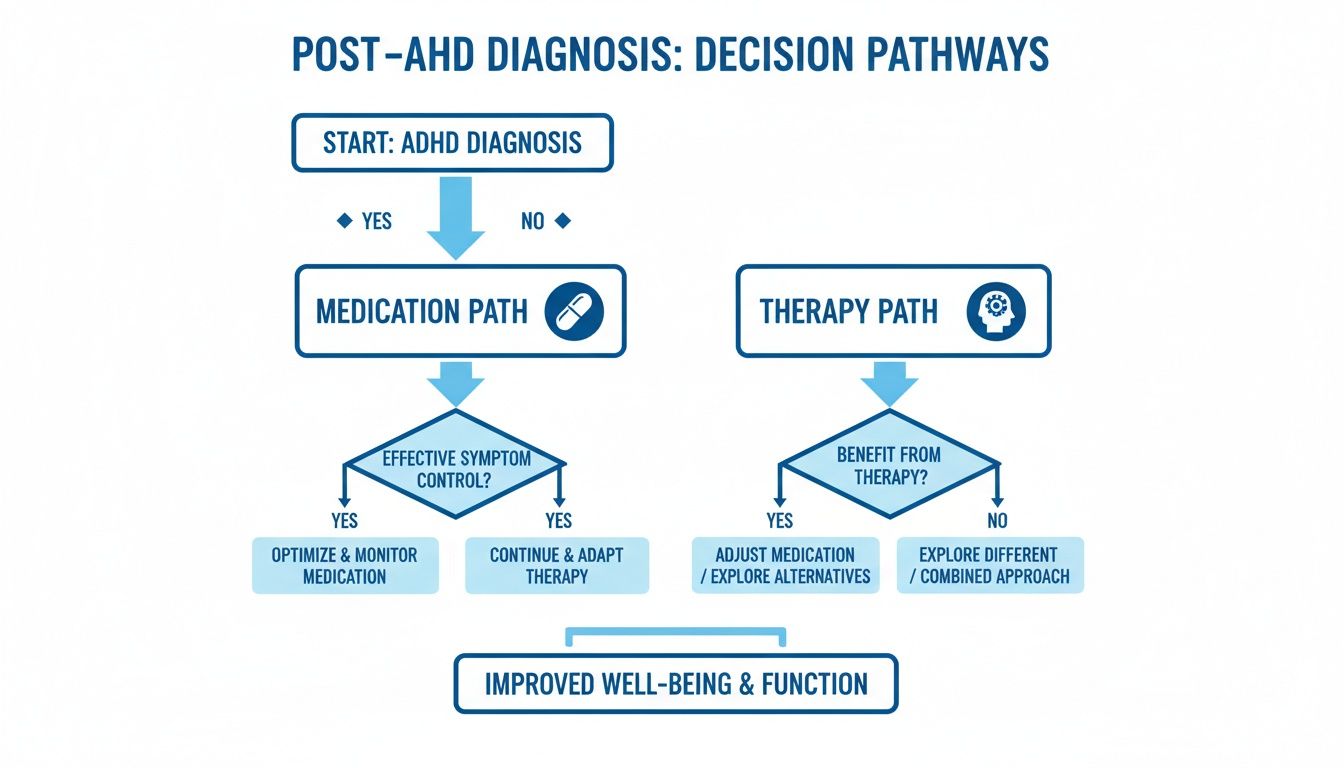
As you can see, a diagnosis is just the beginning. From there, your journey can branch into medication, therapy, or a blend of both to build a management plan that truly works for you.
Your Top Questions Answered: Navigating Private ADHD Diagnosis in London
Making the decision to seek a private ADHD assessment is a big one, and it's completely normal to have a lot of questions swimming around. Let's tackle some of the most common queries to give you a clearer picture of the road ahead.
Is a Private ADHD Diagnosis from a London Clinic Actually Recognised?
Yes, it absolutely is. A diagnosis from a properly accredited private clinic is just as valid as one from the NHS. The key thing to check is that the assessment is carried out by a GMC-registered psychiatrist or a specialist who follows the official DSM-5 or ICD-11 diagnostic guidelines.
Where things get a bit more nuanced is with prescriptions. While other medical professionals will respect the diagnosis itself, your GP isn't automatically obligated to take over your medication. This is precisely why finding a clinic with a solid track record of setting up 'shared care' agreements is so crucial.
What's the Real, All-in Cost for Diagnosis and Treatment?
It’s easy to get fixated on the initial assessment fee, but that’s only part of the financial picture. To avoid any surprises, it’s best to budget for the entire process, from that first appointment to getting your medication sorted.
Here’s a realistic breakdown of what you can expect in London:
- The Initial Assessment: This is the main diagnostic part, and prices can vary quite a bit, typically ranging from £700 to over £2,000.
- Medication Titration: Once you have a diagnosis and decide to try medication, this is the phase where you find the right type and dose. It involves a series of follow-up appointments (usually £150-£300 each) plus the cost of the private prescriptions themselves (£80-£150 a month).
- Shared Care Handover: Some clinics might have a small admin fee for preparing all the paperwork needed to pass your care over to your GP.
Ultimately, the aim for most people is to get that shared-care agreement in place. Once that happens, you’ll only pay the standard NHS prescription charge, which makes a huge difference to the ongoing monthly cost.
Think of a private diagnosis as an investment in your health. Getting a clear handle on the full cost—from assessment right through to shared care—means you can plan properly and focus on your well-being, not on unexpected bills.
Do I Have to Go In-Person, or Are Online Assessments Legit?
Online video assessments are now the norm for most top-tier clinics, and they are considered just as effective and valid as meeting a clinician face-to-face. This has been a game-changer, opening up access to specialists all over the country, not just those with an office in London.
An online appointment can offer much more flexibility with scheduling and often works out a little cheaper. It really boils down to what you feel most comfortable with. Some people find it easier to open up in person, while others prefer the convenience of talking from their own home. Either way, you’ll end up with a fully recognised diagnosis.
What if My GP Says No to a Shared Care Agreement?
This is probably one of the biggest worries people have, and it’s a valid concern. The best approach is to get ahead of the problem. Try to have an informal chat with your GP surgery before you even book a private assessment to see what their general policy is on shared-care arrangements for ADHD.
If you’ve already got your diagnosis and your GP refuses, the first step is to politely ask for their reasons in writing. A good private clinic won’t just leave you high and dry; they will often offer to speak directly with your GP to explain the treatment plan and address any concerns. If you still can’t find a way forward, your main options are to continue paying for private prescriptions or to look into registering with a different GP practice that is known to be more open to these agreements.
Ready to find the right clinic for you? ADHD Private is a free directory designed to help you compare over 85 private ADHD clinics across London and the UK. Check transparent pricing, wait times, and services to make an informed choice. Visit the ADHD Private directory to start your search.