How to Get an Adult ADHD NHS Assessment in the UK
Feeling lost in the adult ADHD NHS pathway? This guide simplifies the process, from GP appointments and Right to Choose to managing long wait times.
If you think you might have adult Attention Deficit Hyperactivity Disorder (ADHD), getting help through the NHS is a well-established route. The journey starts with a chat with your GP about what you've been experiencing. From there, they can refer you for a specialist assessment, which is the gateway to a formal diagnosis and treatment.
Taking the First Steps Towards an Adult ADHD Diagnosis on the NHS

It can be a huge moment when you finally connect the dots and realise your lifelong struggles with focus, organisation, or restlessness might actually be signs of adult ADHD. This isn't about being lazy or disorganised; it’s about the unique wiring of your brain. For many people, this realisation brings a flood of relief mixed with a pressing need for answers.
Taking that first step towards an adult ADHD NHS assessment is about seeking validation for what you've always felt. It’s a chance to finally understand yourself on a deeper level and find strategies that can genuinely make life easier. An official diagnosis can unlock doors to effective support, from medication and therapy to vital adjustments at work.
What Does ADHD Look Like in Adults?
Adult ADHD rarely fits the classic picture of a hyperactive kid running around a classroom. While hyperactivity is still part of the picture, it often shows up differently. You might feel a constant, nagging internal restlessness or an overwhelming need to always be doing something.
For many adults, the inattentive symptoms are the most prominent. This can look like:
- Struggling to hold focus in long meetings, during conversations, or when trying to read.
- A lifelong battle with procrastination, finding it almost impossible to start or finish tasks (especially the boring ones).
- Poor time management, constantly being late or underestimating how long things will take.
- Everyday forgetfulness, like constantly misplacing your keys, wallet, or phone.
Impulsivity is another key piece of the puzzle. It could be making hasty decisions you later regret, frequently interrupting people without meaning to, or having a hard time managing your finances. These aren't character flaws—they're genuine signs of a neurodevelopmental condition.
A diagnosis can offer powerful validation. A 2025 poll highlighted that the biggest impacts reported by individuals after receiving an ADHD diagnosis were greater self-understanding (84%) and discovering new strategies to manage their traits (58%).
Why Are So Many Adults Undiagnosed?
Even with growing awareness, adult ADHD is still massively underdiagnosed in the UK. Experts estimate it affects 3-4% of adults, but most never get a formal diagnosis.
This gap is clear in NHS data, which shows that a tiny fraction of GP records actually contain an ADHD diagnosis. This suggests as few as one in nine adults with the condition may be officially recognised. Accessing treatment is an even bigger hurdle. You can dig into the full statistics on adult ADHD diagnosis and treatment rates for a clearer picture.
How to Prepare for Your GP Appointment
This is where a bit of homework really pays off. Before you see your GP, take some time to write down specific, real-world examples of how your symptoms affect you. Think about all the different parts of your life:
- Work or Study: Have you had feedback about missing deadlines, making careless errors, or appearing disengaged?
- Relationships: Do partners, friends, or family comment on you "zoning out," forgetting important dates, or being emotionally reactive?
- Home Life: Do you find it hard to keep on top of chores, pay bills on time, or manage basic household organisation?
Having this information ready helps your GP see the full picture. It moves the conversation from "I think I'm a bit disorganised" to "Here is clear evidence of how these symptoms are impacting my life," which builds a much stronger case for an NHS referral.
To help you organise your thoughts, I've created a simple checklist. You can fill this out and take it with you to your appointment. It’s designed to help you communicate your experiences clearly and concisely.
ADHD Symptom Checklist for Your GP
Use this checklist to gather your thoughts and present a clear summary of your symptoms to your GP, covering inattention, hyperactivity, and impulsivity.
| Symptom Area | Example Behaviours and Experiences | Frequency (Never, Rarely, Sometimes, Often, Very Often) |
|---|---|---|
| Inattention | Making careless mistakes at work or in tasks. | |
| Difficulty sustaining attention during lectures, meetings, or long conversations. | ||
| Seeming not to listen when spoken to directly (mind wanders). | ||
| Failing to finish tasks, chores, or work projects. | ||
| Struggling with organisation (messy desk, poor time management). | ||
| Avoiding tasks that require sustained mental effort. | ||
| Frequently losing things like keys, wallet, phone, or paperwork. | ||
| Being easily distracted by external stimuli. | ||
| Forgetting daily appointments, chores, or errands. | ||
| Hyperactivity | Fidgeting with hands or feet, or squirming in your seat. | |
| Feeling unable to stay seated in meetings or other situations. | ||
| Feeling restless or "driven by a motor." | ||
| Finding it difficult to engage in quiet leisure activities. | ||
| Talking excessively. | ||
| Impulsivity | Blurting out answers before a question is completed. | |
| Having difficulty waiting your turn in queues or conversations. | ||
| Interrupting or intruding on others' conversations or activities. | ||
| Making impulsive decisions (e.g., spending, quitting a job). |
Remember, this isn't a diagnostic tool, but a powerful way to frame the conversation with your doctor. It provides concrete examples that are essential for them to understand the impact on your life.
Getting Ready for Your GP Appointment
Walking into your GP’s surgery to talk about something as personal as ADHD can feel pretty daunting. It's completely normal to worry about not being taken seriously or just fumbling for the right words. But a little bit of prep can make all the difference, turning that anxiety into a clear, confident conversation that gets you on the path to an adult ADHD NHS referral.
The trick is to think of this appointment less as a desperate plea for help and more as a consultation where you present your case. Your job is to give the GP organised, compelling evidence showing how your symptoms consistently impact your life. When you do that, the whole dynamic shifts into a collaborative chat about your health.
Book the Right Kind of Appointment
First things first, book a double appointment. A standard 10-minute slot is almost never enough time to unpack a lifetime of history and the wide-ranging effects of suspected ADHD.
When you call the surgery, just politely explain that you need to discuss a complex mental health issue and would appreciate a bit more time. This one small step takes the pressure off both you and your doctor, giving you the space you need to talk things through properly without feeling rushed.
Get Your Evidence Together
Before you go, pull together a small file of key documents. This isn't about burying your GP in paperwork; it’s about providing clear, relevant information that paints a picture of what you’re going through.
Here’s what you should aim to include:
- A Specific Symptom List: Use the checklist from the previous section or jot down your own notes. The key is to use real-world examples. Instead of saying, "I'm disorganised," try something like, "I've had two formal warnings at work this year for missing deadlines, and I'm constantly misplacing important things like my keys and wallet."
- The ASRS Checklist: The Adult ADHD Self-Report Scale (ASRS) is a well-respected screening questionnaire. You can easily find it online. Fill it out and bring it with you. This shows you’ve done your homework and gives the GP a standardised tool to look at.
- A Look Back at Childhood: If you can dig them out, old school reports can be gold dust. Teacher comments like "easily distracted," "doesn't fulfil his potential," or "can be disruptive in class" provide powerful evidence of lifelong difficulties.
- A Note from Someone Else (Optional): A short letter from your partner, a parent, or a close friend describing how they see your symptoms affecting you can add a lot of weight to your case.
Pro Tip: Your goal here is to make the GP's job easier. By presenting organised information, you help them quickly grasp the long-term nature of your struggles, which is a critical piece of the puzzle for an ADHD diagnosis.
Starting the Conversation and Speaking Up for Yourself
Knowing what to say to kick things off can be the hardest part. Don't overthink it—you don’t need a perfect opening speech.
Something simple and direct is always best. You could try:
- "I've made this appointment because I've struggled with focus and organisation my whole life, and I've started to think I might have adult ADHD. I've brought some notes to show you why I'm concerned."
- "I've been looking into why I find some things so hard, and the symptoms of ADHD really hit home for me. I’d like to talk about getting a referral for an assessment."
If you feel like you’re being dismissed, try to stay calm. You can politely ask, "Could you please record my request for a referral and your reasons for declining it in my medical notes?" This simple question often encourages a doctor to reconsider. Remember, you are your own best advocate. To get a better idea of what's involved, it can be helpful to look at an ADHD referral form to see the kind of information a specialist needs.
Using Right to Choose to Shorten Your Wait
So, your GP has agreed to refer you for an ADHD assessment. That initial wave of relief is fantastic, but it can quickly fade when you hear about the waiting lists. Depending on where you live, the standard NHS path for an adult ADHD assessment can stretch from many months into several years.
This is where a powerful piece of NHS legislation called Right to Choose (RTC) becomes your most valuable tool.
In a nutshell, Right to Choose gives you the power to select where you receive your NHS-funded specialist care, provided the clinic has an NHS contract. This means you aren't stuck with just your local mental health trust. You can ask your GP to refer you to a qualified private provider—like Psychiatry-UK or ADHD 360—who will carry out your assessment, with the NHS footing the bill.
Who Qualifies for Right to Choose
First things first, you need to know if you're eligible. The good news is the criteria are pretty straightforward, and most people in England will qualify.
To use Right to Choose for an adult ADHD assessment, you must:
- Be registered with a GP in England.
- Be seeking an assessment for a mental health condition (which ADHD is).
- Have a referral from your GP to a consultant-led service.
It's crucial to understand that RTC is an English NHS policy. At the moment, it doesn't apply if you live in Scotland, Wales, or Northern Ireland. If you're in one of those nations, you'll need to go through your national health service's specific pathway.
This flowchart gives a simple overview of the steps that lead up to this crucial referral choice.
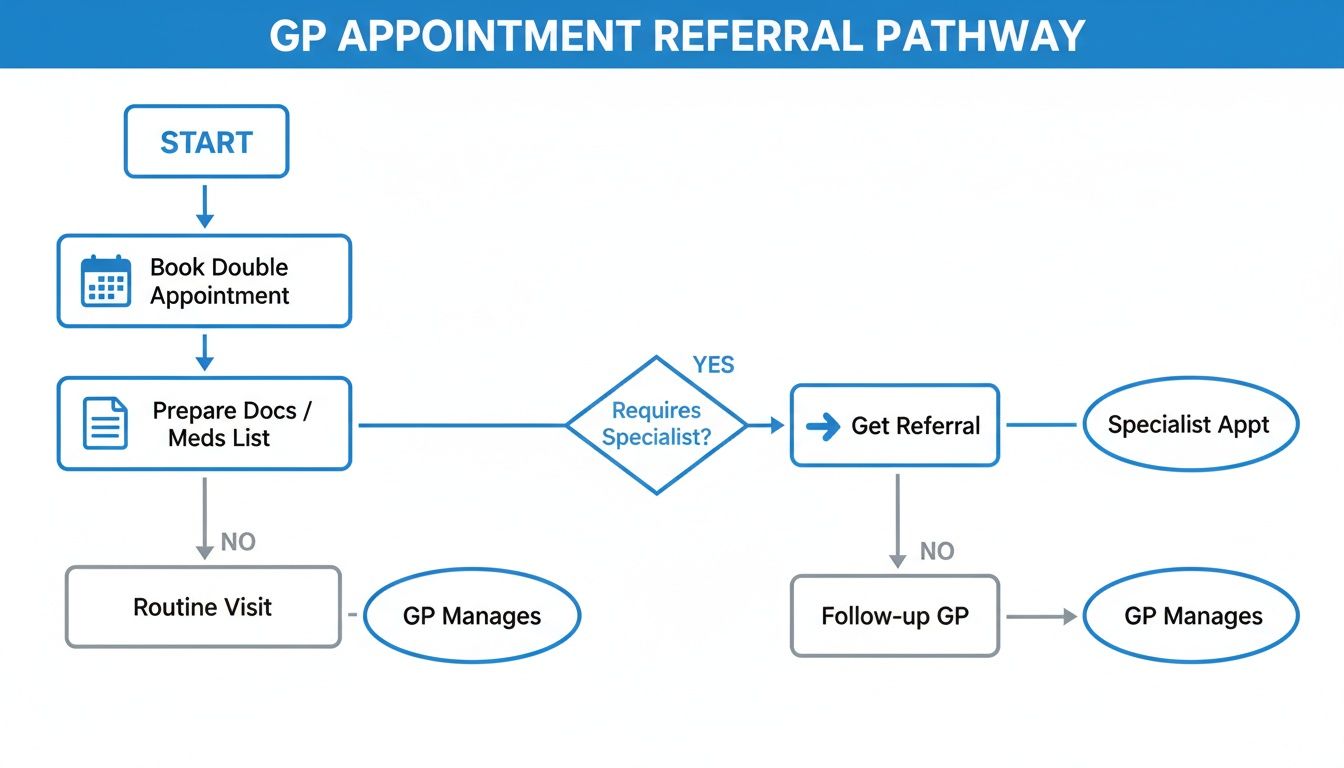
As you can see, once you’ve done your preparation, the whole point of the GP appointment is to secure that referral, which is what opens the door to options like Right to Choose.
How to Formally Invoke Your Right to Choose
Using RTC isn't complicated, but it does require you to be proactive. You can't just hope your GP will suggest it; you need to be the one to raise it and have the right information ready.
The process kicks off with you choosing a provider. A bit of online research will show you which clinics accept RTC referrals for adult ADHD assessments. They almost always have a dedicated page on their website with template letters and clear instructions for GPs.
Once you’ve picked one, you need to tell your GP formally. You should give them:
- A letter that clearly states you wish to exercise your NHS Right to Choose.
- The name of the provider you have chosen.
- Any specific referral forms or letters the clinic has provided for your GP to fill out.
A common myth is that GPs can turn down an RTC referral because of cost or location. As long as you and your chosen provider meet the criteria, the referral should be made. If you meet any resistance, it’s worth politely referencing the official NHS England guidance on patient choice.
This single action can dramatically speed up the entire process. While local NHS waiting times can be painfully long, the wait for an initial assessment with an RTC provider is often just a matter of months. You can explore the full details of the UK Right to Choose ADHD pathway to get a better handle on the legislation and your rights.
Finding a Provider and What to Expect
Several well-regarded clinics specialise in adult ADHD NHS assessments through Right to Choose. When you're looking at them, make sure to check their current waiting times, as these can fluctuate with demand. Their websites are the best place for the most up-to-date information.
After your GP sends off the referral, the RTC provider will get in touch with you directly to book your assessment. This is usually done online via a video call, which makes it incredibly convenient, no matter where you are in England.
The assessment itself is just as thorough as a standard NHS one and follows the same official clinical standards (NICE guidelines). If you do get a diagnosis, the provider will also handle the initial part of your treatment, including medication titration. This is the careful process of finding the right medication and dosage for you, which can take several weeks or months.
Once your treatment is stable and working well, the provider will then arrange a shared care agreement with your GP. This is a critical step. It allows your GP to take over prescribing your medication on an NHS prescription, making your ongoing treatment both affordable and convenient. This smooth handover from a private specialist back to your local GP is one of the biggest benefits of the RTC route—it combines the speed of the private sector with the long-term, accessible support of the NHS.
So, How Long Will I Be Waiting? The Reality of the NHS Postcode Lottery
Once you’ve secured that GP referral, you’ve cleared the first hurdle. But now, you’re officially on the waiting list for an adult ADHD NHS assessment, and this is often where the real test of patience begins.
You might have heard the stories – someone in Manchester gets seen in six months, while a friend just one county over is given a five-year wait time. This isn’t an exaggeration; it’s the frustrating reality of what’s known as the "postcode lottery."
Put simply, your access to timely care isn’t determined by how much you need it, but by your address and the funding priorities of your local Integrated Care Board (ICB). It’s a systemic problem, and it can feel incredibly unfair. This is precisely why understanding all your options, especially the NHS Right to Choose, is so crucial.
The truth is, the system is creaking under the strain. A perfect storm of inconsistent funding, a national shortage of specialist staff, and a massive surge in public awareness has completely overwhelmed services that were already stretched thin.
Why Are Wait Times So Different?
The inconsistency across the UK is staggering. In some areas, dedicated adult ADHD clinics are working through their lists, while in others, your referral might get added to a general mental health services pile, where the specific expertise just isn't there. This creates a deeply unfair system where some people get life-changing support relatively quickly, and others are left in limbo for years.
The numbers paint a stark picture. Access to adult ADHD treatment through the NHS swings wildly from 8.6% to 24.8% across different regions. Think about that for a moment. Nationally, only 15.6% of the estimated 1.6 million adults with ADHD in England are actually getting medication.
When some areas have treatment rates as low as 8.6%, it means there's a 4.6-fold difference in care depending on where you live. This data, which you can read more about in this study on regional differences in ADHD care, makes a powerful case for not just sitting back and waiting.
So, what’s causing these massive differences?
- Local Commissioning Priorities: Every local health authority (ICB) has its own budget and its own set of priorities. If adult neurodiversity isn't high on their agenda, it won't get the funding it needs. Simple as that.
- A Shortage of Specialists: There's a national shortage of psychiatrists, specialist nurses, and clinicians with the right expertise in adult ADHD. Rural and less densely populated areas often feel this pinch the most.
- Outdated Service Models: For decades, ADHD was wrongly dismissed as a childhood condition. Many regions simply never built services for adults, and now they’re playing a desperate game of catch-up.
Setting Realistic Expectations for Your Journey
Learning about this isn't meant to dishearten you. It’s about arming you with a realistic perspective so you can make informed decisions. Knowing that these delays are a systemic failure—and not a reflection of your situation—can help you manage the emotional strain of waiting.
Understanding the postcode lottery is your first step towards taking back control. It explains why an option like Right to Choose isn’t just a nice perk; for many, it’s the only viable path to getting a timely diagnosis.
This knowledge empowers you to be proactive. When your GP confirms your referral has been sent, ask them if they know the current wait time for the local service. If the answer is measured in years, not months, you know you need to start exploring other avenues right away, rather than passively hoping for the best.
What Happens During Your ADHD Assessment

The day of your assessment can feel like a massive step, often bringing a cocktail of nerves and relief. Whether you’ve arrived here via the standard NHS pathway or through Right to Choose, knowing what’s coming can make the whole thing feel less daunting.
At its core, the assessment is a structured, in-depth conversation. Its purpose is to build a complete picture of you and your life, guided by the official NICE (National Institute for Health and Care Excellence) guidelines. This isn't just a quick chat; it's a deep dive with a specialist psychiatrist or a similarly qualified clinician who knows neurodevelopmental conditions inside out.
The Structure of a Diagnostic Interview
Most assessments last between one and three hours. These days, they're usually held over a video call, which makes things a lot more convenient.
The clinician’s main job is to see if your symptoms line up with the formal diagnostic criteria for ADHD. This means they need to find evidence of a consistent pattern of inattention and/or hyperactivity-impulsivity that has significantly affected your life since you were a child.
To do this, they’ll often use a structured tool like the DIVA-5 (Diagnostic Interview for ADHD in Adults). Think of it as a framework for the conversation, making sure they cover all the essential ground.
You can expect to talk about:
- Your School Days: They'll ask about your experiences in primary and secondary school. Did teachers often say you were distracted? Was homework a constant battle? Did you find it impossible to just sit still?
- Work and Career: The conversation will likely turn to your job history. Do you tend to switch jobs often? Has feedback from managers ever mentioned issues with deadlines, organisation, or finishing tasks?
- Relationships: They’ll want to understand how your traits affect your relationships with family, friends, and partners. This might include talking about impulsivity in conversations or finding it hard to manage your emotions.
- Everyday Life: This is about the nuts and bolts of being an adult – things like managing money, keeping your home in order, or simply remembering appointments.
The clinician isn't looking for 'perfect' answers. They are piecing together a lifelong pattern. Be honest about your struggles and successes; both are important parts of your story. Providing specific, real-world examples is far more helpful than giving vague answers.
What Happens After a Diagnosis
If the assessment leads to an ADHD diagnosis, the clinician will talk you through the next steps. This should feel like a collaborative discussion about what kind of support will genuinely help you. For most people, this involves a combination of medication and other therapeutic support.
This is where the sheer demand on the adult ADHD NHS system becomes obvious. Prescriptions for adult ADHD medication in England have skyrocketed, more than doubling to nearly 278,000 patients by 2023-24. But the services haven't kept pace. Despite growing awareness, it's estimated that only 15.6% of adults with ADHD actually receive medication, highlighting a huge gap in treatment. You can see the full scale of the issue in this research on prescription trends and service demand.
Starting Medication and Titration
If you and your specialist agree that medication is a good option, you'll begin a process called titration.
This is the careful, gradual process of finding the right medication and the best dose for you. It is absolutely not a one-size-fits-all approach. Your specialist will work closely with you over several weeks or even months, checking in on how well it's working and monitoring any side effects.
You can read more about the full journey in our guide on how to get tested for ADHD.
Once your dose and medication are stable, the final, crucial step is setting up a shared care agreement. This is a formal arrangement between your specialist (whether NHS or a Right to Choose provider) and your local GP. It allows your GP to take over issuing your repeat prescriptions, making your ongoing treatment both accessible and affordable through the NHS. This agreement is what bridges the gap between specialist diagnosis and long-term, stable care.
Answering Your Questions on the NHS ADHD Pathway
When you're trying to get an adult ADHD diagnosis through the NHS, it’s completely normal to run into roadblocks or have specific, practical questions crop up. It can feel like a confusing and sometimes frustrating process.
This section is designed to tackle some of the most common queries we see. Think of it as a troubleshooting guide to help you navigate the journey with a bit more confidence, from dealing with a reluctant GP to understanding the true cost of going private.
What Should I Do If My GP Won’t Refer Me?
It’s incredibly disheartening when a GP refuses to make a referral, but please don’t let that be the end of the road. If this happens, the first thing to do is calmly ask the doctor to write down their clinical reasons for the refusal in your medical records. This is your right, and it creates an important paper trail.
Your next move is to get a second opinion. You can book an appointment with a different GP at your practice or, if you feel you need a fresh start, register with a new surgery entirely.
To make that next appointment as effective as possible, you’ll want to build a stronger case. Here’s how:
- Complete an ASRS (Adult ADHD Self-Report Scale) checklist and bring it with you.
- Write a detailed list of specific examples of how your symptoms affect your daily life – at work, at home, and in your relationships.
- If you can, ask a partner or close family member to write a short letter supporting what you've said. Hearing it from someone else can add a lot of weight.
- Don't be afraid to politely mention NICE guideline NG87, which sets out the official criteria for an adult ADHD referral.
How Much Is a Private ADHD Assessment?
If the NHS or Right to Choose pathways aren't working for you, going fully private is another route, but it's a significant financial commitment. In the UK, a private ADHD assessment will typically set you back somewhere between £600 and £1,500.
It’s crucial to know what you’re getting for that money. This fee usually just covers the initial diagnosis. The costs don't stop there. If medication is recommended, you'll also have to pay for the titration process, which is where they find the right dose for you. This involves follow-up appointments that can cost £100-£250 each month, plus the cost of the private prescriptions themselves.
Before you commit to a private clinic, always ask for a full, transparent breakdown of every single potential cost. This should cover the assessment, all follow-up appointments, titration fees, and any admin charges for reports or letters to your GP.
Can My GP Prescribe Medication After a Private Diagnosis?
Yes, this can often be arranged through what’s known as a shared care agreement. This is a formal arrangement between your private specialist and your NHS GP. Once you have a diagnosis and your medication type and dose are stable, the private clinic can ask your GP to enter into this agreement.
If the GP agrees, they take over writing the prescriptions, which means you'll only pay the standard NHS prescription charge. It makes treatment much more affordable in the long run. The key thing to remember, though, is that GPs are not required to accept a shared care agreement. It's a really good idea to have a chat with your GP about their willingness to consider one before you pay for a private assessment to avoid any nasty surprises down the line.
Do I Have to Tell the DVLA About My ADHD Diagnosis?
You only have a legal duty to tell the DVLA about your ADHD if your symptoms – or any side effects from your medication – could negatively impact your ability to drive safely. For many people, treatment actually improves their focus behind the wheel, making them safer drivers. If you're in any doubt whatsoever, have a word with your doctor.
When it comes to car insurance, it's a bit different. If an application form asks you directly about pre-existing medical conditions, you must declare your diagnosis. If you don't, it could invalidate your policy. While it is a condition you have to declare, it doesn't automatically mean your premiums will shoot up, particularly if your ADHD is well-managed.
Trying to figure out the complexities of getting an ADHD assessment can feel overwhelming, but you don't have to do it all on your own. ADHD Private offers a free, comprehensive directory of over 85 clinics across the UK. It lets you compare wait times, costs, and services to find the best path forward for you. Take the next step towards getting clarity and support by exploring your options.